Beauty and personal care brands are under growing pressure — from both regulation and consumer expectation — to reduce plastic packaging without compromising the premium unboxing experience that drives repeat purchases. Molded pulp inserts and trays have emerged as a credible answer, combining sustainability credentials with a tactile, premium finish that plastic increasingly struggles to compete with on brand perception. This guide covers the specifications, benefits, and sourcing considerations for cosmetics and personal care packaging buyers.
What Is Molded Pulp Cosmetics Packaging?
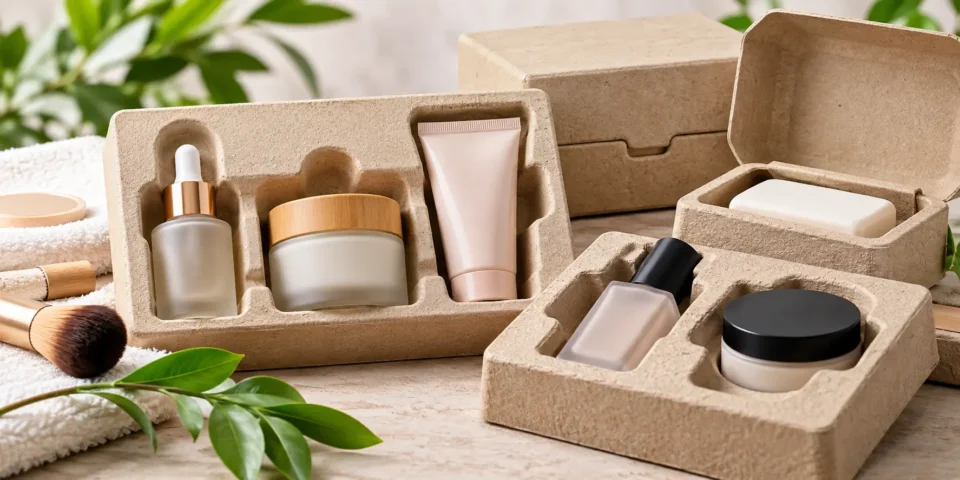
Molded pulp cosmetics packaging typically takes the form of custom-molded inserts or trays that sit inside an outer rigid box or carton, precisely shaped to cradle bottles, jars, palettes, or skincare product sets. Unlike foam or plastic thermoform inserts, molded pulp versions can be finished with smooth, velvet-textured, or flocked surfaces to achieve a premium tactile feel, along with debossed branding and color-matched finishes.
Because cosmetics and personal care products often ship in mixed sets — a cleanser, serum, and moisturizer bundled together, for instance — insert design frequently needs to accommodate multiple different container shapes and sizes within a single tray. This makes cosmetics packaging one of the more design-intensive molded pulp applications, typically involving 3D modeling and physical prototyping before a final mold is cut.
Molded Pulp vs. Plastic Inserts for Cosmetics
| Factor | Molded Pulp Insert | Plastic Thermoform Insert |
| Perceived premium quality | High, especially with flocking/embossing | Moderate, seen as generic in premium segments |
| Sustainability messaging | Strong (biodegradable, recyclable) | Weak, increasingly a liability for brand image |
| Precision fit for irregular product shapes | Good, improving with CAD-based mold design | Excellent, longer track record |
| Cost at low-to-mid volume | Competitive, especially post-tooling | Cheaper at very high volume |
| Regulatory exposure | Low | Rising (EPR fees, plastic taxes) |
| Tactile “unboxing” quality | High, especially with soft-touch finishes | Generally lower, feels utilitarian |
For related material science context, see our explainer on molded pulp vs. paper pulp and wet-pressed vs. dry-pressed molded pulp, since surface finish quality — critical for cosmetics presentation — depends heavily on which pressing method and pulp density is used.
Key Specifications to Request From Suppliers
| Specification | Why It Matters |
| Thickness range (typically 1.5mm–8mm) | Determines rigidity and protection level for glass/jar products |
| Surface finish (flocked, smooth, embossed) | Directly affects perceived brand quality |
| Color matching capability (Pantone) | Needed for brand-consistent packaging |
| Dimensional tolerance (e.g., ±0.3mm) | Critical for a snug, premium product fit |
| Food/cosmetic-contact compliance | Required for products with direct skin/product contact |
| Lead time for new custom molds | Typically 10–15+ days; plan launch timelines accordingly |
| Multi-cavity accommodation | Needed for gift sets bundling multiple product shapes |
Why Beauty Brands Are Switching to Molded Pulp
- Unboxing experience as a marketing channel. For DTC beauty brands, packaging is part of the product experience shared on social media — a tactile, natural-fiber insert with debossed branding photographs and feels distinctly different from plastic, supporting premium price positioning even for mid-market product lines.
- Sustainability as a purchase driver. Personal care consumers, particularly in North America and Europe, increasingly factor packaging sustainability into brand loyalty decisions, and pulp inserts provide a visible, communicable sustainability signal at the point of unboxing rather than a claim buried in fine print.
- Regulatory and retailer pressure. Major beauty retailers are setting plastic reduction targets for private-label and stocked brands, pushing suppliers toward alternatives like molded pulp ahead of formal regulatory mandates in several markets.
- Protection without excess material. Precision-molded pulp inserts can be engineered to use less material than overbuilt foam inserts while maintaining equivalent drop-test protection for glass jars and bottles, which also reduces shipping weight and freight cost.
- Gift and seasonal packaging appeal. Holiday and gift-set packaging benefits particularly well from molded pulp’s premium tactile quality, giving brands a distinctive presentation for limited-edition or seasonal product bundles.
Who Buys This Product
- DTC and indie beauty brands
- Established personal care and cosmetics manufacturers
- Subscription beauty box companies
- Luxury gifting and hospitality amenity suppliers
- Packaging distributors serving the beauty industry
- Private-label manufacturers producing for retail beauty chains
Design and Development Process
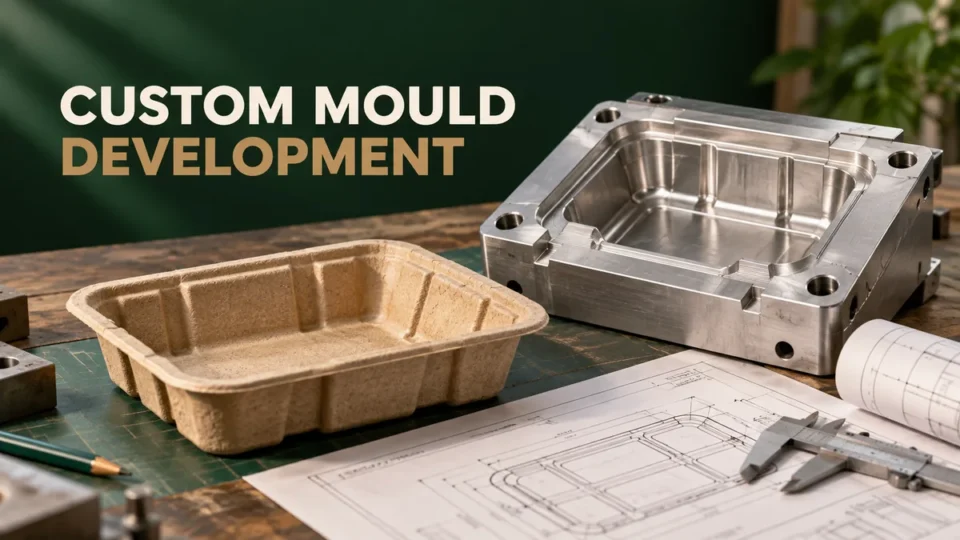
Unlike commodity molded pulp products such as egg trays, cosmetics packaging typically follows a structured development path: initial product measurements and outer box dimensions are shared with the supplier, a 3D CAD mockup is produced for approval, a physical sample or prototype is manufactured for hands-on evaluation, and only after sign-off does the supplier cut the production mold. Buyers should budget both time and, in some cases, a tooling fee for this process, and should expect to see at least one round of revisions before final approval.
Sourcing Considerations for International Buyers
Because cosmetics packaging is highly design-dependent, buyers should expect a longer development cycle than commodity products like egg trays — including 3D CAD mockups, physical prototypes, and iteration rounds before committing to full production tooling. Review our guide on ISO, FSSAI, and IEC certifications to understand which compliance documentation may be relevant depending on your product category and target market, and our buyer’s guide to importing molded pulp packaging from India for the general import workflow.
Frequently Asked Questions
Can molded pulp inserts be color-matched to my brand’s Pantone colors?
Yes, most suppliers offer custom color matching, typically with a small surcharge and minimum order requirement for non-standard colors.
Is molded pulp packaging suitable for glass cosmetic jars and bottles?
Yes, precision-molded pulp inserts are commonly used to cradle and protect glass jars and bottles, provided the cavity is engineered to the exact product dimensions.
How long does custom mold development typically take?
Lead times vary by complexity, but buyers should generally plan for multiple weeks between initial design approval and first production-ready samples.
Can pulp inserts achieve a luxury, premium look comparable to foam or velvet-lined boxes?
Yes, with surface treatments like flocking, embossing, and foil stamping, molded pulp inserts can achieve a premium tactile and visual finish comparable to traditional luxury packaging materials.
Can one insert hold multiple different product shapes, like a gift set?
Yes, custom multi-cavity inserts are commonly designed to hold a mix of bottles, jars, and smaller items within a single gift-set tray.
Balancing Premium Finish With Production Cost
One common tension in cosmetics packaging development is the pull between achieving the most premium possible finish and keeping per-unit cost within a workable margin, especially for indie and early-stage beauty brands ordering smaller initial volumes. Flocked or velvet-textured finishes, multi-color printing, and foil stamping all add cost and lead time relative to a natural or single-color pressed finish. Many brands find a middle path by using a premium finish only on the visible top surface of an insert while leaving the underside in a simpler, unfinished state, or by reserving the highest-cost finishing techniques for limited-edition or gift-set packaging while using a simpler finish for everyday product lines.
Brands should also factor in how the insert will be viewed by the end customer. A cosmetics insert that’s fully visible the moment the outer box is opened justifies more investment in finish quality than one that sits beneath a printed sleeve or additional packaging layer, where the customer’s first visual impression is shaped by something other than the pulp tray itself.
Get a Quote
Looking to develop custom molded pulp packaging for your cosmetics or personal care brand? Contact Aavadh Exports for design consultation, sample development, and export pricing.