aavadh exports

Aavadh exports

FOB vs. CIF vs. EXW — Understanding Export Terms When Ordering Bulk Packaging

If you’re new to importing packaging internationally, few things cause more confusion — and more unexpected costs — than misunderstanding shipping terms. FOB, CIF, and EXW are among the most common Incoterms (International Commercial Terms) used in export agreements, and each defines a genuinely different split of cost, risk, and responsibility between buyer and seller.

FOB vs. CIF vs. EXW — Understanding Export Terms When Ordering Bulk Packaging Read More »
A Buyer’s Guide to Importing Molded Pulp Packaging from India: Documentation, Ports, and Lead Times

For businesses sourcing molded pulp packaging internationally for the first time, the process of importing from an overseas manufacturer can feel more complicated than it needs to be. This guide walks through what to actually expect — from documentation requirements to shipping logistics to realistic lead times — so first-time buyers can plan with confidence.

A Buyer’s Guide to Importing Molded Pulp Packaging from India: Documentation, Ports, and Lead Times Read More »

Biodegradable vs. Compostable vs. Recyclable

Biodegradable vs. Compostable vs. Recyclable — What Does Eco-Friendly Packaging Actually Mean?

Eco-friendly has become one of the most overused and least precise terms in packaging marketing. Biodegradable, compostable, and recyclable are often used interchangeably in casual conversation, but they describe genuinely different end-of-life outcomes, with different infrastructure requirements and different regulatory implications. For packaging buyers making sourcing decisions — or making sustainability claims to their own

Biodegradable vs. Compostable vs. Recyclable — What Does Eco-Friendly Packaging Actually Mean? Read More »

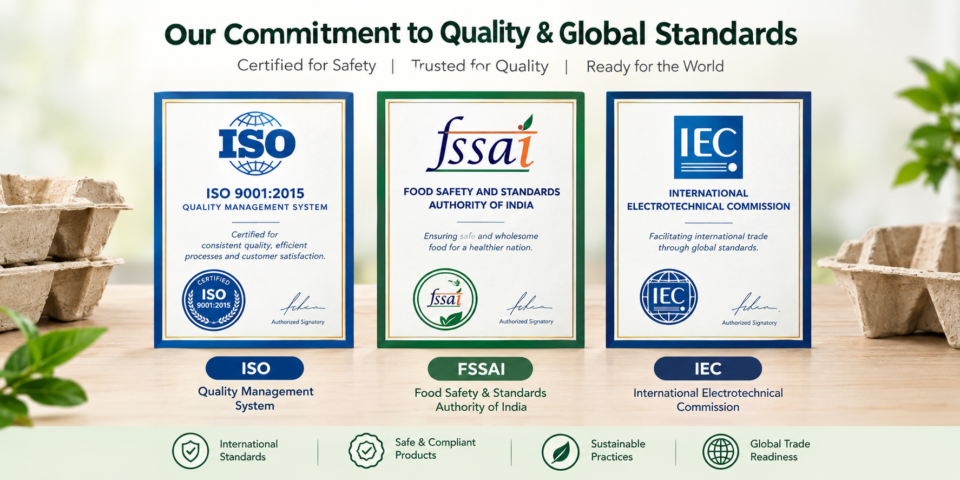
ISO, FSSAI, and IEC Certifications

Understanding ISO, FSSAI, and IEC Certifications: What They Mean for Your Packaging Supplier

When evaluating an overseas packaging manufacturer, certification badges are often the first thing buyers notice — and the last thing they actually understand. This guide breaks down what ISO, FSSAI, and IEC certifications specifically mean, why they matter for molded pulp packaging buyers, and what questions to ask a supplier beyond simply confirming a certification

Understanding ISO, FSSAI, and IEC Certifications: What They Mean for Your Packaging Supplier Read More »

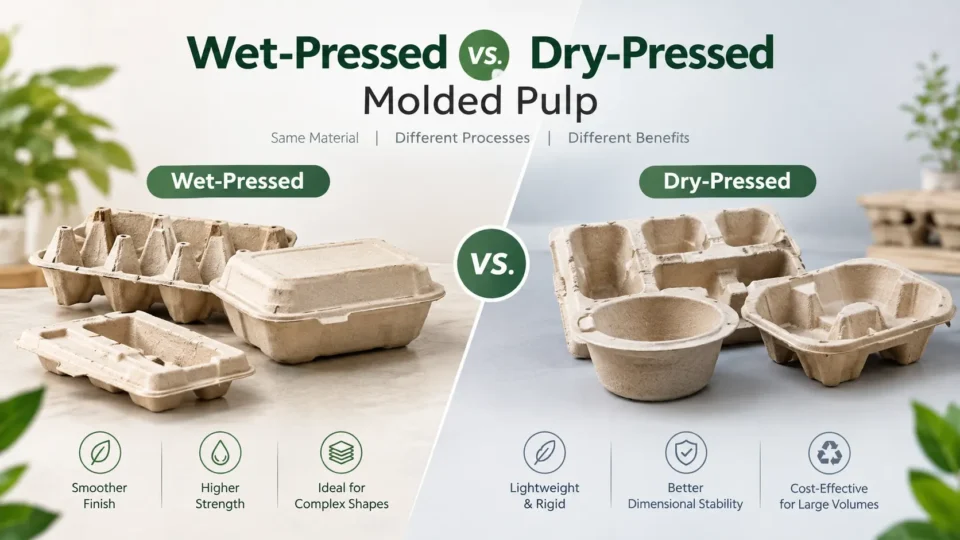
Wet-Pressed vs. Dry-Pressed Molded Pulp

Wet-Pressed vs. Dry-Pressed Molded Pulp — What’s the Difference and Which Do You Need?

Not all molded pulp packaging is manufactured the same way, and the production method has a direct effect on the final product’s surface finish, dimensional precision, and cost. Understanding the difference between wet-pressed and dry-pressed (also called thermoformed) molded pulp helps buyers ask the right questions when evaluating a supplier or specifying a new product.

Wet-Pressed vs. Dry-Pressed Molded Pulp — What’s the Difference and Which Do You Need? Read More »

Medical & Healthcare Molded Fiber Trays

Medical & Healthcare Molded Fiber Trays: Hygiene, Compliance, and Use Cases

Healthcare settings have unique packaging requirements that differ meaningfully from food or consumer goods packaging: single-use disposability, low contamination risk, and straightforward, hygienic disposal are often more important than cost or aesthetics. Molded fiber trays have long served a role in this space, and understanding where and why they’re used helps healthcare facilities and medical

Medical & Healthcare Molded Fiber Trays: Hygiene, Compliance, and Use Cases Read More »

The Complete Guide to Molded Pulp Shoe Inserts and Shoe Trees for Footwear Manufacturers

The Complete Guide to Molded Pulp Shoe Inserts and Shoe Trees for Footwear Manufacturers

Shoe inserts and shoe trees made from molded pulp serve a purpose that’s often underestimated: they’re not just filler material inside a shoebox, but a functional component that helps preserve shoe shape, absorb moisture, and protect footwear during storage and international shipping. As footwear brands face growing pressure to reduce plastic content across their packaging,

The Complete Guide to Molded Pulp Shoe Inserts and Shoe Trees for Footwear Manufacturers Read More »

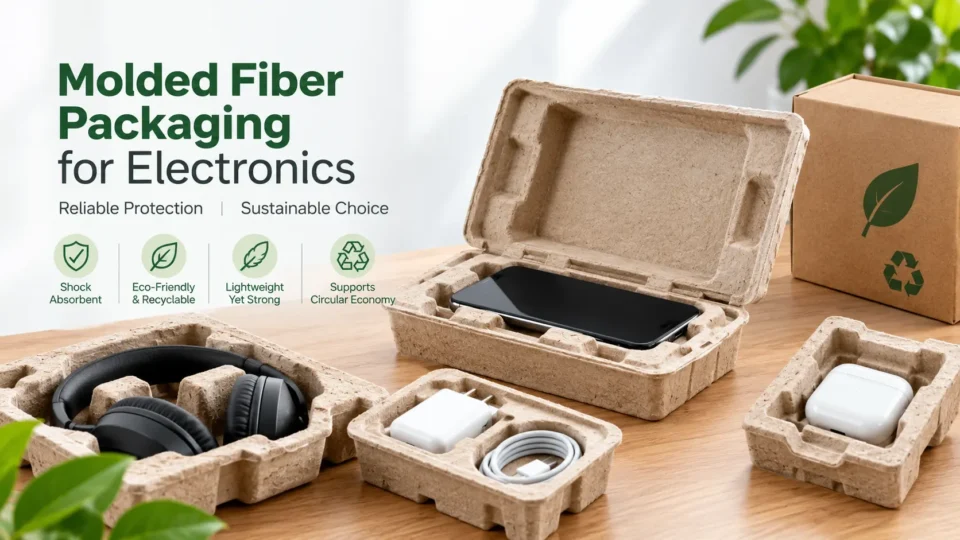
Molded Fiber Packaging for Electronics

Molded Fiber Packaging for Electronics — Replacing EPS Foam Without Losing Protection

Expanded polystyrene (EPS) foam has been the default protective packaging material for electronics and sensitive components for decades, prized for its light weight and shock-absorbing properties. But EPS is difficult and expensive to recycle in most municipal systems, is being restricted or banned outright in a growing number of jurisdictions, and increasingly conflicts with the

Molded Fiber Packaging for Electronics — Replacing EPS Foam Without Losing Protection Read More »

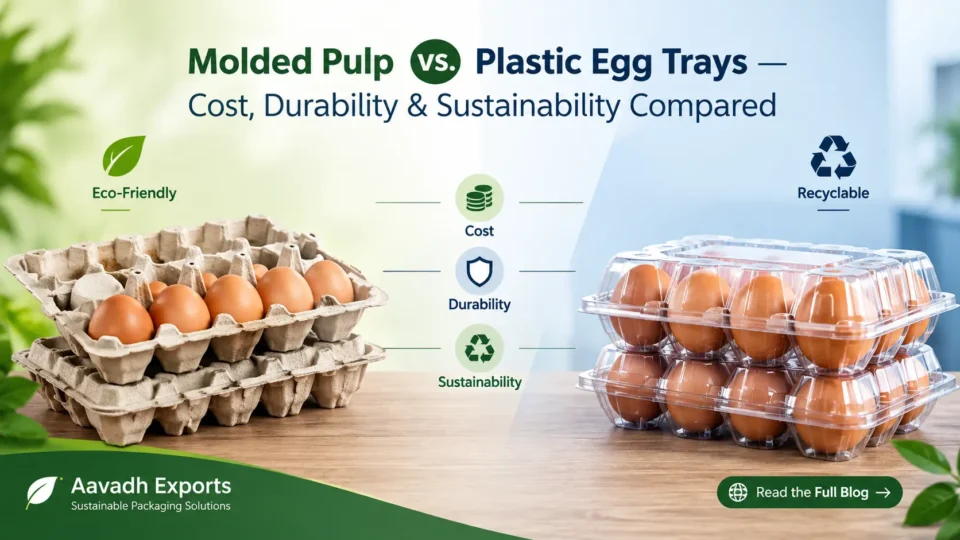
Molded Pulp vs. Plastic Egg Trays

Molded Pulp vs. Plastic Egg Trays — Cost, Durability & Sustainability Compared

For poultry farms, egg wholesalers, and distributors, the choice between molded pulp egg trays and plastic egg trays is rarely made on sustainability alone. Cost per unit, breakage rates, storage space, and buyer expectations in your target export market all factor into the decision. This guide breaks down the real, practical differences between the two

Molded Pulp vs. Plastic Egg Trays — Cost, Durability & Sustainability Compared Read More »

EPS (Styrofoam) Is Out: 5 Molded Pulp Alternatives That Pass 2026 Compliance

EPS (Styrofoam) Is Out: 5 Molded Pulp Alternatives That Pass 2026 Compliance

Expanded polystyrene has had a good run. It’s cheap to mold, light to ship, and cushions almost anything you put in a box. It’s also on its way out — and if you’re still specifying it for food containers, protective inserts, or cushioning packaging in 2026, you’re carrying regulatory risk that’s no longer worth the

EPS (Styrofoam) Is Out: 5 Molded Pulp Alternatives That Pass 2026 Compliance Read More »