Shoe inserts don’t get much attention compared to the shoebox or the shoe itself, but they do real work — holding shape during shipping, protecting the toe box from crushing, and keeping a pair looking retail-ready from factory to shelf. For decades, that job has mostly gone to plastic or polyurethane foam. Increasingly, it’s going to moulded pulp instead. This article covers why footwear brands are making the switch, how these inserts are actually made, and what the shift means for both product protection and brand messaging.
The Role of Shoe Inserts in Footwear Packaging
Shoe inserts (sometimes called shoe trees, tissue substitutes, or toe supports depending on the format) serve a few specific functions in the footwear supply chain:
- Shape retention — preventing the toe box and upper from collapsing or creasing while the shoe sits in a box for weeks or months between factory and customer
- Cushioning during transit — absorbing shock and pressure from stacking and handling, particularly for boxes shipped in bulk cartons
- Presentation — a shoe that arrives holding its shape looks retail-ready in a way a collapsed, crumpled shoe doesn’t, which matters both for wholesale buyers inspecting stock and for direct-to-consumer unboxing
- Moisture management — some insert materials help absorb residual moisture from manufacturing or humid shipping conditions before the shoe reaches the customer
Because inserts touch every pair that ships, the material choice multiplies across a brand’s entire production volume — a small per-unit cost difference or sustainability improvement adds up quickly at scale.
Why Brands Are Moving Away From Plastic & Foam Inserts
Plastic and polyurethane foam inserts have been standard for a long time, but several pressures are pushing footwear brands toward alternatives:
- Difficult recyclability. Foam inserts are rarely recycled in practice, even where technically possible — they typically end up as waste immediately after the customer opens the box, which is a poor first impression for a brand trying to signal sustainability.
- Regulatory tightening. Packaging regulations taking effect across the EU, UK, and Australia through 2026 increasingly restrict or tax hard-to-recycle plastics, and footwear packaging isn’t exempt from this pressure even though inserts are a small, easy-to-overlook component.
- Retailer and marketplace expectations. Wholesale buyers and online marketplaces increasingly ask footwear brands about the sustainability of their full packaging — not just the shoebox, but everything inside it, including inserts and tissue.
- Consumer visibility. Unlike some packaging components, shoe inserts are something the customer directly handles and disposes of at the moment of unboxing — making them a highly visible touchpoint for a brand’s sustainability claims, for better or worse.
For a footwear brand already using recycled or minimal packaging elsewhere, plastic or foam inserts can be the one visible gap in an otherwise sustainable unboxing experience.
How Moulded Pulp Shoe Inserts Are Made
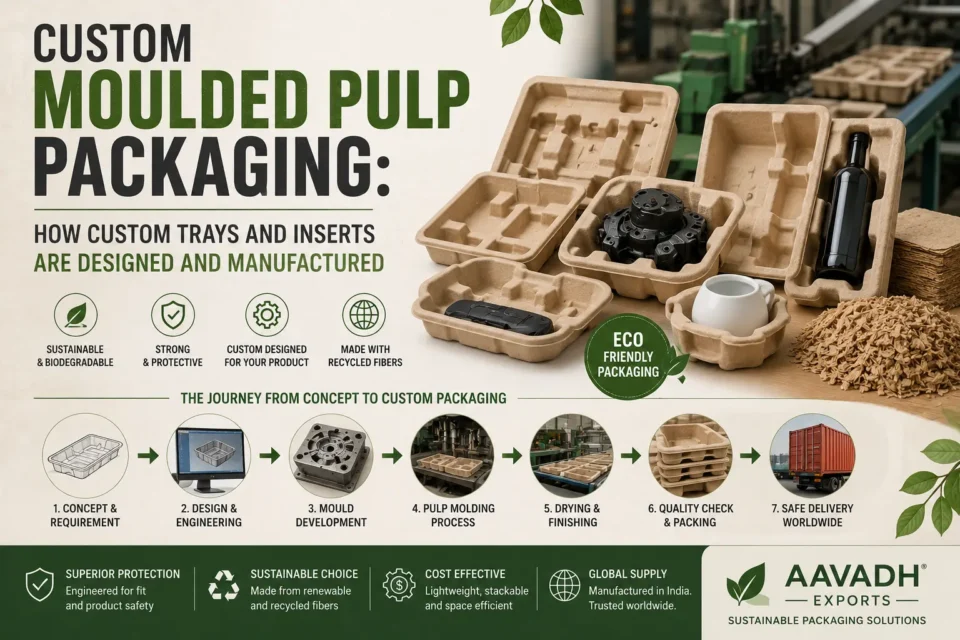
Moulded pulp shoe inserts go through the same core manufacturing process as other moulded fibre products, shaped specifically for footwear:
- Pulping — recycled paper is broken down into fibre and mixed with water into a slurry
- Moulding — the slurry is drawn onto a mould shaped to fit the toe box and shoe interior, using suction to form the fibre layer
- Pressing (for wet-press designs) — a second mould compresses the wet fibre for a firmer, more consistent shape
- Drying — formed inserts are dried until they reach the right moisture level and structural rigidity
- Trimming and quality check — inserts are trimmed to a clean shape and checked for consistent thickness and strength before packing
Because shoe inserts need to hold a specific internal shape rather than being a flat tray, mould design typically requires more attention to contour and depth than a standard flat tray — closer in complexity to a custom electronics insert than to a basic egg tray. Manufacturers with strong custom mould capability generally produce a better-fitting, more consistent shoe insert as a result.
Protection & Shape-Retention Benefits
For footwear specifically, moulded pulp performs well on the two things inserts are actually meant to do:
- Shape retention — a correctly moulded pulp insert holds firm enough to keep the toe box from collapsing during the weeks a shoe might sit in a warehouse, container, or store shelf before sale
- Cushioning under stacking pressure — pulp’s fibrous structure compresses slightly under load rather than transmitting pressure directly, protecting the shoe’s structure when boxes are stacked during warehousing and freight
- Consistent fit across a production run — once a mould is properly designed for a specific shoe size and style, every insert produced from it fits the same way, which matters for brands managing quality consistency across large production volumes
- No off-gassing or chemical odor — unlike some foams, moulded pulp doesn’t carry manufacturing chemical odors that customers occasionally notice when unboxing polyurethane-inserted shoes
The main adjustment for brands switching from foam is understanding that pulp inserts are typically firmer and less flexible than foam — which is generally an advantage for shape retention, but worth testing against your specific shoe style before switching your full production line.
Sustainability Messaging Brands Can Use With Customers
A switch to moulded pulp shoe inserts gives footwear brands a concrete, verifiable sustainability claim they can use directly with customers and wholesale buyers — genuinely made from recycled paper, and fully recyclable or compostable at end of life. This is a meaningfully stronger claim than “recyclable plastic,” given how inconsistently plastic packaging is actually recycled in practice.
Practical ways brands use this in customer communication:
- A simple on-box or on-insert note (“this insert is made from recycled paper — recycle or compost it”) that turns a disposal moment into a brand touchpoint
- Sustainability reporting language for wholesale and retail partners who increasingly ask about packaging composition as part of their own ESG commitments
- Direct-to-consumer marketing that highlights the full packaging chain as plastic-free, particularly relevant for brands already positioning around sustainability in their footwear materials themselves
For brands where sustainability is part of the core product story, closing the gap on a small but visible component like the shoe insert is often a quick, low-cost way to make the packaging match the message.
Get a Quote for Footwear Packaging Inserts
Aavadh Exports manufactures moulded pulp shoe inserts, including custom mould configurations sized for specific shoe styles, for footwear brands and exporters across the USA, UK, Australia, and Singapore. If you’re evaluating a switch from plastic or foam inserts, we can send samples for you to test against your current packaging.
Explore Our Products → Get a Quote →
📧 info@aavadhexports.com | 📞 +91 99 50 67 9838