If you’ve ever compared two seemingly identical egg trays or paper products and noticed one costs more, feels slightly different, or carries an “eco-friendly” label the other doesn’t, there’s a good chance the difference comes down to one core factor: whether the pulp used was recycled or virgin. It’s one of the most important — and most misunderstood — decisions in the entire pulp and paper supply chain, and it affects everything from cost to environmental footprint to how the finished product actually performs.
Let’s unpack what these terms really mean, and which one genuinely comes out ahead when it comes to sustainability.
What Is Virgin Paper Pulp?
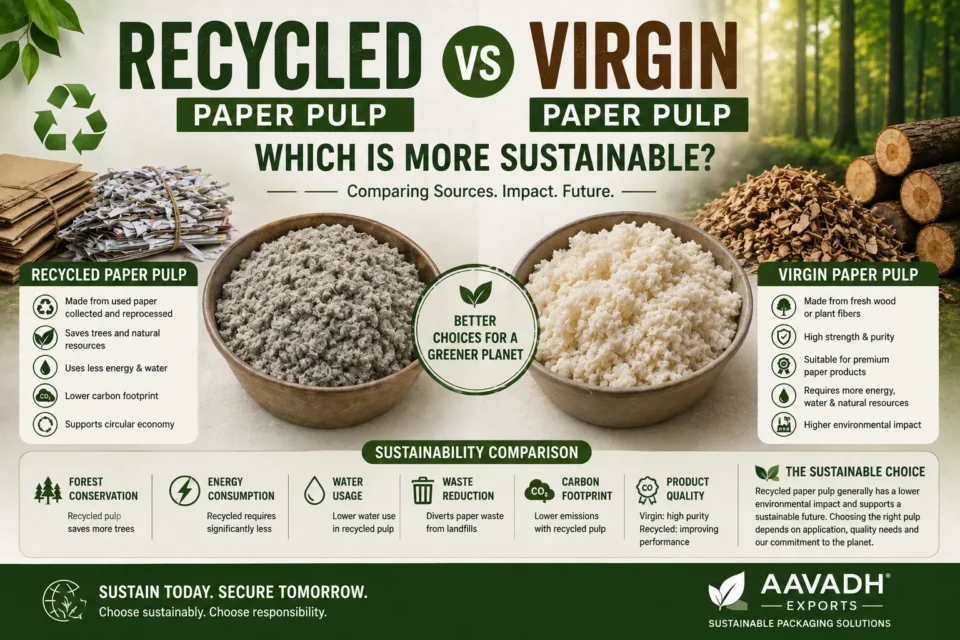
Virgin pulp is made from fresh, never-before-processed plant fibre — typically wood chips from softwood or hardwood trees, though it can also come from bamboo or agricultural sources on a first-use basis. The fibres in virgin pulp are long, strong, and haven’t been through any prior pulping or drying cycle, which gives virgin-pulp products a distinct strength and consistency advantage.
This is why virgin pulp is often chosen for applications that demand high tensile strength or a particularly clean, bright finish — premium packaging, medical-grade products, or items where structural reliability is non-negotiable.
The trade-off is resource intensity. Producing virgin pulp requires harvesting raw plant material, along with significant water and energy use during the pulping and bleaching stages. Even when sourced from responsibly managed, certified plantations, virgin pulp production carries a heavier environmental footprint than working with material that already exists in circulation.
What Is Recycled Paper Pulp?
Recycled pulp is made by re-processing used paper and cardboard — everything from office paper and newspapers to cardboard boxes and packaging offcuts — back into usable fibre slurry. The process involves collecting and sorting waste paper, re-pulping it in water, removing contaminants like ink, staples, and plastic laminates (a stage called de-inking), and then refining the resulting fibre for reuse.
Because the fibres have already been through at least one pulping and drying cycle, they tend to be shorter and slightly weaker than virgin fibres — cellulose fibres lose some structural integrity each time they’re reprocessed. However, for many packaging applications, this modest strength difference is barely noticeable in the finished product, especially when recycled pulp is blended with a portion of virgin or agricultural fibre for reinforcement.
The Sustainability Case, Point by Point
Water and energy use. Producing pulp from recycled paper generally uses significantly less water and energy than producing pulp from raw wood, since much of the fibre breakdown work was already done in the first production cycle.
Land and resource pressure. Virgin pulp, even from certified sustainable forestry, still requires ongoing land use for tree cultivation and harvesting. Recycled pulp draws entirely from existing waste streams, reducing pressure on forest land and virgin biomass.
Waste diversion. Every tonne of paper or cardboard diverted into recycled pulp production is a tonne that doesn’t end up in a landfill, where paper waste can generate methane as it decomposes anaerobically — a considerably more potent greenhouse gas than the CO2 released during composting or recycling.
The fibre-cycle limit. It’s worth being honest about one limitation: paper fibres can only be recycled a finite number of times — generally estimated at five to seven cycles — before they become too short and weak to hold together in a new sheet. This is exactly why recycled pulp production still needs a steady input of some virgin fibre entering the system; recycling extends a fibre’s useful life, but it doesn’t make that fibre reusable forever.
Where Virgin Pulp Still Makes Sense
Despite the strong sustainability case for recycled pulp, virgin fibre isn’t obsolete, and framing this as a simple “recycled good, virgin bad” story oversimplifies things.
- Food-contact and medical packaging sometimes require the cleaner, more controlled fibre profile that virgin pulp offers, particularly where strict hygiene and contamination standards apply.
- High-strength structural applications — heavier trays, industrial cushioning for sharp or heavy items — may need the longer fibre length virgin pulp provides to avoid product failure.
- Fibre replenishment — since recycled fibre degrades with each cycle, the overall paper and pulp system needs a continuous, responsibly sourced supply of virgin fibre to remain sustainable in the long run. Recycled pulp alone can’t sustain the entire industry indefinitely.
The most environmentally responsible approach, in practice, is usually a blend: maximising recycled content wherever product performance allows, while using virgin or agricultural fibre strategically where strength or hygiene genuinely requires it.
What This Means for Packaging Buyers
If you’re sourcing moulded pulp products — paper pulp egg tray manufacturers in particular deal with this trade-off constantly — it’s worth asking your supplier directly about their fibre mix. A transparent manufacturer should be able to tell you:
- What percentage of the pulp is recycled versus virgin fibre
- Where the recycled material is sourced from
- Whether the virgin fibre component (if any) comes from certified or agricultural-residue sources rather than uncontrolled deforestation
This transparency matters increasingly to international buyers, many of whom now require documented sustainability claims as part of procurement, not just marketing language. Working with experienced egg pulp tray manufacturers who can back up their sustainability claims with real sourcing detail is far more valuable than a generic “eco-friendly” label on a product page.
The Bottom Line
Recycled paper pulp is, in most practical measures, the more sustainable choice — lower water and energy use, reduced landfill waste, and less pressure on virgin forest resources. But it isn’t a complete replacement for virgin fibre, both because recycled fibre degrades with each use cycle and because certain applications genuinely need the strength and cleanliness that fresh fibre provides.
For manufacturers and buyers alike, the smartest approach isn’t choosing one exclusively over the other — it’s understanding the trade-offs well enough to use each material where it makes the most sense. That’s the kind of nuanced sourcing decision that separates packaging built to tick a sustainability checkbox from packaging genuinely designed with resource efficiency in mind. If you’re evaluating paper pulp suppliers in India for your next order, asking about their recycled-to-virgin fibre ratio is one of the simplest, most revealing questions you can ask.
How to Read a Sustainability Claim Critically
As “eco-friendly” and “sustainable” become standard marketing language across the packaging industry, it’s worth developing a habit of reading these claims critically rather than taking them at face value. A product labelled simply “made from recycled materials” tells you very little on its own — recycled content could range from 10% to 100%, and the source and cleanliness of that recycled material can vary widely.
Useful questions to ask a supplier include: What percentage of the fibre is recycled, by weight? Is that recycled content pre-consumer (offcuts from manufacturing) or post-consumer (actual used paper collected from households and businesses)? Post-consumer recycled content is generally considered the stronger sustainability claim, since it directly diverts waste that would otherwise reach a landfill. A manufacturer willing to share this level of detail is usually one that has genuinely thought through their sourcing, rather than one applying a green label after the fact.
Frequently Asked Questions
How many times can paper fibre actually be recycled?
Answer: Most estimates put the practical limit at five to seven recycling cycles before the fibres become too short and weak to bond effectively into new paper or moulded products, which is why the system still needs a steady input of fresh fibre.
Is virgin pulp always bad for the environment?
Answer: Not necessarily. Virgin pulp sourced from certified, responsibly managed plantations — including fast-growing agricultural fibres like bamboo or bagasse — can have a relatively low environmental footprint. The concern is specifically with virgin fibre sourced from uncontrolled deforestation or unmanaged natural forests.
Does recycled pulp cost less than virgin pulp?
Answer: Generally yes, since recycled pulp requires less energy and raw material processing, though pricing can shift based on the availability and cost of collecting and sorting clean recyclable paper in a given region.