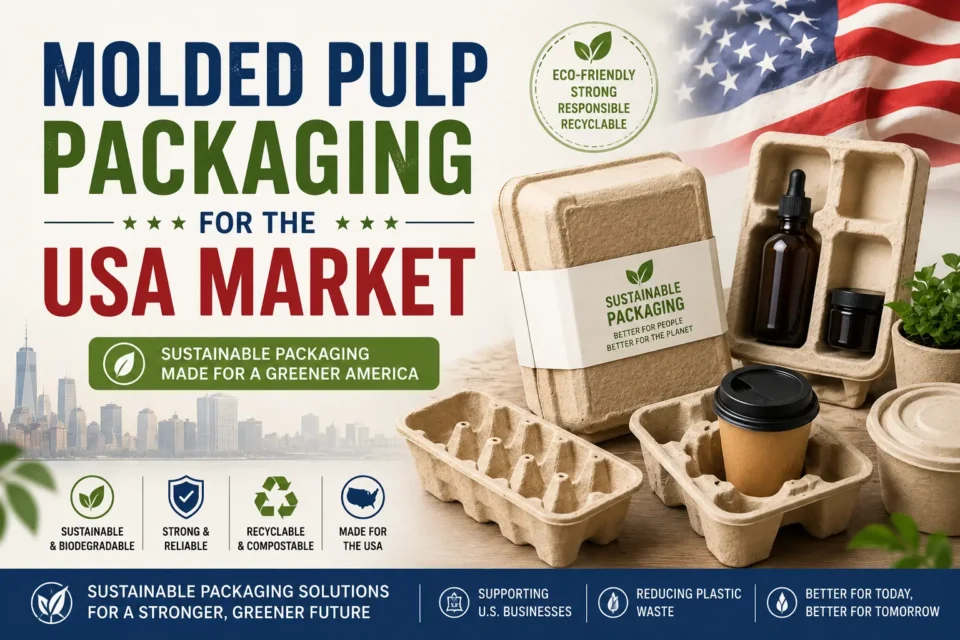
US businesses across food, healthcare, electronics, and retail are increasingly moving away from plastic and polystyrene packaging — driven by a mix of state-level regulations, retailer sustainability requirements, and shifting consumer expectations. Molded pulp packaging has become one of the most practical replacements, but sourcing it — especially at scale — comes with its own set of considerations specific to the US market. This guide walks through what US buyers need to know.
Why US Businesses Are Adopting Molded Pulp Packaging
Regulatory Pressure Is Increasing
A growing number of US states have enacted their own Extended Producer Responsibility (EPR) laws for packaging, creating an expanding, state-by-state patchwork of producer obligations around packaging waste and recyclability. For businesses operating or shipping across multiple states, this means packaging decisions increasingly need to account for a broader compliance landscape rather than a single national standard.
Retailer and Distributor Requirements
Many major US retailers now maintain their own packaging sustainability standards for suppliers, often ahead of what’s legally required — making sustainable packaging a practical business requirement, not just a regulatory one, for businesses selling through large retail channels.
Functional Performance Has Improved
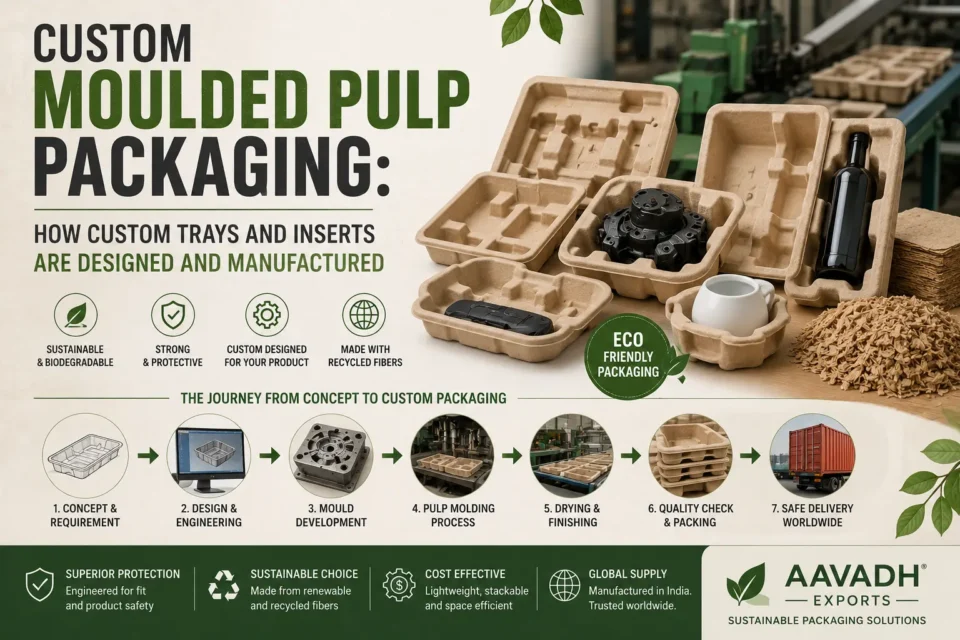
Modern molded pulp packaging has moved well beyond its traditional egg-carton reputation. Custom-molded pulp inserts now provide protective performance comparable to foam for many applications, including electronics — a major factor in its growing adoption across US industries beyond food packaging.
Sourcing Options for US Buyers
Domestic US Suppliers
The US has established domestic molded pulp manufacturers, generally offering shorter shipping times and simpler logistics, though often at a higher per-unit cost, particularly for custom or high-volume orders.
Importing from International Manufacturers
Many US businesses — particularly those needing large bulk volumes or custom mold development — source molded pulp packaging from international manufacturers, with India being one of the most established global sources for cost-competitive, export-grade molded pulp products. This generally offers stronger pricing at scale, though it requires factoring in shipping time, import documentation, and minimum order quantities into your planning.
For a full breakdown of what’s involved in international sourcing, see our guide on how to import molded pulp packaging from India.
What US Buyers Should Look For in a Supplier
- Certifications relevant to your industry — food safety certifications for food-contact packaging, quality management certifications like ISO 9001
- Export documentation experience — a supplier familiar with US import requirements, customs documentation, and shipping logistics reduces friction significantly
- Sample-first process — the ability to approve a physical sample before committing to bulk production
- Custom mold capability — particularly relevant if you need packaging designed around a specific product shape
- Production capacity for recurring bulk orders — important if you’re establishing an ongoing supply relationship rather than a one-time order
Cost Considerations for US Buyers
Pricing for molded pulp packaging depends on several factors: order volume, standard vs custom mold design, material specification, and whether you’re sourcing domestically or internationally. As a general pattern, international sourcing (particularly from established manufacturers in India) tends to offer meaningfully lower per-unit costs at higher volumes, even after factoring in shipping — though total landed cost (including duties, freight, and handling) should always be calculated rather than comparing factory price alone. Our guide on calculating landed cost and understanding import duties and tariffs can help with that calculation.
Common Use Cases Among US Buyers
- Poultry farms and egg distributors — standard and custom egg tray configurations
- Electronics companies — custom protective inserts replacing foam packaging
- Healthcare and medical suppliers — biodegradable packaging trays for disposable medical items
- Footwear and consumer goods brands — sustainable retail packaging inserts
- Food and produce businesses — trays for fruits, vegetables, and other perishable goods
Getting Started
For US businesses exploring molded pulp packaging for the first time, the typical process involves sharing your product specifications (or standard requirement, like egg tray configuration) with a potential supplier, requesting a sample for approval, and confirming payment terms and shipping logistics before committing to bulk production. Working with a supplier experienced in exporting to the US specifically helps streamline this process considerably.
At Aavadh Exports, we manufacture and export molded pulp packaging to businesses across the United States, including egg trays, electronics packaging, medical and healthcare trays, and footwear and consumer goods packaging, along with fully custom molded pulp packaging engineered to your specifications. Get in touch to discuss your requirement.
Frequently Asked Questions
Q.1. Is it cheaper to import molded pulp packaging or source domestically in the US?
Answer: For high-volume orders, importing from established international manufacturers often provides better per-unit pricing, even accounting for shipping and duties, though total landed cost should always be calculated for an accurate comparison.
Q.2. What certifications should I ask a supplier for if I’m sourcing food-contact packaging?
Answer: Look for relevant food safety certifications and quality management standards like ISO 9001, and confirm the specific certification aligns with your target application (direct food contact vs general product packaging).
Q.3. How long does international shipping take for molded pulp packaging orders?
Answer: Transit time varies based on shipping method and origin, but sea freight from major exporting countries like India typically takes several weeks; your supplier should provide a specific estimate based on your order and destination port.
Q.4. Can I get a custom-designed mold for a US-specific product?
Answer: Yes, most established molded pulp manufacturers, including international suppliers, offer custom mold design based on your product’s exact dimensions — typically starting with a prototype sample for approval.
Q.5. Do US packaging regulations require molded pulp specifically?
Answer: Regulations generally focus on reducing plastic waste and improving recyclability rather than mandating a specific material, but molded pulp packaging is one of the most widely adopted compliant alternatives to plastic and polystyrene.