Not all molded pulp packaging is manufactured the same way, and the production method has a direct effect on the final product’s surface finish, dimensional precision, and cost. Understanding the difference between wet-pressed and dry-pressed (also called thermoformed) molded pulp helps buyers ask the right questions when evaluating a supplier or specifying a new product.
The Wet-Pressed Process
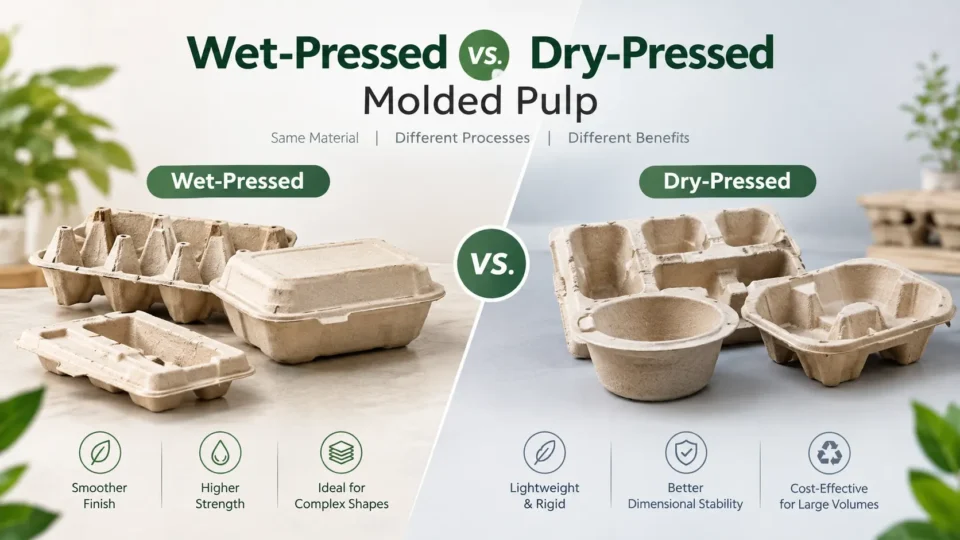
Wet-pressed molded pulp — sometimes called the traditional or standard process — involves forming pulp fiber into shape using molds, then allowing the formed product to air-dry or oven-dry afterward, without applying heated pressing during the forming stage itself. This is the older, more widely used method globally, and it’s well suited to products where a rougher, more visibly fibrous surface texture is acceptable — think standard egg trays, fruit trays, and general protective packaging, where function matters far more than surface finish.
Wet-pressed production tends to be lower cost per unit, since it requires less specialized equipment and energy input than heated pressing. It’s the standard, proven method for the majority of high-volume, cost-sensitive molded pulp applications worldwide, including most of the egg tray and general protective packaging market.
The Dry-Pressed (Thermoformed) Process
Dry-pressed or thermoformed molded pulp uses heated molds to press and simultaneously dry the formed pulp under pressure, producing a denser, smoother, more precisely dimensioned final product. This “cure-in-the-mold” approach yields packaging with a noticeably more refined surface finish — closer in feel and appearance to molded plastic — along with tighter dimensional tolerances than wet-pressed production typically achieves.
This precision comes at a cost: dry-pressed production requires more specialized, capital-intensive equipment and consumes more energy during the heated pressing stage, which is generally reflected in a higher per-unit price compared to wet-pressed equivalents.
Which Process Fits Which Application
Choose wet-pressed molded pulp when: cost efficiency matters more than surface finish, your application is functional rather than retail-facing (bulk egg trays, general industrial cushioning, wholesale fruit trays), and you don’t require extremely tight dimensional tolerances for automated handling equipment.
Choose dry-pressed (thermoformed) molded pulp when: your product will be retail-facing or brand-visible, where a smoother, more premium surface finish matters for consumer perception — for example, premium consumer electronics packaging, cosmetics packaging, or retail-facing food packaging where the tray itself is part of the presentation. Dry-pressed is also generally the better choice when precise dimensional consistency is critical for automated packing or assembly line compatibility, since the heated-press process produces more uniform results across production runs.
How This Affects Custom Mold Development
When commissioning a custom mold, it’s worth deciding early which process is right for your product, since mold design differs somewhat between the two methods. Our guide to custom molded pulp packaging development covers the general process and timeline; discussing your surface finish and tolerance requirements upfront with your manufacturer helps ensure the right production method is selected from the start, avoiding costly mold rework later.
A Practical Example: Electronics vs. Egg Trays
Our article on molded fiber packaging for electronics discusses custom-molded protective inserts for components — these applications generally benefit from dry-pressed production, given the value of dimensional precision for a snug, protective fit around specific device geometry. By contrast, our guide on choosing the right egg tray size and cell count covers a product category where wet-pressed production is typically the standard, cost-effective choice, since surface finish is a non-factor for wholesale egg distribution.
Talking to Your Supplier
If you’re unsure which process best fits your application, the most useful conversation to have with a potential supplier is around your product’s actual functional and presentation requirements — not the production method itself. A knowledgeable manufacturer should be able to recommend wet-pressed or dry-pressed production based on your product’s end use, required tolerances, and target price point, rather than defaulting to whichever method they happen to have more capacity for.
Frequently Asked Questions
Q.1 What is the main difference between wet-pressed and dry-pressed molded pulp?
A: Wet-pressed pulp is formed and then air- or oven-dried afterward, while dry-pressed (thermoformed) pulp is pressed and dried simultaneously using heated molds, producing a denser, smoother, more precisely dimensioned result.
Q.2 Which process is cheaper — wet-pressed or dry-pressed?
A: Wet-pressed is generally cheaper, since it requires less specialized equipment and energy input than heated pressing.
Q.3 Which process gives a smoother, more premium surface finish?
A: Dry-pressed (thermoformed) molded pulp produces a noticeably smoother, more refined finish, closer in feel to molded plastic.
Q.4 Is dry-pressed pulp more durable than wet-pressed pulp?
A: Dry-pressed pulp is denser and offers tighter dimensional tolerances, which can benefit automated handling, but “durability” ultimately depends on the specific application and required strength characteristics.
Q.5 Which process should I choose for retail-facing packaging?
A: Dry-pressed is generally the better choice for retail-facing or brand-visible packaging, where surface finish and precise dimensions matter more than for purely functional, wholesale packaging.
Q.6 Does the production process affect custom mold development time or cost?
A: Yes, mold design differs somewhat between the two methods, so it’s worth deciding which process fits your product before commissioning a custom mold to avoid costly rework later.
Explore Our Manufacturing Capabilities
Aavadh Exports produces both wet-pressed and dry-pressed molded pulp packaging depending on product requirements. Learn more about our production capabilities on our Manufacturing page, or read our companion piece on what a pulping mill is and how it works to understand the raw material stage that precedes both forming processes. Contact us to discuss which process fits your specific product.
References
- Wikipedia — Molded pulp manufacturing processes overview: https://en.wikipedia.org/wiki/Molded_pulp
- TAPPI (Technical Association of the Pulp and Paper Industry) — pulp and paper manufacturing standards: https://www.tappi.org