Eco-friendly has become one of the most overused and least precise terms in packaging marketing. Biodegradable, compostable, and recyclable are often used interchangeably in casual conversation, but they describe genuinely different end-of-life outcomes, with different infrastructure requirements and different regulatory implications. For packaging buyers making sourcing decisions — or making sustainability claims to their own customers — understanding the distinction matters.
Biodegradable: Breaks Down Naturally, But Timeline Varies Widely
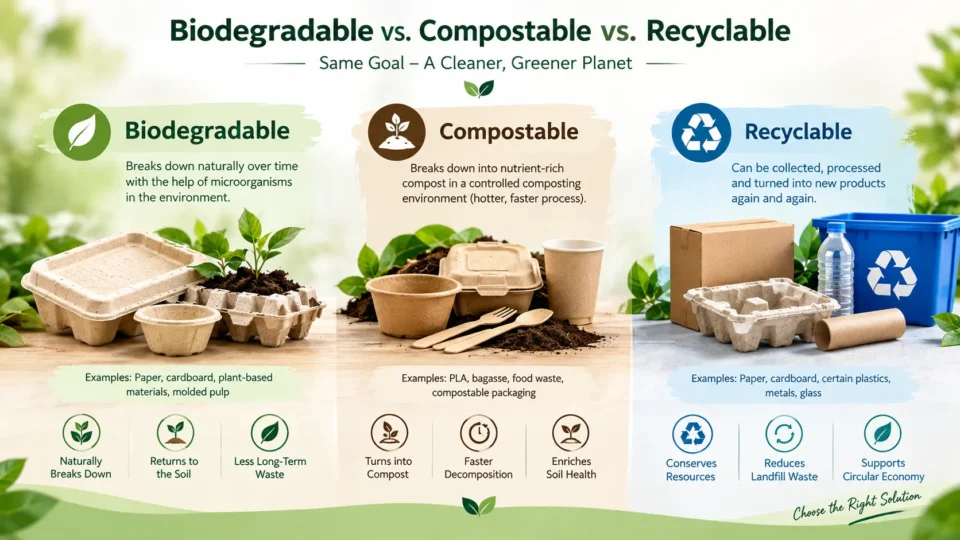
A material is biodegradable if it can be broken down by naturally occurring microorganisms into water, carbon dioxide, and biomass, without requiring specific industrial conditions. The catch is that “biodegradable” alone says nothing about how long this process takes — it could be weeks under ideal conditions, or years in a landfill environment lacking sufficient oxygen and microbial activity. This is why “biodegradable” as a standalone claim, without a specified timeframe or environment, is treated with increasing skepticism by regulators and sustainability-conscious buyers alike, and why more precise terms like “compostable” (discussed below) are generally considered more meaningful claims.
Compostable: A Stricter, More Specific Standard
Compostable materials are a subset of biodegradable materials that meet specific standards for breaking down within a defined timeframe under defined composting conditions — typically requiring specific temperature, moisture, and microbial activity levels found in industrial composting facilities, and in some cases home composting setups. Genuine compostability claims are usually backed by recognized certification standards (such as those maintained by international standards bodies), which specify both the breakdown timeframe and the absence of harmful residues after decomposition. This makes “compostable” a more rigorous and verifiable claim than “biodegradable” alone.
Recyclable: A Different Concept Entirely
Recyclability describes whether a material can be processed and reused as a raw material input for new products, through mechanical or chemical recycling processes — a fundamentally different end-of-life pathway than biodegradation or composting. A material can be recyclable without being biodegradable (many plastics fall into this category, at least in theory) or biodegradable without being conveniently recyclable through standard municipal systems. The practical usefulness of a recyclability claim also depends heavily on whether adequate recycling infrastructure actually exists in the market where the packaging will be disposed of — a recyclable material is only meaningfully “recycled” if collection and processing systems for it actually exist and are used.
Where Molded Pulp Packaging Fits
Molded pulp packaging, made from recycled paper fiber, is unusual in that it genuinely qualifies across multiple categories: it is biodegradable (breaking down naturally through standard microbial processes), generally compostable under standard composting conditions, and recyclable through the same paper recycling streams used for cardboard and other paper products in most developed recycling infrastructure. This multi-category fit is one of the more genuinely differentiated sustainability advantages molded pulp holds compared to many alternative “eco-friendly” packaging materials, which often qualify under only one of these three categories.
Why This Distinction Matters for Regulatory Compliance
As covered in more depth in our article on sustainable packaging trends, packaging regulations across the EU, UK, and a growing number of US states increasingly specify precise, verifiable end-of-life requirements — rather than accepting vague “eco-friendly” marketing claims. Businesses making sustainability claims about their packaging to regulators, retail partners, or end consumers benefit from understanding exactly which category their packaging genuinely qualifies for, since imprecise or unsubstantiated claims increasingly carry regulatory and reputational risk in markets actively cracking down on “greenwashing.”
Practical Guidance for Packaging Buyers
When evaluating packaging materials or making claims about your own product’s packaging, avoid the generic term “eco-friendly” in favor of the specific, accurate claim that applies — biodegradable, compostable, recyclable, or some combination, backed by the relevant standard or certification where available. This is both more defensible from a regulatory standpoint and more genuinely useful to environmentally conscious buyers trying to compare options.
Frequently Asked Questions
Q.1 What’s the actual difference between biodegradable and compostable packaging?
A: Biodegradable means microorganisms can break the material down naturally, but with no defined timeframe. Compostable is a stricter subset requiring breakdown within a defined timeframe under defined composting conditions, usually backed by a recognized certification standard.
Q.2 Is molded pulp packaging recyclable?
A: Yes, molded pulp is recyclable through the same paper recycling streams used for cardboard, in addition to being biodegradable and generally compostable.
Q.3 Can biodegradable packaging still take years to break down in a landfill?
A: Yes — biodegradability alone says nothing about timeframe, and materials that biodegrade quickly under ideal conditions may take much longer in a landfill lacking sufficient oxygen and microbial activity.
Q.4 Does molded pulp packaging qualify as compostable?
A: Generally yes, under standard composting conditions, though buyers making formal compostability claims should confirm against the specific certification standard relevant to their market.
Q.5 Why does the distinction between these terms matter for compliance?
A: Packaging regulations in the EU, UK, and a growing number of US states increasingly require precise, verifiable end-of-life claims rather than vague “eco-friendly” marketing language, and imprecise claims carry regulatory and reputational risk.
Q.6 What should businesses avoid when marketing their packaging as eco-friendly?
A: Avoid generic, unsubstantiated claims like “eco-friendly” alone. Use the specific, accurate term — biodegradable, compostable, or recyclable — backed by a relevant standard or certification where available.
Explore Our Sustainable Packaging Range
Aavadh Exports manufactures molded pulp packaging that is biodegradable, compostable under standard conditions, and recyclable through standard paper waste streams. Visit our Products page to explore our full range, or read our wet-pressed vs. dry-pressed molded pulp guide to understand how our manufacturing process supports these end-of-life properties. Contact us with questions about specific sustainability documentation for your market.
References
- European Committee for Standardization — EN 13432 compostability standard: https://www.cen.eu
- US Federal Trade Commission — Green Guides on environmental marketing claims: https://www.ftc.gov/business-guidance/resources/green-guides
- Ellen MacArthur Foundation — circular economy terminology and definitions: https://www.ellenmacarthurfoundation.org