Custom branded molded pulp packaging can connect product protection with a recognisable presentation. A logo, selected color or considered surface finish may help an insert feel part of the wider brand. However, each treatment must suit the material, the design and the manufacturing method proposed for the project.
Buyers should treat branding options as subjects for supplier discussion rather than standard features available on every tray. Feasibility, reproduction quality and cost can vary. The following guide explains how to prepare a branding brief and assess samples without allowing decoration to compromise fit or function.
Decide what the insert should communicate
Begin with the role of the packaging. An industrial support may need clear identification, while a gift tray may contribute to a customer’s first impression. State whether branding should be highly visible, subtle or limited to a particular area seen during opening.
Review the complete pack before adding marks to every component. The outer box, card or sleeve may already communicate the brand clearly. An insert can contribute through shape and material character as well as a logo. Decide which elements need to be branded and why.
Prepare usable artwork
Provide the correct logo files and a simple guide to acceptable use. Include clear space, preferred size and any elements that must remain consistent. Explain whether a simplified version is permitted if fine details are difficult to reproduce in the proposed process.
Keep essential information separate from decorative detail. Small lettering and complex marks may need particular consideration on a textured surface. Ask the supplier to review artwork before finalizing the design. A screen image of the logo does not show how its features will translate to molded fiber.
Discuss molded logo details
Some molded fiber designs can incorporate branding relief as part of their geometry. Buyers may describe this generally as logo embossing, although the supplier should explain the method proposed for the actual tray. Raised or recessed detail needs to be considered alongside material and tooling constraints.
Ask which logo size, location and detail level are feasible. Review a physical sample instead of approving only a digital rendering. A logo should remain legible without introducing unwanted contact with the product or weakening an essential part of the insert. Functional requirements should guide its position.
Review the effect on tooling and changes
If branding is incorporated into the mold, changing the artwork may affect tooling. Clarify development charges, ownership and modification terms where relevant. Explain whether the same tray will be used for several brands, corporate clients or seasonal campaigns.
For frequent branding changes, another approach may be more practical than changing molded details. Discuss whether the main insert can remain constant while a box, card or sleeve carries the variable message. The most appropriate solution depends on order patterns and the manufacturing options available for the project.
Set realistic color expectations
Natural molded fiber can have visual variation, and color choices should be evaluated with the actual material. If a colored insert is desired, provide a clear reference and explain the acceptable matching range. Do not assume a color shown on a monitor will reproduce identically in production.
Ask about material composition, process feasibility and batch consistency for the proposed option. Compare physical samples under consistent lighting and with the actual products. A muted fiber tone may complement the pack even when it differs from a printed brand color, provided the result is deliberately approved.
Consider surface finish
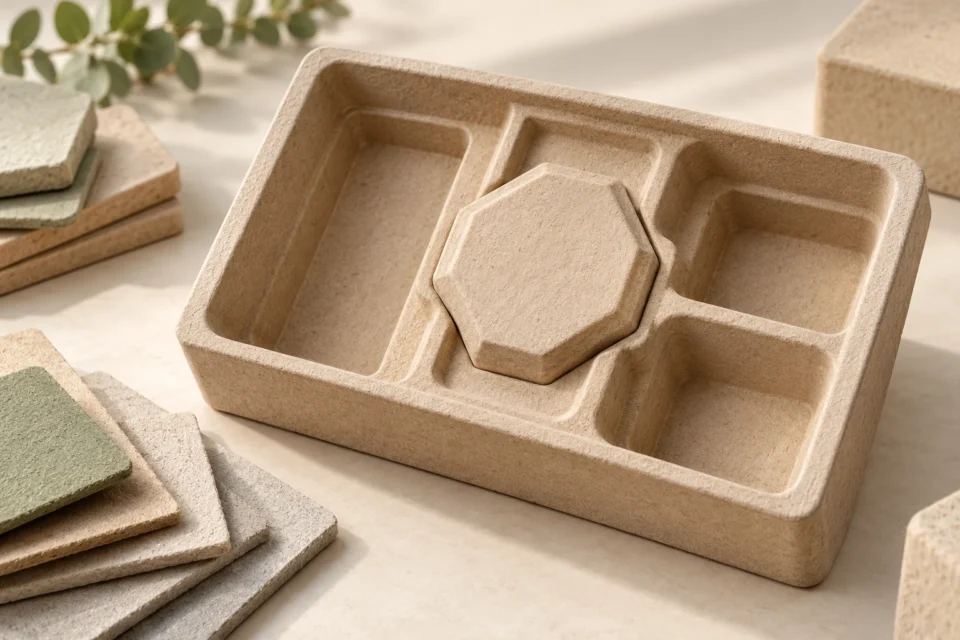
Texture, smoothness and visible fiber character influence both appearance and product contact. Describe the intended look using sample references where possible. A natural protective tray and a refined presentation insert may require different expectations, even if both are called molded pulp packaging.
Confirm the manufacturing approach and available finishes directly with the supplier. Do not assume every process can achieve the same surface or detail. Where the product has scratch-sensitive areas, assess contact after handling trials. Appearance and protection should be evaluated together rather than approved in separate conversations.
Assess printing, labels and sleeves
Direct printing may be an option for some fiber packaging formats and manufacturing arrangements, but its suitability needs confirmation for the proposed insert. Surface texture, geometry and artwork can affect the result. Request a representative sample and clarify which method is being quoted.
Labels, cards or sleeves may offer alternatives when artwork changes frequently or needs finer detail. Consider their placement, attachment and customer handling. They should not cover a functional feature, interfere with retention or detach into the product cavity. Include all decorative components in the final sample configuration.
Protect brand consistency through sample approval
Create an approval record that identifies artwork version, logo position, material appearance and any agreed color range. Keep the approved sample under conditions that make it useful for comparison. Describe acceptable variation rather than relying on an undefined instruction to match perfectly.
Have the brand team inspect visibility and appearance while operations reviews packing. The product team should check any new contact created by decorative features. Bringing these reviews together helps avoid a sample that looks suitable but becomes difficult to use on the packing line.
Check environmental claims for the finished design
Branding treatments form part of the finished packaging specification. If inks, labels, coatings or other additions are used, ask how they affect the intended material description and disposal guidance. The appearance of paper fiber is not enough to support every environmental statement on a marketing page.
Avoid making compostability, recycling or plastic-free claims without considering the complete pack and the relevant market. Ask for documentation where a claim is central to the brand message. Specific statements about verified material composition are more useful than broad promises that the finished design has not established.
Evaluate cost and order planning
Request a quotation that explains which branding charges are one-time and which recur. Artwork review, tooling changes or special production requirements may influence the project. Compare the complete branded pack, including cards or sleeves, rather than focusing only on the insert’s quoted unit price.
Share expected quantities and reorder frequency. If several versions are required, identify the quantity for each instead of presenting one combined number. Confirm approval and production timelines for the exact design, especially where a campaign date depends on receiving branded packaging on schedule.
Keep functional validation in the final approval
Branding approval does not replace protection checks. The completed tray still needs to fit the product and carton, retain accessories and allow suitable loading and removal. If a finish or added component changes the approved configuration, review its practical effect before ordering at scale.
Ask a qualified packaging specialist about relevant validation where transport protection matters. Retain the product and packaging details associated with approval. Future logo, color or material changes should be reviewed through the same change process rather than introduced as purely cosmetic adjustments without assessment.
Discuss branding feasibility with Aavadh Exports
Send product dimensions, artwork, finish references, box details and order quantities through the Aavadh Exports contact page. Ask which branding approaches are feasible for the proposed custom molded fiber design. Logo relief, colors, printing and special finishes require project-specific confirmation; they should not be assumed available for every order.