
Industrial shippers are increasingly evaluating molded pulp pallets and heavy-duty packaging as a lightweight, biodegradable alternative to wood and plastic — particularly for export shipments where wood pallets trigger phytosanitary treatment requirements (ISPM-15) and added cost. This guide covers specifications, benefits, and sourcing considerations for industrial buyers evaluating this packaging category.
What Is Molded Pulp Industrial Packaging?
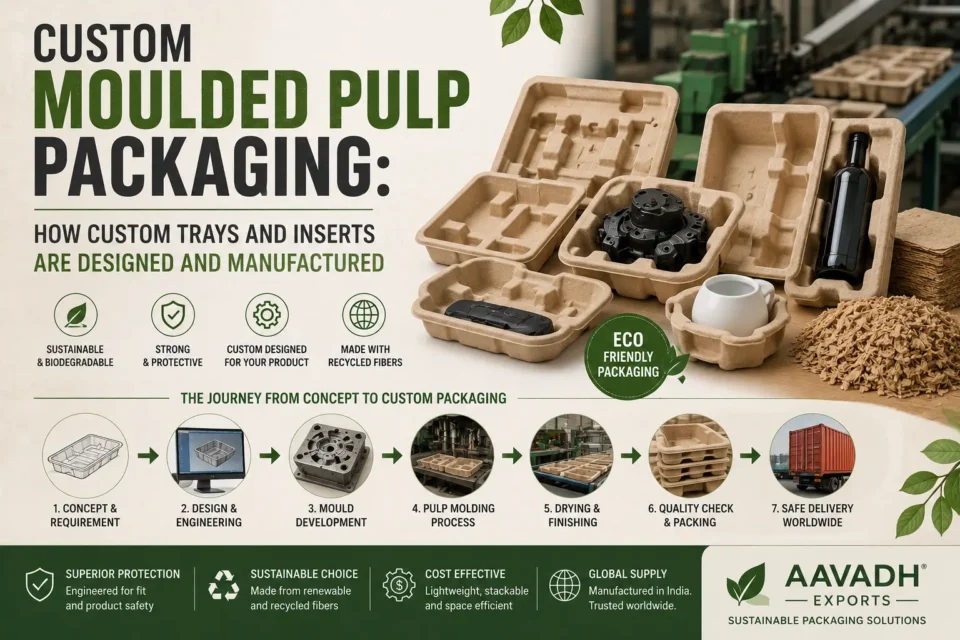
Molded pulp industrial packaging refers to thick-wall molded pulp products — typically 1.5mm to 6mm wall thickness — engineered for structural and cushioning applications rather than retail presentation. This category includes molded pulp pallets, pallet trays, edge protectors, roll cradles, and heavy-item dunnage used to stabilize industrial goods, machinery components, and packaged products during warehousing and freight transport.
Unlike thin-walled transfer-molded products used for egg trays or food service items, thick-wall molded pulp is produced with a rougher, less refined surface finish since structural strength — not visual presentation — is the design priority. This also means thick-wall products can typically use a broader mix of recovered paper grades in the pulp slurry, which can improve cost efficiency for large-volume industrial orders.
Molded Pulp Pallets vs. Wood and Plastic Pallets
| Factor | Molded Pulp Pallet | Wood Pallet | Plastic Pallet |
| Weight | Very light | Heavy | Moderate |
| Export/phytosanitary requirements | None (no ISPM-15 treatment needed) | Requires heat treatment/fumigation certification | None |
| Load capacity | Moderate (commonly cited up to ~300kg for lightweight pulp pallets) | High | High |
| Biodegradable/recyclable | Yes | Yes (but treatment chemicals reduce recyclability) | No |
| Reusability | Single-use to limited reuse | Multi-use | Highly reusable |
| Cost | Competitive for single-use/export applications | Low upfront, but treatment/return logistics add cost | Higher upfront, lower long-term cost per use |
| Storage footprint when empty | Nestable, low storage volume | Bulky, doesn’t nest | Often stackable/nestable depending on design |
This trade-off matters directly for export shipments — our guide on FOB, CIF, and EXW terms explains how pallet and packaging costs factor into overall shipment cost allocation between buyer and seller.
Key Specifications for Industrial Buyers
| Specification | Why It Matters |
| Maximum load capacity | Determines suitability for your product weight class |
| Wall thickness (1.5mm–6mm range) | Thicker walls suit heavier, less delicate goods |
| Thermal resistance range | Relevant for cold-chain or high-temperature storage/transport |
| Compression/stacking rating | Affects safe warehouse stacking height |
| IPPC/phytosanitary compliance status | Confirms no additional treatment needed for cross-border shipment |
| Moisture resistance | Important for ocean freight and humid storage conditions |
| Footprint/dimension standardization | Should match standard pallet racking and container loading dimensions |
Why Industrial Shippers Are Switching to Molded Pulp
- Avoiding ISPM-15 wood treatment requirements. Wood pallets and packaging materials require heat treatment or fumigation and official certification marks for international shipment — molded pulp pallets and dunnage bypass this requirement entirely, simplifying customs clearance and reducing the risk of shipment delays or rejections at the border.
- Weight-driven freight savings. Lighter packaging directly reduces air and ocean freight costs, particularly relevant for exporters shipping high volumes of packaging materials or lightweight industrial components where the packaging’s own weight can otherwise become a significant share of total shipment weight.
- Single-use logistics simplicity. For one-way export shipments where pallet return isn’t economical, molded pulp pallets eliminate the need for pallet-return logistics or pooling programs required with reusable wood/plastic pallets, removing an entire layer of reverse-logistics coordination.
- Sustainability reporting. Industrial shippers with corporate sustainability targets can report reduced use of virgin wood and plastic materials in their packaging supply chain by switching applicable shipments to molded pulp alternatives, supporting ESG reporting requirements increasingly demanded by large customers.
- Pest and contamination control. Because molded pulp is manufactured under controlled conditions, it avoids the pest-contamination risks associated with raw or improperly treated wood pallets, an increasing concern for food-adjacent and pharmaceutical supply chains.
Who Buys This Product
- Industrial equipment and machinery exporters
- Electronics and appliance manufacturers needing dunnage and edge protection
- Chemical and pharmaceutical packaging suppliers (subject to compliance requirements)
- Automotive parts suppliers and logistics providers
- General freight and logistics companies seeking lightweight, compliant pallet alternatives
- Textile and roll-goods manufacturers needing roll cradle packaging
Export Considerations for International Buyers
Because industrial packaging load ratings and compliance requirements vary significantly by application, buyers should clearly specify the product weight, dimensions, and any regulatory requirements (e.g., IPPC marking, UN hazardous packaging approval) before requesting a quote. For general context on manufacturing processes that affect strength and thickness options, see our guide on mechanical vs. chemical pulp and paper pulp manufacturing equipment, which affects production capability for thicker, structural-grade molded pulp products.
For cost planning, review our guides on import duties and tariffs and calculating landed cost to compare total logistics cost against wood or plastic pallet alternatives, factoring in wood treatment fees that molded pulp avoids entirely.
Frequently Asked Questions
Can molded pulp pallets replace wood pallets for all export shipments?
Not universally — load capacity is generally lower than wood or plastic pallets, so molded pulp pallets are best suited to lighter industrial goods and single-use export shipments rather than heavy machinery or repeated-use logistics.
Do molded pulp pallets require any special export documentation?
No ISPM-15 treatment certification is required (unlike wood pallets), which can simplify customs clearance, though standard export documentation still applies.
What load capacity can I expect from a molded pulp pallet?
Load capacity varies by design and wall thickness; some commercial molded pulp pallets are rated for loads up to roughly 300kg, though buyers should confirm exact ratings with their specific supplier and design.
Is molded pulp industrial packaging suitable for automotive parts?
Yes, thick-wall molded pulp is a long-established material for automotive replacement parts packaging, edge protection, and dunnage applications.
Can molded pulp pallets be stored outdoors before use?
Generally no — like most paper-based products, molded pulp pallets should be stored in dry conditions, as prolonged exposure to moisture can weaken structural integrity before use.
Planning Around Load Testing and Application Fit
Industrial buyers evaluating molded pulp for the first time should treat it as a distinct engineering decision rather than a drop-in substitute for whatever pallet or dunnage material they currently use. The right approach is to start with a clear specification of the product being shipped — its weight, fragility, handling frequency, and destination market — and work backward to whether molded pulp’s load capacity and cushioning profile genuinely fit that application, rather than starting with a cost-savings target and trying to force-fit the material afterward.
For buyers unsure whether a given application is a good match, requesting a small trial batch for internal drop and compression testing before committing to a full production order is a reasonable and common step. This is particularly worthwhile for chemical, pharmaceutical, or electronics shipments where a packaging failure carries costs well beyond the packaging itself — a damaged shipment, a regulatory compliance issue, or a safety incident in the case of hazardous materials packaging.
Get a Quote
Looking to source molded pulp pallets or industrial packaging for export or domestic logistics use? Contact Aavadh Exports for load specifications, samples, and volume pricing.