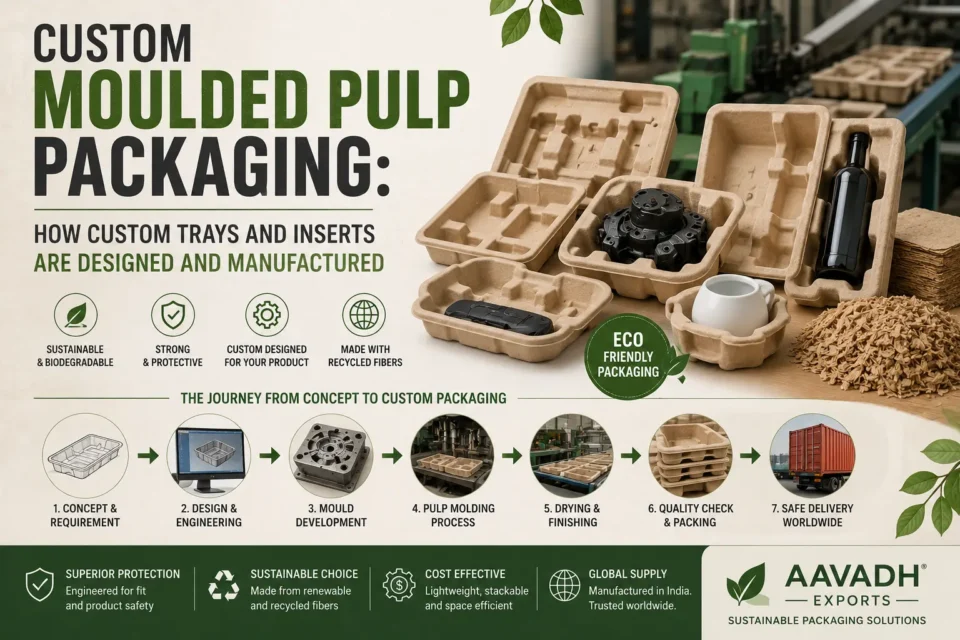
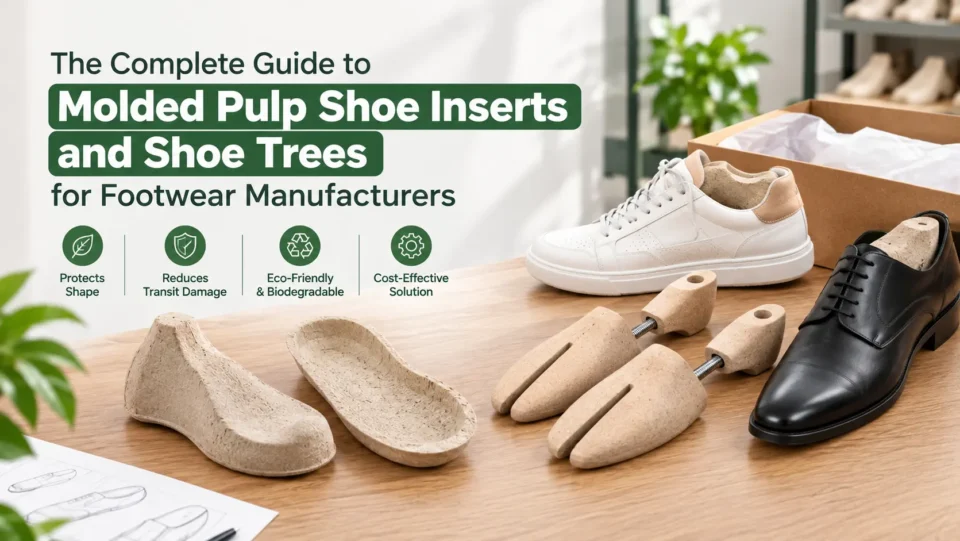
Shoe inserts and shoe trees made from molded pulp serve a purpose that’s often underestimated: they’re not just filler material inside a shoebox, but a functional component that helps preserve shoe shape, absorb moisture, and protect footwear during storage and international shipping. As footwear brands face growing pressure to reduce plastic content across their packaging, molded pulp shoe inserts have become one of the more straightforward, high-impact substitutions available.
What Molded Pulp Shoe Inserts Actually Do
A molded pulp shoe insert, sometimes called a shoe tree or shoe form, is placed inside a shoe during storage and transit to maintain its shape, prevent creasing in the upper material, and absorb residual moisture from manufacturing or the shoe’s lining. This is particularly important for leather and synthetic leather footwear, which can develop permanent creases or deformation if stored flat or compressed for extended periods — a common scenario during long-distance ocean freight shipping, where footwear may sit in a container for weeks.
Why Footwear Brands Are Moving Away From Plastic and Foam Inserts
Historically, many footwear manufacturers used plastic or foam shoe inserts, prized for low cost and moisture resistance. But footwear is one of the retail categories most directly affected by major brands’ public plastic-reduction commitments, and packaging materials — including internal components like shoe inserts, not just the outer shoebox — are increasingly scrutinized as part of these commitments. Molded pulp inserts offer functionally comparable shape retention and moisture absorption while being fully biodegradable and recyclable, making them a natural substitution for brands auditing their full packaging bill of materials.
Moisture Absorption: An Underrated Advantage
One practical advantage molded pulp holds over plastic inserts specifically is moisture absorption. Because pulp is inherently absorbent, it can draw residual moisture out of a shoe’s lining during storage — helpful both for preventing mold or mildew development during long transit times and for delivering a shoe to the end retailer or consumer in better condition. Plastic inserts, by contrast, do not absorb moisture and can in some cases trap it against the shoe’s interior.
Custom Shapes for Different Footwear Categories
Not all shoe inserts are identical. Athletic footwear, dress shoes, boots, and sandals each have different shape and volume requirements for an insert to function effectively. A dress shoe insert typically needs a more structured, close-fitting shape to maintain the toe box and heel structure, while athletic shoe inserts often prioritize covering more internal volume to prevent midsole compression during transit. Manufacturers offering custom mold development, discussed in more detail in our custom molded pulp packaging development guide, can produce inserts shaped specifically for your product line rather than a generic one-size-fits-most format.
Beyond Shoe Inserts: Broader Footwear Packaging Applications
Molded pulp’s role in footwear packaging extends beyond internal inserts. Structural elements like shoebox dividers, heel supports, and protective corner guards for boxed footwear can all be produced in molded fiber, offering the same biodegradability and cost advantages as inserts while addressing different points in the packaging system. For manufacturers auditing their full footwear packaging bill of materials, addressing these components alongside inserts often yields a more complete plastic-reduction outcome than switching inserts alone.
Sourcing Considerations for Footwear Manufacturers
Footwear manufacturing is heavily concentrated in specific global regions — Vietnam, Indonesia, and parts of China among the largest footwear production hubs. Manufacturers sourcing shoe inserts should weigh both unit cost and reliability of bulk, recurring supply, since footwear production runs, unlike some other industries, often operate on tight, seasonally driven timelines tied to fashion retail calendars. A packaging supplier capable of consistent, high-volume, recurring fulfillment is generally more valuable to a footwear manufacturer than one offering only the lowest per-unit price on a single order.
Frequently Asked Questions
Q.1 What is the purpose of a molded pulp shoe insert?
A: Shoe inserts help maintain shoe shape, prevent creasing in the upper material, and absorb residual moisture during storage and long-distance transit.
Q.2 Are molded pulp shoe trees better than plastic ones?
A: Molded pulp offers comparable shape retention and superior moisture absorption compared to plastic, while being fully biodegradable and recyclable — an increasing priority for footwear brands with plastic-reduction commitments.
Q.3 Can shoe inserts be custom molded for different footwear types?
A: Yes, dress shoes, athletic shoes, boots, and sandals each have different shape and volume requirements, and custom mold development can produce inserts shaped specifically for your product line.
Q.4 Do molded pulp inserts really help during long ocean freight shipments?
A: Yes — footwear can sit in a shipping container for weeks, and pulp inserts help prevent permanent creasing or deformation during this extended storage period, particularly for leather and synthetic leather footwear.
Q.5 What other footwear packaging components can be made from molded pulp?
A: Shoebox dividers, heel supports, and protective corner guards can all be produced in molded fiber, extending plastic reduction beyond just the internal insert.
Q.6 Which countries are the main footwear manufacturing hubs sourcing this kind of packaging?
A: Vietnam, Indonesia, and parts of China are among the largest global footwear production hubs, and manufacturers in these regions are increasingly sourcing sustainable packaging components to meet international brand requirements.
Explore Our Footwear & Consumer Goods Packaging
Aavadh Exports manufactures molded pulp shoe inserts, shoe trees, and consumer goods packaging for footwear manufacturers and retail brands worldwide. Visit our Footwear & Consumer Goods Packaging page to learn more, or read our buyer’s guide to importing packaging from India if you’re sourcing internationally for the first time. Contact our team for bulk pricing and custom mold inquiries.
References
- World Footwear Yearbook — global footwear manufacturing and trade data: https://www.worldfootwear.com
- Ellen MacArthur Foundation — circular economy principles for consumer goods packaging: https://www.ellenmacarthurfoundation.org