Paper pulp trays are one of the most versatile products to come out of the molded pulp packaging industry. What started largely as a simple solution for egg packaging has grown into a broad category used across food, healthcare, electronics, and industrial sectors. If you’re considering pulp trays for your business — or just want to understand why they’ve become so widely used — here’s a complete look at their benefits and applications.
What Are Paper Pulp Trays?
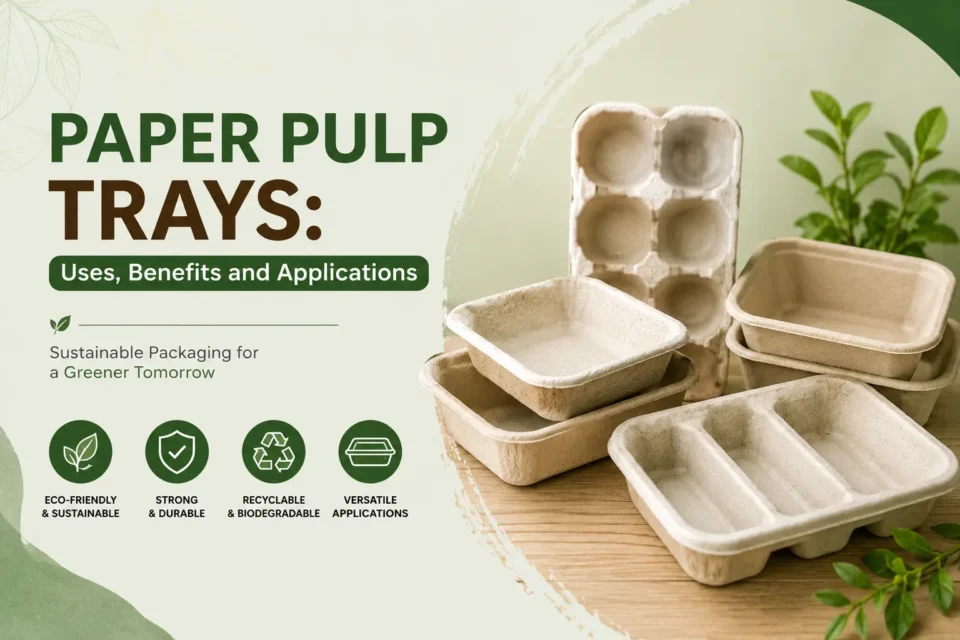
Paper pulp trays are molded packaging products made by shaping wet pulp — typically from recycled paper and cardboard — into flat or contoured tray forms, then pressing and drying them into a rigid final shape. Unlike flat cardboard, trays have depth and structure, allowing them to hold, separate, or cushion items during storage and transport.
They range from simple flat trays with no compartments to precisely engineered trays with multiple cavities, ridges, or contours designed for a specific product.
Key Benefits of Paper Pulp Trays
1. Biodegradable and Recyclable
Since they’re made primarily from recycled paper fiber, pulp trays are both recyclable and biodegradable — a major advantage over plastic and polystyrene trays, especially as more markets introduce plastic packaging regulations.
2. Lightweight Yet Structurally Sound
Pulp trays are significantly lighter than plastic or wooden alternatives while still providing meaningful structural protection — which also helps reduce shipping weight and associated costs for businesses shipping in bulk.
3. Cost-Effective at Scale
For high-volume applications like egg packaging, pulp trays are typically more cost-effective than plastic alternatives, particularly when sourced from manufacturers using recycled input material.
4. Customizable Design
Trays can be engineered with specific cavity shapes, depths, and compartment counts based on the product being packaged — from standard 30-cell egg trays to fully custom trays designed around unique product dimensions.
5. Breathability
Unlike sealed plastic packaging, pulp trays allow airflow, which is particularly valuable for perishable items like fruit and eggs, helping reduce moisture buildup and extend freshness during transport.
6. Brand-Friendly Sustainability Signal
For consumer-facing products, pulp trays visibly communicate a sustainability commitment — something increasingly valued by environmentally conscious buyers and required by some retailers’ packaging policies.
Common Applications of Paper Pulp Trays
Food and Agriculture
The most familiar use case: egg trays and fruit/vegetable trays. These trays protect delicate produce during handling and transport while allowing enough airflow to reduce spoilage — a functional advantage flat plastic packaging often can’t match.
Healthcare and Medical
Molded pulp trays are used to package medical instruments and disposable healthcare items, where clean, single-use, and easily disposable packaging matters. Their biodegradability is an increasingly important factor for healthcare facilities managing sustainable waste practices.
Electronics
Precision-molded pulp trays cushion electronic components during shipping, replacing polystyrene foam inserts. These trays are typically thermoformed for a smoother, tighter-fitting finish that holds components securely in place.
Industrial and Protective Packaging
Heavier or more delicate industrial components are increasingly packaged using custom pulp trays designed to distribute weight evenly and prevent movement during transit — an application area that continues to grow as manufacturers move away from foam and plastic.
Consumer Goods and Retail
From cosmetics to small consumer electronics, pulp trays are used in retail packaging both for protection and for the premium, eco-conscious unboxing experience they offer compared to plastic trays.
Standard vs Custom Pulp Trays
Most manufacturers offer both standard, off-the-shelf tray designs (like the common 30-cell egg tray) and fully custom trays engineered to a specific product’s dimensions. Standard trays are more cost-effective and readily available, while custom trays require mold development but provide precise, product-specific protection — an important distinction to raise with your supplier depending on your use case.
What to Look for When Sourcing Pulp Trays
If you’re evaluating suppliers for paper pulp trays, a few things are worth checking:
- Material composition — recycled content percentage and fiber quality
- Structural consistency — uniform thickness and shape across units, especially for bulk orders
- Customization capability — whether the manufacturer can design molds for your specific product
- Certifications — quality and food-safety certifications relevant to your application
- Production capacity and lead time — particularly important for export or large-volume orders
Sourcing Paper Pulp Trays
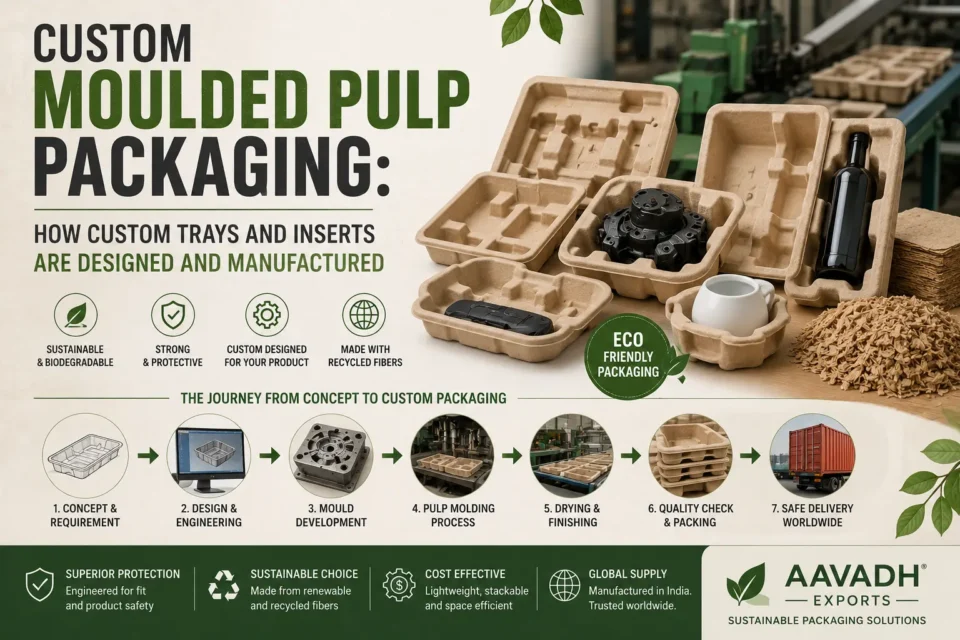
Understanding trays as a category makes it easier to specify exactly what you need when reaching out to suppliers — whether that’s standard egg trays, custom electronics inserts, or medical packaging trays. For a deeper look at how these products are actually manufactured, see our guide on how molded pulp packaging is made.
At Aavadh Exports, we manufacture and export paper pulp trays across multiple applications — egg trays for poultry and food businesses, electronics packaging for protective cushioning, medical and healthcare trays, and footwear and consumer goods packaging — along with fully custom molded pulp packaging designed to your specifications.
Frequently Asked Questions
Are paper pulp trays strong enough for heavy items?
Answer: With appropriate density and mold design, pulp trays can support moderately heavy items, though extremely heavy industrial loads may require reinforced or alternative packaging solutions — a good manufacturer can advise based on your specific product.
Can paper pulp trays be customized for irregular-shaped products?
Answer: Yes, custom mold design allows trays to be engineered around almost any product shape, though this typically requires a sample and approval process before bulk production.
Are pulp trays food-safe?
Answer: Many pulp trays are suitable for food contact, particularly for produce and eggs, though direct food-contact applications should be confirmed against relevant food safety certifications for your target market.
How do pulp trays compare to plastic trays in cost?
Answer: For high-volume standard applications like egg packaging, pulp trays are often cost-competitive or cheaper than plastic, especially when made from recycled material; custom-designed trays vary more in cost depending on mold complexity.
Can pulp trays be recycled after use?
Answer: Yes, paper pulp trays are recyclable and, in most cases, biodegradable and compostable, making them a strong alternative to plastic and polystyrene trays.