Across the US, businesses in food, healthcare, electronics, and retail are quietly replacing plastic and foam packaging with molded pulp alternatives — not as a trend experiment, but as a genuine operational shift driven by regulation, retailer requirements, and cost considerations. Here’s a closer look at how different sectors are actually using this material, and what’s driving the shift.
Poultry and Egg Producers
This is the most established use case, and it remains the backbone of molded pulp packaging demand in the US. Poultry farms and egg distributors rely on molded pulp trays specifically because they reduce breakage during transport, allow natural airflow to maintain freshness, and offer reliable cost efficiency at high volumes — advantages that have made pulp the default packaging material for eggs for decades, well before sustainability became a mainstream business priority.
Electronics and Consumer Tech Companies
One of the more significant shifts in recent years has been the electronics industry’s move away from expanded polystyrene (EPS) foam toward custom-molded pulp inserts. Companies shipping everything from small consumer electronics to larger components have adopted precision-molded pulp packaging that cradles products securely during transit, offering comparable shock absorption to foam while being fully recyclable. This shift has been driven both by sustainability commitments and by growing consumer expectation for plastic-free unboxing experiences, particularly among premium and direct-to-consumer electronics brands.
Healthcare and Medical Supply Companies
Healthcare providers and medical supply companies are increasingly using molded pulp trays for packaging disposable medical instruments and healthcare items. Beyond general sustainability goals, this shift is partly driven by healthcare facilities’ own waste management priorities — biodegradable packaging simplifies disposal processes compared to mixed-material plastic packaging, which often complicates medical waste sorting.
Footwear and Apparel Brands
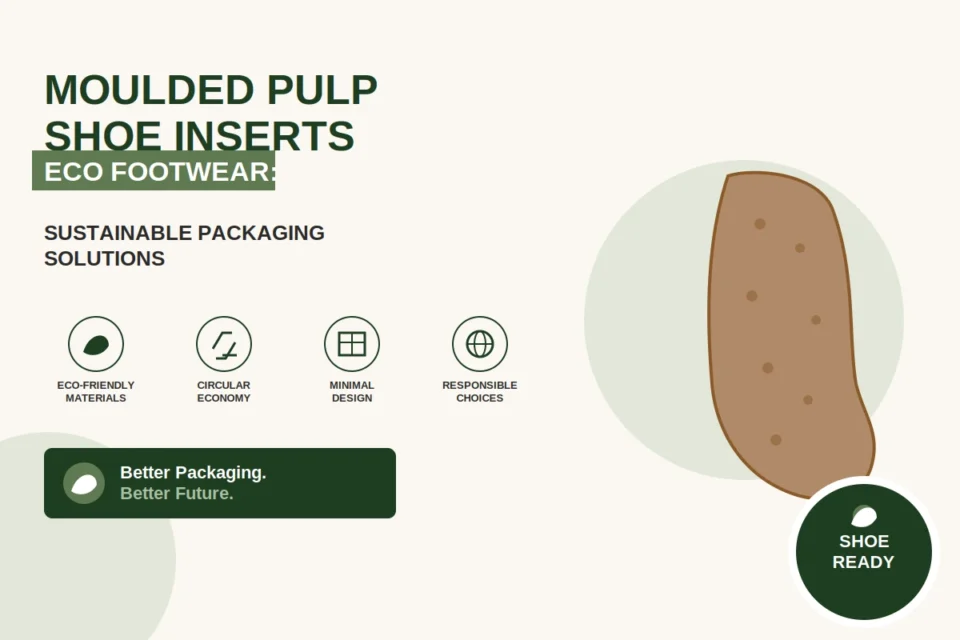
Shoe brands have widely adopted molded pulp inserts to replace tissue paper and plastic shape-retention inserts inside shoe boxes. Beyond the sustainability angle, molded pulp offers better structural shape retention than tissue paper, helping shoes maintain their form during shipping and warehouse storage — a functional benefit alongside the environmental one.
Food Service and Produce Businesses
Beyond eggs, US food service companies and produce distributors use molded pulp trays and food containers as direct replacements for polystyrene food service packaging — an area facing particularly strong regulatory pressure, with several US cities and states restricting polystyrene food packaging specifically.
Retail and E-Commerce Brands
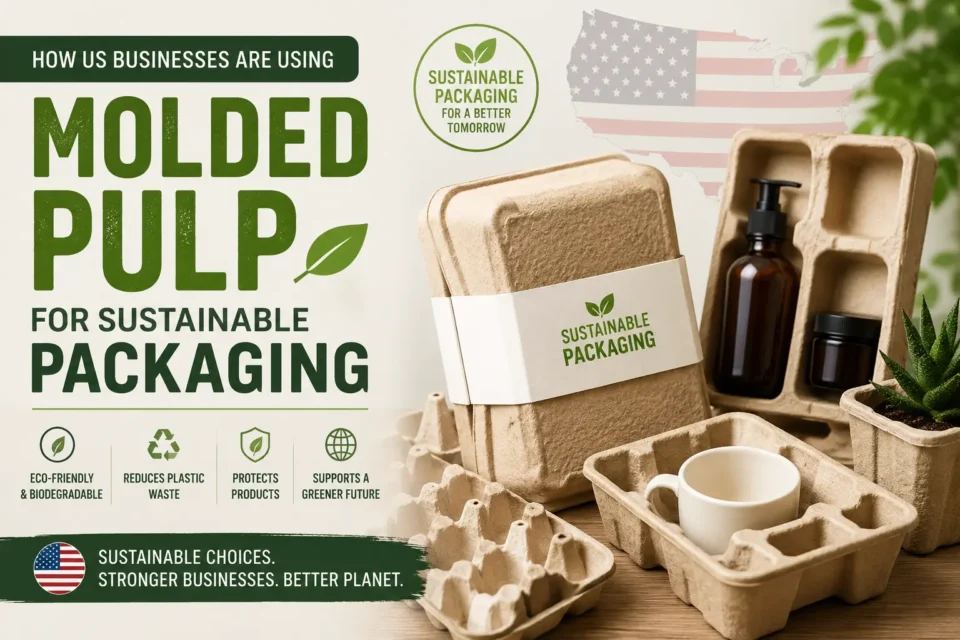
E-commerce and retail brands across categories — cosmetics, small consumer goods, specialty products — are increasingly using molded pulp packaging inserts both for product protection during shipping and as a visible sustainability signal in their unboxing experience, which has become an important brand touchpoint for direct-to-consumer companies.
What’s Driving This Shift Across Industries
A few consistent factors show up across all these sectors:
State-Level Regulatory Pressure
An expanding number of US states have introduced their own Extended Producer Responsibility (EPR) laws and plastic packaging restrictions, creating growing compliance pressure for businesses operating or shipping nationally.
Retailer Sustainability Requirements
Major US retailers increasingly hold suppliers to their own packaging sustainability standards, pushing adoption further down the supply chain, even for businesses not directly subject to state regulations.
Consumer Expectations
Sustainability-conscious consumers, particularly in categories like electronics, cosmetics, and direct-to-consumer retail, increasingly view packaging as part of the overall brand experience — making eco-friendly packaging a competitive consideration, not just a compliance one.
Genuine Functional Performance
Perhaps most importantly, molded pulp packaging has proven itself functionally reliable across demanding applications like electronics protection — removing what was once a legitimate performance concern for businesses considering the switch from foam and plastic.
What This Means If You’re Considering the Switch
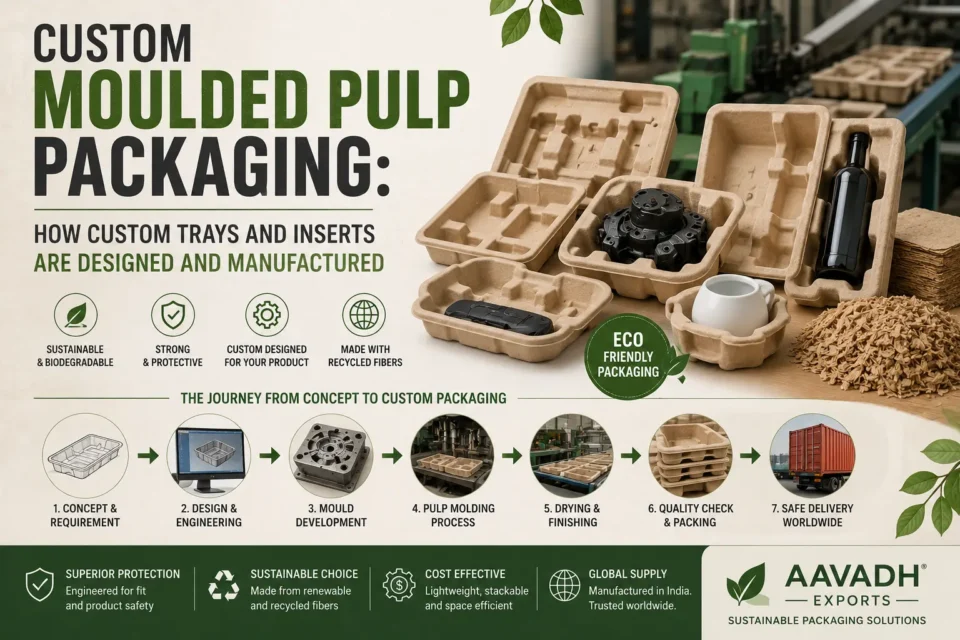
If your business is evaluating molded pulp packaging, it’s worth looking at how comparable companies in your industry have approached the transition — whether that’s egg producers optimizing for breakage reduction, electronics brands engineering custom protective inserts, or retail brands using pulp packaging as part of a broader sustainability and brand strategy. The right approach typically starts with identifying your specific protection requirements and whether standard products will work, or whether custom mold design is needed for your particular product.
For a closer look at practical sourcing considerations specific to the US market — including supplier evaluation, costs, and import logistics — see our companion guide on molded pulp packaging for the USA market.
At Aavadh Exports, we support US businesses across these exact use cases — manufacturing and exporting egg trays, electronics packaging, medical and healthcare trays, and footwear and consumer goods packaging, along with custom molded pulp packaging designed around your specific product and sustainability goals.
Frequently Asked Questions
Q.1. Which US industries use molded pulp packaging the most?
Answer: Poultry and egg production remains the largest and most established user, followed by growing adoption in electronics, healthcare, footwear, food service, and e-commerce retail.
Q.2. Why are electronics companies switching from foam to molded pulp?
Answer: Custom-molded pulp inserts now offer protective performance comparable to foam for many applications, while being fully recyclable — aligning with both sustainability goals and consumer expectations for plastic-free packaging.
Q.3. Is molded pulp packaging required by US law?
Answer: Regulations generally target plastic reduction and recyclability broadly rather than mandating molded pulp specifically, but it’s one of the most widely adopted materials businesses use to meet these requirements.
Q.4. Do small US businesses use molded pulp packaging, or just large companies?
Answer: Both — while large retailers and manufacturers have driven much of the initial adoption, smaller and direct-to-consumer brands increasingly use molded pulp packaging as well, particularly for its brand and sustainability positioning benefits.
Q.5. Can molded pulp packaging be customized for a specific US brand’s product?
Answer: Yes — manufacturers can design custom molds based on a brand’s exact product dimensions and protection requirements, typically starting with a sample for approval before bulk production.