Expanded polystyrene (EPS) foam has been the default protective packaging material for electronics and sensitive components for decades, prized for its light weight and shock-absorbing properties. But EPS is difficult and expensive to recycle in most municipal systems, is being restricted or banned outright in a growing number of jurisdictions, and increasingly conflicts with the sustainability commitments electronics brands are making publicly. Molded fiber packaging has emerged as the leading replacement — and for good reason.
Why Electronics Manufacturers Are Reconsidering Foam
EPS foam packaging faces a two-sided pressure. On the regulatory side, several countries and US states have introduced restrictions on EPS foam products specifically, given how poorly it performs in standard recycling infrastructure and how persistently it accumulates in the environment when improperly disposed of. On the commercial side, electronics brands — particularly those selling directly to environmentally conscious retail and consumer markets — face growing pressure from retailers’ own sustainability scorecards and from consumers who now routinely document unboxing experiences on social media, where foam packaging increasingly reads as outdated rather than premium.
How Molded Fiber Compares Functionally
The core question for any electronics manufacturer considering a switch is whether molded fiber can actually protect components as well as foam. The honest answer is: for most applications, yes, provided the mold is engineered correctly for the specific product.
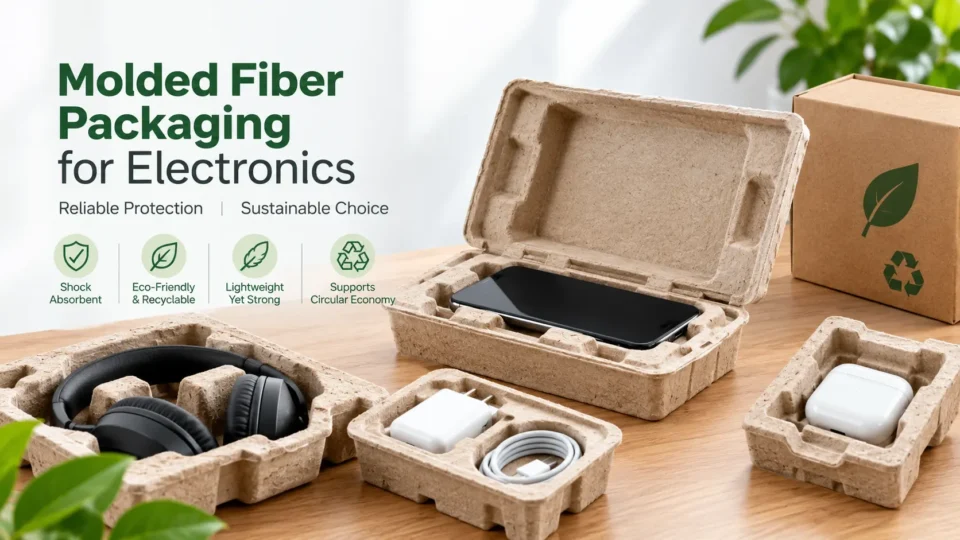
Shock absorption. Molded fiber’s fibrous structure absorbs impact energy effectively, particularly for vertical drop scenarios common in shipping and handling. Custom-molded fiber inserts, shaped precisely to the contours of a specific device, distribute impact force in much the same way a custom foam insert does — the key variable is mold precision, not the base material.
Rigidity and structural support. Molded fiber offers strong compressive strength, meaning it resists crushing under stacked weight — an important property for palletized shipping of electronics components. In some cases, molded fiber’s greater rigidity compared to soft foam can be an advantage, providing more stable positioning of components during transit.
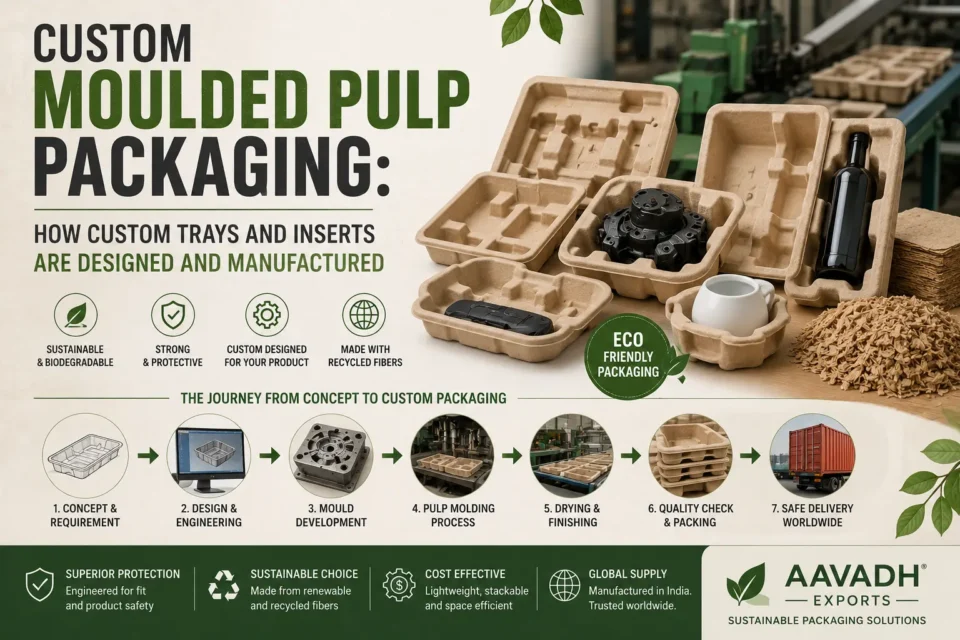
Custom-fit design. Just as with foam, molded fiber inserts can be custom-molded to match the exact geometry of a specific device or component, cradling it securely rather than relying on generic padding. This custom-mold approach is standard practice for both materials and doesn’t represent a functional trade-off — see our guide on custom molded pulp packaging development for how this process works for electronics-specific applications.
Weight. Molded fiber is comparable to or lighter than EPS foam for equivalent structural performance, meaning the switch typically doesn’t add meaningful freight cost.
Where the Comparison Gets More Nuanced
Foam retains a genuine advantage in a few specific scenarios: extremely delicate, high-value components requiring maximum cushioning with minimal material thickness, and applications involving significant moisture exposure where foam’s inherent water resistance outperforms untreated fiber. However, modern molded fiber manufacturing — including hot-press finishing techniques discussed in our article on wet-pressed vs. dry-pressed molded pulp — has substantially closed this moisture-resistance gap for most standard shipping and storage conditions.
The Sustainability Case, Beyond Regulation
Even setting aside regulatory pressure, molded fiber packaging offers electronics manufacturers a straightforward sustainability upgrade: it is made from recycled paper fiber, is biodegradable, and is recyclable through standard paper recycling streams in most markets — unlike EPS foam, which requires specialized recycling facilities largely unavailable to end consumers. For electronics brands managing their own environmental, social, and governance (ESG) reporting, packaging material is often one of the more visible and easily improved components of a broader sustainability strategy, a theme we explore further in our post on sustainable packaging trends.
Making the Transition
For electronics manufacturers considering a switch from foam to molded fiber, the transition typically starts with a custom mold development process for your specific product line, followed by a trial production run and drop-test validation against your existing internal shipping standards. Because mold tooling is product-specific, this is not a same-day switch, but for companies planning packaging redesigns or new product launches, building in molded fiber from the start avoids the cost of retooling later.
Frequently Asked Questions
Q.1 Can molded fiber packaging protect electronics as well as EPS foam?
A: For most applications, yes — provided the mold is precision-engineered to the specific product’s contours. Custom-molded fiber inserts distribute impact force similarly to custom foam inserts.
Q.2 Is molded fiber packaging heavier than EPS foam?
A: No, molded fiber is generally comparable to or lighter than EPS foam for equivalent structural performance, so switching typically doesn’t add meaningful freight cost.
Q.3 Does molded fiber packaging perform as well as foam in moisture-prone environments?
A: Foam retains a moisture-resistance edge in high-humidity or wet-exposure scenarios, though modern hot-press finished molded fiber has substantially closed this gap for standard shipping and storage conditions.
Q.4 How long does it take to develop custom electronics packaging inserts?
A: Custom mold development for electronics-specific packaging is product-specific and requires tooling lead time, followed by a trial run and drop-test validation before full production.
Q.5 Is EPS foam banned everywhere?
A: No, but a growing number of countries and US states have introduced restrictions on EPS foam products specifically, and this regulatory trend is expanding rather than reversing.
Q.6 Can molded fiber electronics packaging be recycled through normal paper recycling?
A: Yes, molded fiber packaging is recyclable through standard paper recycling streams in most markets, unlike EPS foam, which requires specialized recycling facilities.
Explore Our Industrial & Electronics Packaging
Aavadh Exports manufactures custom-molded protective fiber packaging for electronics, components, and industrial goods. Visit our Industrial & Electronics Packaging page to learn more, or read our custom mold development guide to understand the process and typical timelines. Contact our team to discuss your specific component or product.
References
- US Environmental Protection Agency — Facts and Figures about Materials, Waste and Recycling (polystyrene): https://www.epa.gov/facts-and-figures-about-materials-waste-and-recycling
- Ellen MacArthur Foundation — Circular economy and packaging design principles: https://www.ellenmacarthurfoundation.org