It’s one of those facts everyone half-remembers from a school science lesson: paper comes from trees. But ask someone to explain exactly how a solid, leafy tree trunk turns into a smooth sheet of paper — or a moulded egg tray — and most people draw a blank. The honest, slightly more interesting answer is that paper isn’t really made “from trees” directly at all. It’s made from pulp, a fibrous, water-based material that trees (and increasingly, other plants) are broken down into first.
Understanding this distinction matters more than it might seem, especially if you’re evaluating packaging suppliers, sourcing raw materials, or just genuinely curious about the products you use every day. So let’s break it down properly.
What Exactly Is Paper Pulp?
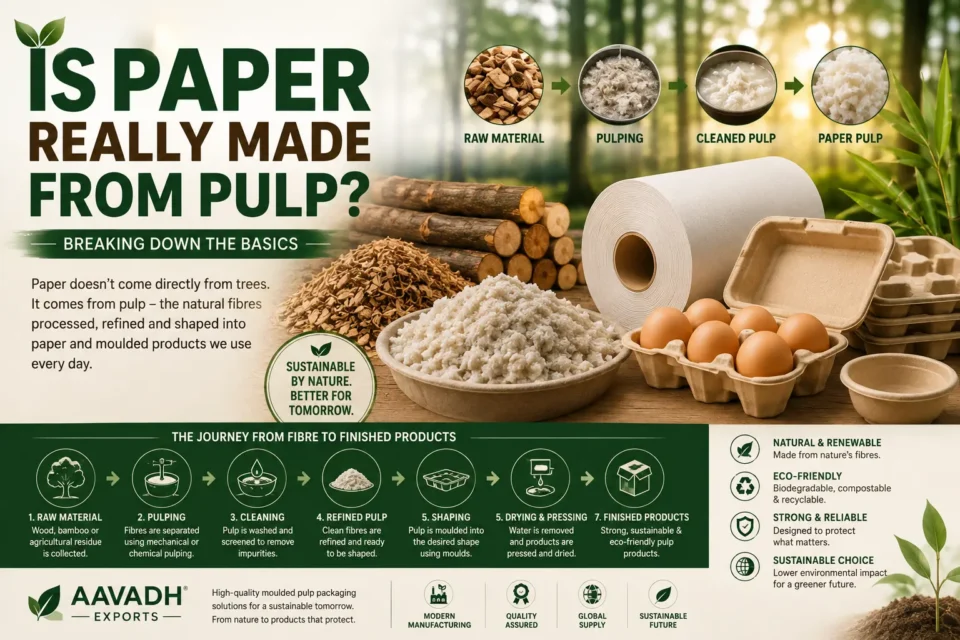
Paper pulp is a mixture of cellulose fibres suspended in water, created by mechanically or chemically breaking down wood, bamboo, agricultural residue, or recycled paper into their individual fibre strands. Think of it less as a solid substance and more as a slurry — similar in consistency to thick porridge — that can later be pressed, dried, and shaped into whatever final form is needed.
Every plant-based fibre used to make paper contains cellulose, a natural polymer that gives plant cell walls their structure and strength. Pulping is essentially the process of separating that cellulose from the other components of the plant — mainly lignin, the natural “glue” that holds plant cells together — so the fibres can be re-formed into a new material: paper, cardboard, or moulded packaging.
How Wood (or Other Plants) Becomes Pulp
There are two broad approaches to pulping, and the method chosen affects the final pulp’s strength, colour, and cost.
Mechanical pulping grinds wood chips or fibre material down using mechanical force, physically tearing the fibres apart. This method is faster and cheaper, and it retains most of the original plant material — including the lignin — which gives mechanical pulp a slightly rougher texture and a tendency to yellow over time (this is why cheap newsprint discolours quickly).
Chemical pulping, most commonly using the kraft process, cooks wood chips in a chemical solution that dissolves away the lignin, leaving behind cleaner, stronger cellulose fibres. This produces higher-quality, more durable pulp, but requires more energy, chemicals, and processing time. Most premium packaging pulp — including the pulp used in moulded fibre trays — leans toward this cleaner chemical or semi-chemical process, or uses recycled paper stock that has already been through pulping once.
There’s also a third and increasingly important source: recycled pulp, made by re-pulping used paper and cardboard. Recycled pulp requires de-inking and cleaning but uses significantly less energy and water than producing pulp from raw wood, which is part of why so many manufacturers today lean heavily on recycled fibre.
From Pulp Slurry to Finished Product
Once you have pulp — whether from virgin wood, bamboo, agricultural residue, or recycled paper — the next step depends entirely on what you’re making.
For flat paper and cardboard, the pulp slurry is spread thinly across a moving mesh screen, drained of most of its water, pressed, and dried into continuous rolls.
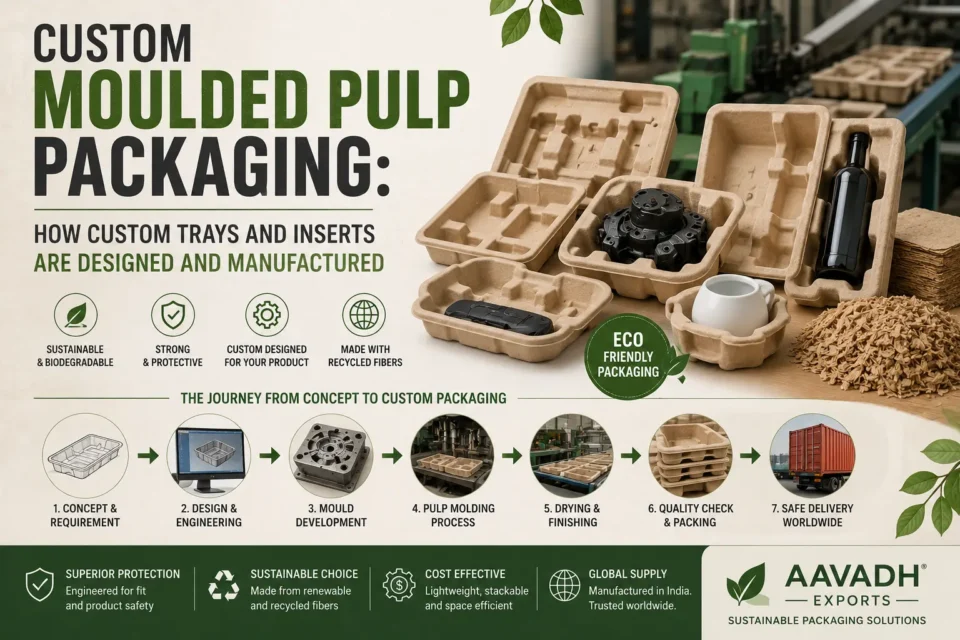
For moulded pulp products — egg trays, fruit trays, protective packaging inserts — the process is different. The pulp slurry is drawn onto a shaped mould (essentially a metal screen in the exact form of the final product), where suction pulls water through the mesh and deposits a layer of fibre in that shape. The moulded piece is then pressed and dried, resulting in a rigid, three-dimensional product rather than a flat sheet.
This is exactly the process behind the moulded paper pulp products you’ll find protecting eggs, fruit, electronics, and medical supplies during shipping — the same basic pulp, shaped for a completely different purpose than a sheet of writing paper.
Why This Distinction Matters for Buyers
If you’re sourcing packaging or paper-based products, understanding that “pulp” and “paper” aren’t quite the same thing helps you ask sharper questions:
- What fibre source is the pulp made from? Virgin wood, recycled paper, bamboo, or agricultural residue each affect strength, cost, and sustainability differently.
- What pulping method was used? This affects durability, colour, and whether the product needs additional bleaching or treatment.
- Is the pulp food-safe? For applications like egg trays or food packaging, the pulping and finishing process matters for compliance with food-contact regulations.
Reputable paper pulp suppliers will be able to answer these questions clearly, rather than treating “pulp” as a vague, interchangeable term. This kind of transparency is often a good early signal of how seriously a manufacturer takes quality control across the rest of their production process.
A Quick Myth-Check
A few common misconceptions worth clearing up:
- “Pulp only comes from trees.” Not anymore — a huge share of modern pulp comes from bamboo, bagasse, wheat straw, and recycled paper, particularly in regions with limited forest resources.
- “All pulp looks and behaves the same.” It doesn’t. Fibre length, source, and processing method all affect strength, texture, and appearance.
- “Recycled pulp is lower quality.” Not necessarily — well-processed recycled pulp can perform comparably to virgin fibre for many packaging applications, and it comes with a much smaller environmental footprint.
The Bigger Picture
Understanding that paper is made from pulp — and that pulp itself can come from a wide range of sources beyond traditional forestry — opens up a more informed conversation about sustainability, sourcing, and product quality. It’s also the foundation for understanding why the packaging industry has been able to shift so dramatically toward eco-friendly, plastic-alternative products in recent years: the fibre technology has been quietly evolving for decades, and manufacturers are simply applying it to new shapes and new problems.
Whether you’re buying egg trays, exploring sustainable packaging for your product line, or just satisfying genuine curiosity about how everyday materials are made, knowing the real journey from raw fibre to finished pulp product gives you a much clearer picture than the simple childhood version of “paper comes from trees.” It comes from pulp — and pulp, increasingly, comes from wherever the most sustainable, reliable fibre source can be found. Working with established paper pulp manufacturers in India who understand this full journey, from raw fibre to finished export-ready product, is often the difference between packaging that just looks sustainable and packaging that actually performs.
Why Pulp Quality Varies So Much Between Suppliers
If pulp is simply “cellulose fibre suspended in water,” it might seem like all pulp should behave more or less the same way. In practice, quality varies enormously between suppliers, and the reasons come down to a handful of controllable factors: how carefully the raw material was sorted and cleaned before pulping, how consistently the pulping chemicals or mechanical settings were controlled, and how thoroughly contaminants were screened out before the pulp moved on to shaping.
A manufacturer cutting corners at any of these stages can produce pulp that looks similar on the surface but performs poorly in the finished product — trays that crumble under moderate weight, paper that tears unevenly, or products with inconsistent thickness. This is part of why experienced buyers don’t just ask “is it pulp-based” but dig into the specifics of how that pulp was produced and tested before committing to a large order.
Frequently Asked Questions
Is pulp the same thing as paper?
Answer: No. Pulp is the intermediate fibrous material — cellulose fibres suspended in water — that gets pressed, dried, and shaped into paper, cardboard, or moulded products. Paper is one of many possible end products made from pulp.
Can pulp be made without any chemicals at all?
Answer: Yes, through purely mechanical pulping, though the resulting pulp is generally weaker and more prone to yellowing since it retains lignin. Most premium and food-contact applications use at least some chemical or semi-chemical processing for cleaner, more stable fibre.
Why does some pulp look white and other pulp look brown or tan?
Answer: Unbleached pulp — common in agricultural fibres like bagasse and in some recycled sources — retains its natural tan or brown colour. Bleaching, using oxygen-based or chlorine-free methods in most modern facilities, removes this colour for applications where a whiter finish is preferred.