These two terms get used almost interchangeably in casual conversation, but they actually refer to two different things — one is a raw material, and the other is a manufactured product made from that material. If you’re sourcing packaging or just trying to understand industry terminology, this distinction matters more than it might seem. Here’s a clear breakdown.
The Short Answer
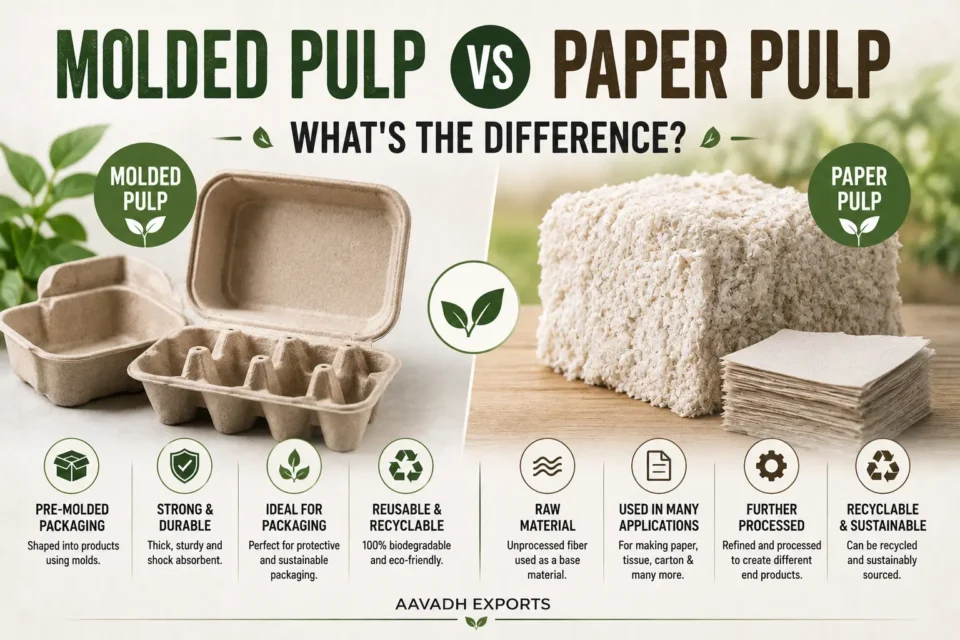
Paper pulp is the raw fibrous material — cellulose fibers separated from wood, recycled paper, or plant material and mixed with water into a slurry. Molded pulp is a finished product made by shaping that same raw pulp into a specific three-dimensional form, like an egg tray or a protective packaging insert, using molds.
In other words: all molded pulp starts as paper pulp, but paper pulp doesn’t automatically become molded pulp. It can also be pressed flat to make regular paper, cardboard, or tissue instead.
Paper Pulp: The Raw Material
Paper pulp is produced by breaking down raw material — usually wood chips, recycled paper, or agricultural fibers like bagasse or wheat straw — into individual cellulose fibers. This is done mechanically, chemically, or through a combination of both, depending on the desired pulp quality and end use.
Once produced, paper pulp is a flexible starting point. It can be:
- Pressed into flat sheets to make writing paper, newsprint, or cardboard
- Processed further into tissue and specialty papers
- Shaped in molds to become molded pulp packaging products
This flexibility is why “paper pulp” as a term covers such a broad range of downstream products — it’s really just describing the material stage, not the final form.
Molded Pulp: The Manufactured Product
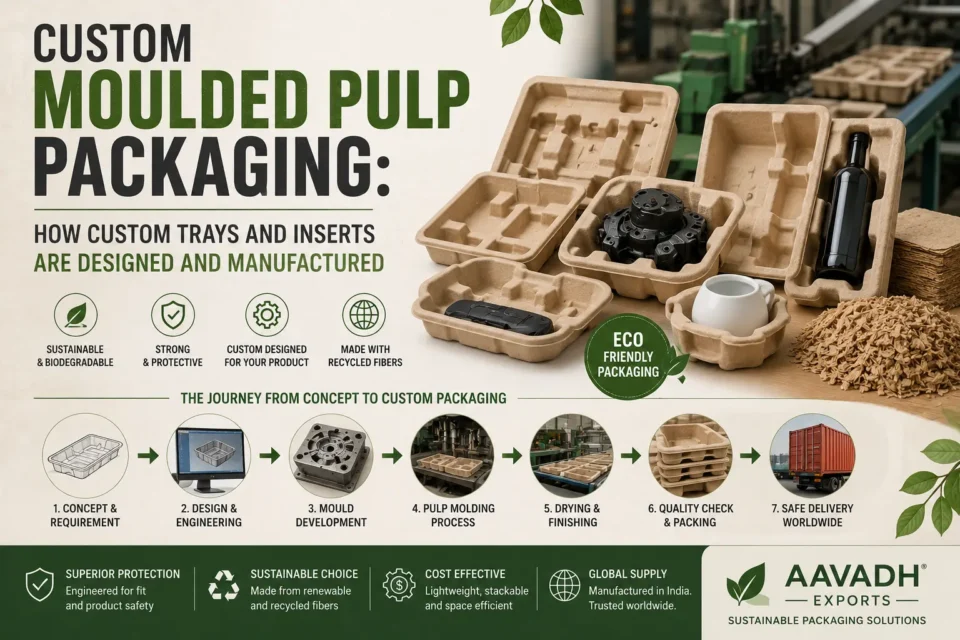
Molded pulp takes that same raw pulp and, instead of pressing it flat, shapes it using molds into specific three-dimensional forms. The wet pulp slurry is drawn onto a mesh mold in the shape of the desired product — the individual cups of an egg carton, for example, or the contoured cushioning shape needed to protect an electronic component — then pressed and dried into a rigid final shape.
This is a fundamentally different manufacturing step from making flat paper, which is why molded pulp products require different equipment, mold tooling, and production expertise compared to standard paper mills.
Why the Confusion Happens
Part of the confusion comes from the fact that both processes start with the same raw material and use similar terminology — “pulp,” “fiber,” “recycled paper” — even though the end products look and function completely differently. A sheet of printer paper and an egg tray are both, technically, “paper pulp products,” but almost no one would describe them the same way in casual conversation. That’s really where the term “molded pulp” earns its keep — it specifically signals a three-dimensional, shaped product rather than a flat one.
Side-by-Side Comparison
| Aspect | Paper Pulp | Molded Pulp |
|---|---|---|
| What it is | Raw fibrous material | Manufactured 3D product |
| Form | Wet slurry / raw fiber | Shaped, dried, rigid product |
| Typical outputs | Paper, cardboard, tissue | Egg trays, protective inserts, medical trays |
| Manufacturing step | Fiber separation and refining | Mold forming, pressing, drying |
| Buyer relevance | Relevant to paper/board manufacturers | Relevant to packaging buyers |
Which One Do You Actually Need?
If you’re a packaging buyer — sourcing egg trays, protective inserts, or custom packaging for your products — what you actually need is molded pulp packaging, not raw paper pulp. Paper pulp on its own isn’t usable as packaging; it needs to go through the molding process first. Understanding this distinction helps when researching suppliers, since a “pulp manufacturer” might specialize in raw pulp production for the paper industry, while a “molded pulp packaging manufacturer” specializes in the finished, shaped products businesses actually order.
If you want to understand paper pulp as a raw material in more depth — including how it’s sourced and processed — our guide on what paper pulp is covers that from the ground up. If you’re specifically interested in the molding process and finished packaging products, our complete guide to molded pulp packaging goes into detail on how it’s made, its types, and its applications.
Why This Distinction Matters for Sourcing Decisions
When businesses reach out to packaging suppliers, being able to clearly say “we need molded pulp packaging” rather than just “pulp packaging” or “paper packaging” leads to faster, more accurate quotes. It also helps you evaluate suppliers correctly — a molded pulp manufacturer should be able to show you mold samples, production capacity for shaped products, and application-specific examples (like egg trays or electronics inserts), not just raw pulp sheets.
At Aavadh Exports, we specialize specifically in molded pulp packaging — not raw pulp production — manufacturing egg trays, electronics packaging, medical and healthcare trays, and footwear and consumer goods packaging, along with custom molded pulp packaging designed around your specific product. Browse our full product range to see what we manufacture.
Frequently Asked Questions
Q.1. Is molded pulp stronger than regular paper pulp?
Answer: They’re not directly comparable — molded pulp is a shaped, pressed, and dried product, giving it structural rigidity that flat paper doesn’t have, even though both come from the same raw fiber.
Q.2. Can any paper pulp be turned into molded pulp packaging?
Answer: In principle, yes, though manufacturers typically use pulp blends optimized for molding — balancing fiber strength, moldability, and cost — rather than pulp intended for fine writing paper.
Q.3. Do I need to specify “molded pulp” when contacting a supplier?
Answer: Yes, it’s helpful. Saying “molded pulp packaging” or naming the specific product (like “egg trays” or “protective inserts”) ensures the supplier understands you need finished packaging products, not raw pulp material.
Q.4. Is molded pulp packaging more expensive than flat paper packaging?
Answer: Molded pulp typically costs more per unit than flat cardboard because of the additional mold-forming process, but it offers structural protection that flat packaging can’t provide, which is why it’s used for fragile or shaped items.
Q.5. Are molded pulp and “molded fiber” the same thing?
Answer: Yes, these terms are used interchangeably in the packaging industry to describe the same category of shaped, pulp-based packaging products.