
The molded pulp packaging industry has moved well beyond its traditional stronghold of egg trays and fruit cartons. As plastic-reduction regulations expand across major economies and consumer expectations around sustainable packaging continue to shift, manufacturers and buyers alike are watching a clear set of trends shape the category heading into 2026 and beyond.
1. Expansion Into Electronics and Consumer Tech Packaging
Molded fiber inserts are increasingly replacing expanded polystyrene and plastic foam in electronics packaging, including headphones, small appliances, and consumer gadgets. Precision-tooled pulp trays now offer shock absorption performance comparable to foam while being fully recyclable and compostable — a major factor for technology brands under growing pressure from regulators and their own sustainability commitments to reduce plastic packaging footprints across their product lines.
2. Growth in Food Delivery and Takeaway Packaging
With single-use plastic bans expanding across an increasing number of countries and cities, molded pulp clamshells, bowls, and trays are steadily replacing plastic containers in food delivery and quick-service restaurant packaging. This segment has become one of the fastest-growing use cases for pulp molding manufacturers globally, driven both by regulation and by food service brands positioning sustainability as part of their customer proposition.
3. Color and Finish Innovation
Buyers are no longer settling for the standard grey or brown recycled-pulp appearance that has historically defined the category. Manufacturers are investing in dyed pulp formulations, smoother surface finishes, and branded embossing directly on molded trays, allowing for retail-ready packaging that carries brand identity without needing to add a plastic laminate or separate printed label — preserving the material’s compostability while still meeting brand presentation standards.
4. Water-Resistant and Grease-Resistant Coatings Without Plastic Lining
New bio-based coating technologies now allow molded pulp packaging to resist moisture and oil, which is critical for many food applications, without relying on PFAS compounds or plastic laminates that would otherwise undermine compostability claims. This is one of the more technically significant developments in the industry recently, as it directly addresses a long-standing limitation that had previously kept some food packaging applications locked into plastic despite sustainability pressure.
5. Automation and Higher-Precision Tooling
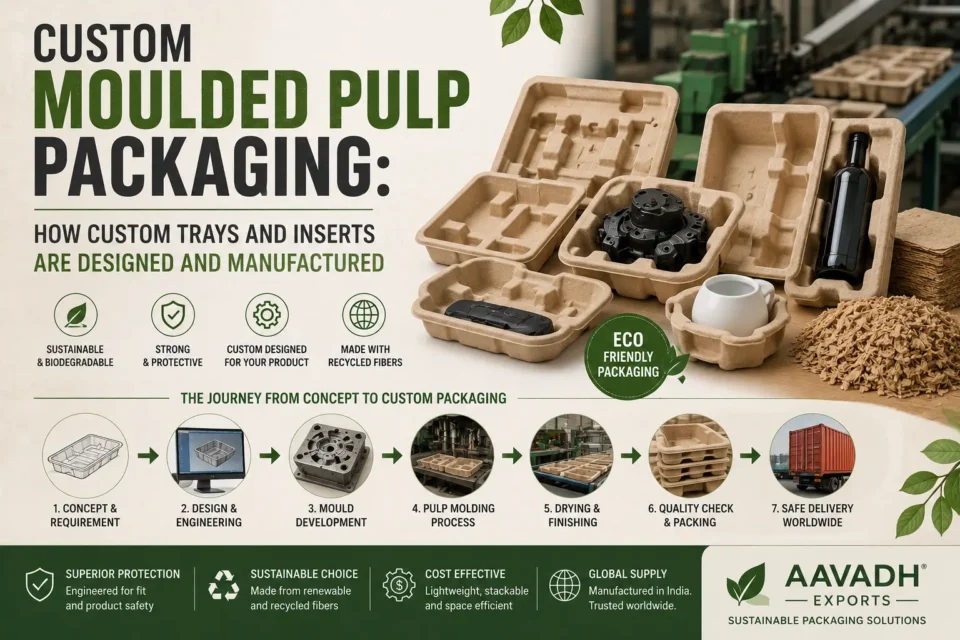
Manufacturers are increasingly adopting more advanced rotary and thermoformed pulp molding production lines, improving dimensional consistency for precision applications such as wine bottle packaging, cosmetics inserts, and pharmaceutical trays. These are categories that historically remained with plastic packaging due to tighter tolerance requirements, but improved tooling precision is steadily opening these higher-value segments to molded fiber alternatives.
6. Retailer-Driven Demand, Not Just Regulatory Pressure
While government regulation has historically been the primary driver of adoption, large retailers across Europe and North America are now setting their own independent packaging sustainability targets, separate from legal requirements. This is pushing suppliers throughout their vendor networks to adopt molded fiber packaging as part of formal vendor compliance scorecards, effectively creating market-driven demand that operates alongside, and sometimes ahead of, regulatory timelines.
7. Rise of Bagasse and Agricultural Waste as Pulp Feedstock
Beyond traditional recycled paper, manufacturers are increasingly turning to bagasse from sugarcane processing, wheat straw, and other agricultural residues as pulp feedstock. This reduces dependency on recycled paper supply chains, which can face their own pricing volatility, while adding an additional and often compelling sustainability narrative around converting agricultural waste into useful packaging material rather than it being burned or discarded.
8. Growing Export Demand From India
India’s combination of raw material availability, competitive manufacturing costs, and steadily improving certification standards has made it one of the leading global sourcing destinations for molded pulp packaging exports, competing directly with established suppliers in China and Vietnam on price while often offering greater flexibility for mid-volume and custom orders that larger overseas factories are less willing to accommodate.
9. Circular Packaging and Take-Back Programs
Some brands are piloting closed-loop programs in which used molded pulp packaging is collected from customers or retail locations and reprocessed into new packaging material. This circular model is considerably easier to execute with pulp-based packaging than with most plastic packaging types, since pulp fiber can typically be re-pulped and reformed multiple times without significant quality loss, making genuine circularity a realistic near-term goal rather than a distant aspiration.
10. Increased Buyer Scrutiny on Supply Chain Sustainability
As more brands publish sustainability reports covering their full supply chain, buyers are asking more detailed questions of their packaging suppliers than in previous years — water recycling rates, energy sourcing for production, and raw material traceability are increasingly part of standard supplier evaluation, rather than being reserved for specialized ESG audits of only the largest accounts.
11. Digitization of Order Management and Traceability
Some larger molded pulp manufacturers are beginning to offer digital order tracking, batch traceability, and even QR-code based sourcing transparency on finished packaging, allowing brand customers to demonstrate supply chain transparency directly to end consumers. This trend is still emerging but is likely to become more standard as sustainability reporting requirements continue to formalize across major markets.
12. Diversification Into Non-Food Industrial Applications
Beyond food and consumer electronics, molded pulp packaging is expanding into automotive parts packaging, industrial component trays, and agricultural equipment protection, sectors that have traditionally relied heavily on plastic or foam due to durability requirements. Advances in pulp density and coating technology are gradually making these heavier-duty applications viable for fiber-based alternatives.
Pricing Trends Alongside Sustainability Demand
As demand for molded pulp packaging grows across new categories, raw material costs — particularly for recycled fiber — have seen periodic volatility tied to broader paper and cardboard recycling markets. Buyers should expect manufacturers to increasingly quote pricing with more frequent review clauses tied to raw material indices, rather than fixed annual pricing, especially for longer-term supply agreements. Locking in multi-month pricing where possible, or diversifying feedstock sourcing across recycled paper and agricultural residue, is one way forward-thinking manufacturers are managing this volatility on behalf of their buyers.
Regional Manufacturing Hubs Gaining Prominence
Within India specifically, manufacturing clusters are emerging around regions with strong agricultural residue availability (for bagasse-based pulp) alongside traditional paper recycling hubs near major ports, allowing shorter inland transit before export. Buyers evaluating suppliers may find it useful to ask where a facility is located relative to its raw material source and the nearest container port, since this affects both cost consistency and total lead time reliability.
What This Means for Buyers Heading Into 2026
Procurement teams sourcing packaging this year should expect suppliers to offer considerably more design flexibility around color, coating, and branding than in previous years, while also anticipating more rigorous certification requirements being passed down from their own retail customers and regulatory environments. Building a relationship with a manufacturer actively investing in these newer capabilities, rather than one offering only basic grey standard trays, positions buyers considerably better for where packaging requirements are clearly heading over the next several years.
Practical Steps for Buyers Adapting to These Trends
- Ask potential suppliers directly about their coating technology and whether it affects certified compostability status
- Request information on raw material feedstock diversity, including any bagasse or agricultural residue capabilities
- Evaluate whether a supplier’s tooling precision can support your specific application, particularly for higher-value or fragile products
- Discuss data and traceability capabilities if your own sustainability reporting requires supply chain transparency
- Reassess packaging specifications periodically rather than assuming last year’s design remains the optimal choice as material and coating technology continues to advance
The molded pulp packaging category is evolving considerably faster than its traditional reputation suggests, and buyers who stay closely engaged with these developments are better positioned to secure both a genuine sustainability advantage and a meaningful cost or performance edge over competitors still relying on outdated packaging specifications.