Paper pulp production might look like a straightforward mechanical process from the outside — wood goes in, fiber comes out — but at its core, it’s a chemistry problem. Understanding the basic chemistry behind pulping helps explain why different pulp types behave so differently, why bleaching is necessary for some products, and why fiber bonding determines everything from paper strength to how well molded packaging holds its shape. Here’s a beginner-friendly breakdown.
The Basic Chemistry: Cellulose, Hemicellulose, and Lignin
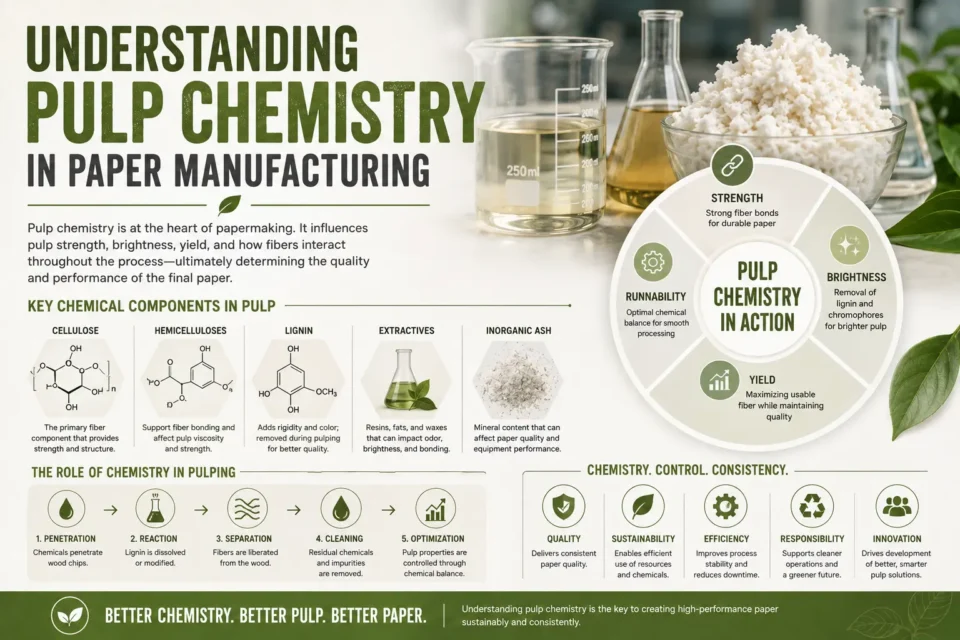
Wood and plant fiber is made up of three main structural components:
- Cellulose — long, strong chains of glucose molecules that form the core structural fiber used in paper and pulp products
- Hemicellulose — shorter, more branched carbohydrate chains that help bind cellulose fibers together, contributing to flexibility and bonding
- Lignin — a complex, rigid compound that acts as a natural “glue,” binding cellulose and hemicellulose fibers together and giving wood its structural rigidity
Pulping, at its chemical core, is the process of separating cellulose fiber from the lignin holding it together — either by physically breaking that bond (mechanical pulping) or chemically dissolving it (chemical pulping).
Why Lignin Removal Matters
Lignin is essential for a living tree’s structure, but for paper and pulp products, it creates problems. Left in the pulp, lignin causes discoloration over time (this is why old newsprint yellows) and reduces the flexibility needed for strong fiber bonding in paper.
Chemical pulping processes are specifically designed to dissolve and remove lignin, leaving behind cleaner, more flexible cellulose fibers that bond more effectively when pressed into paper or molded into packaging shapes. This is a core reason why chemically pulped fiber tends to produce stronger, longer-lasting products than mechanically pulped fiber, which retains most of its lignin content.
The Kraft (Sulfate) Process: The Dominant Chemical Method
The most widely used chemical pulping method globally is the kraft process (also called the sulfate process). It uses a chemical solution containing sodium hydroxide and sodium sulfide — known as “white liquor” — to cook wood chips at high temperature and pressure. This chemically breaks down and dissolves lignin, releasing strong, largely intact cellulose fibers.
The kraft process is favored industrially because it produces particularly strong pulp fiber and includes an efficient chemical recovery system, where the spent cooking chemicals (“black liquor”) are processed and reused, improving both cost efficiency and environmental performance.
Fiber Bonding: Why Chemistry Affects Strength
Once fibers are separated, the strength of the final paper or molded pulp product depends heavily on how well those fibers bond together during forming and drying. This bonding occurs largely through hydrogen bonds forming between hydroxyl groups on adjacent cellulose fiber surfaces as water is removed during pressing and drying.
Fibers with intact hemicellulose content (which chemical pulping tends to preserve better than mechanical pulping) generally bond more effectively, which is part of why chemically pulped fiber produces stronger paper and packaging products.
Bleaching Chemistry: Why Some Pulp Is Whiter
For products requiring bright white pulp — high-grade writing paper, for example — pulp undergoes a separate bleaching process after initial pulping. This typically involves chemical treatments (historically chlorine-based, though many modern facilities use elemental chlorine-free or totally chlorine-free methods for environmental reasons) that remove residual lignin and other coloring compounds.
Molded pulp packaging products, like egg trays and protective inserts, typically skip extensive bleaching, both because it’s an added cost and because these products don’t require the same visual brightness standards as premium paper — part of why they often retain a natural grey or brown fiber appearance.
Why This Chemistry Matters for Recycled Pulp
Recycled paper pulp — the primary raw material for most molded packaging products — goes through its own chemical process, typically involving de-inking (removing printing ink through chemical and mechanical treatment) and re-pulping. Since recycled fiber has already been through one or more previous pulping and drying cycles, its cellulose fiber structure is somewhat shorter and less flexible than virgin fiber, which is why recycled pulp products, while still strong, generally have slightly lower structural strength than products made purely from virgin chemical pulp.
Why Buyers Rarely Need to Think About This — But It Still Matters
Most packaging buyers don’t need a chemistry background to source molded pulp packaging effectively. But understanding the basics explains real, practical differences you’ll encounter — why recycled pulp packaging has a natural grey-brown tone rather than bright white, why some manufacturers’ products feel more rigid than others, and why fiber sourcing (not just “recycled vs virgin” as a simple label) genuinely affects performance.
For a broader look at how these chemical fundamentals connect to the two main pulping approaches, see our comparison of mechanical pulp vs chemical pulp. And if you want to understand how raw pulp — regardless of its chemistry — gets shaped into finished packaging, our guide on what molded pulp is covers that process in full.
At Aavadh Exports, we manufacture molded pulp packaging with quality-controlled recycled fiber input, balancing strength and sustainability across our egg trays, electronics packaging, medical and healthcare trays, and footwear and consumer goods packaging.
Frequently Asked Questions
What is lignin, and why is it removed from pulp?
Lignin is a natural compound that binds wood fibers together. It’s removed (or reduced) during pulping because it causes yellowing over time and reduces fiber flexibility needed for strong bonding in paper and packaging products.
Why is the kraft process the most common chemical pulping method?
It produces particularly strong pulp fiber and includes an efficient chemical recovery system, making it both cost-effective and more environmentally manageable than older alternative methods.
Does molded pulp packaging use bleached or unbleached pulp?
Most molded pulp packaging, including egg trays and protective inserts, uses unbleached or minimally processed pulp, which is why these products typically have a natural grey or brown appearance rather than bright white.
Why does recycled pulp produce slightly weaker products than virgin pulp?
Recycled fiber has already been through prior pulping and drying cycles, which shortens and weakens the cellulose fiber structure slightly compared to fresh virgin fiber.
Do I need to understand pulp chemistry to buy molded pulp packaging?
Not in detail, but understanding the basics helps explain quality and appearance differences between suppliers, and can be a useful reference point when discussing material specifications with a manufacturer.