When most people picture where paper comes from, they imagine tall trees being felled in a forest somewhere. That image is increasingly out of date. Around the world — and especially in countries like India, where land is precious and forest cover is limited — pulp producers have turned to a completely different category of raw material: agricultural and fast-growing plant residues. Bamboo, wheat straw, and sugarcane bagasse have quietly become some of the most important fibre sources in the modern pulp economy, and they’re reshaping what sustainable packaging can look like.
This shift matters not just for environmental reasons, but for the practical, everyday businesses that depend on these fibres — including the growing number of moulded pulp manufacturers producing egg trays, fruit trays, and protective packaging for global export.
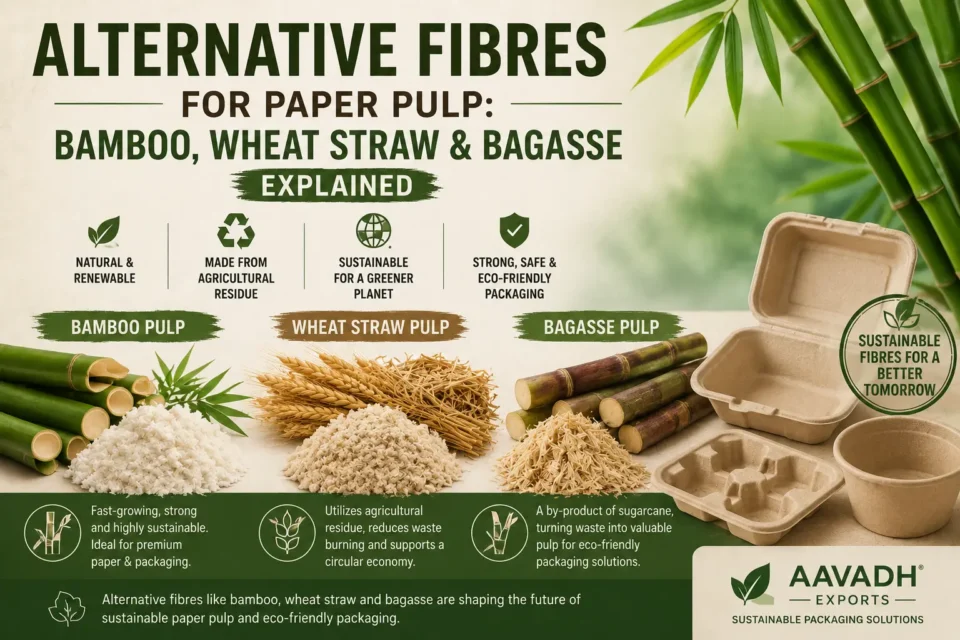
Bamboo Pulp: Fast-Growing, Fast-Renewing
Bamboo is technically a grass, not a tree, and that single fact changes everything about how it behaves as a raw material. While a hardwood tree can take 20 to 60 years to mature enough for harvesting, many bamboo species reach harvestable maturity in just 3 to 5 years. Some varieties grow several centimetres in a single day under the right conditions.
For pulp production, this rapid renewability is a genuine advantage. Bamboo plantations can be harvested in rotation without the long replanting cycles that hardwood forestry requires, and bamboo’s root systems help prevent soil erosion, making it a relatively low-impact crop compared to many alternatives.
The fibre itself has a longer, stronger structure than many hardwoods, which gives bamboo pulp good tensile strength — useful for both paper products and moulded packaging that needs to hold its shape under weight or pressure. Bamboo-based moulded trays, for instance, tend to have a slightly different texture and rigidity compared to standard recycled-paper trays, which some buyers specifically request for premium or specialty packaging lines.
Wheat Straw Pulp: Turning Farm Waste Into Raw Material
Wheat straw is what’s left over after the grain has been harvested — traditionally either burned in the field (a major source of seasonal air pollution in parts of North India) or left to decompose slowly. Diverting this straw into pulp production solves two problems at once: it reduces crop-burning pollution, and it provides a low-cost, abundant fibre source that doesn’t compete with forest land at all.
Wheat straw pulp typically has shorter fibres than wood or bamboo pulp, which affects its mechanical strength slightly, but it works well when blended with other fibre sources or used in products where extreme tensile strength isn’t the primary requirement — trays, fillers, and moulded cushioning inserts, for example. For agricultural economies like India’s, wheat straw represents an enormous, currently under-utilised fibre reserve.
Bagasse: The Sugar Industry’s Fibrous By-Product
Bagasse is the dry, fibrous residue left after sugarcane stalks are crushed to extract juice. For every tonne of sugarcane processed, a significant volume of bagasse is generated — and much of it, historically, was simply burned as low-grade boiler fuel or left to pile up near sugar mills.
Today, bagasse is one of the most widely used alternative fibres in moulded pulp packaging, particularly for food-contact applications like plates, bowls, and clamshell containers, because it’s naturally food-safe, compostable, and doesn’t require the intensive bleaching that some wood pulps do. Its short-to-medium fibre length also makes it easy to mould into detailed shapes, which is part of why it’s become a go-to material for disposable tableware and light packaging.
Why These Fibres Matter for the Packaging Industry
For manufacturers serving industries like poultry, fruit, and consumer goods, the choice of fibre isn’t just an environmental talking point — it directly affects product performance, cost, and buyer perception.
- Cost stability: Agricultural residues like bagasse and wheat straw are byproducts of existing farming and sugar operations, so their supply isn’t tied to forestry cycles the way wood pulp is.
- Compostability: Products made from these fibres generally break down faster and more completely than some wood-pulp blends, which matters for buyers targeting fully compostable or zero-waste packaging claims.
- Regional sourcing advantage: Manufacturers based in agricultural regions — much of India, for example — have these raw materials available locally, reducing transport costs and supply chain risk compared to importing wood pulp.
This is exactly why so many established molded pulp manufacturers have shifted a portion of their production toward these alternative fibres, either as pure feedstock or blended with recycled paper for a balance of strength and sustainability.
The Trade-Offs Buyers Should Understand
No fibre source is perfect for every application, and it’s worth being upfront about the trade-offs:
- Strength vs. sustainability: Long-fibre wood pulp generally offers the highest strength-to-weight ratio. Agricultural fibres are excellent for many packaging applications but may need thicker walls or reinforced designs for very heavy or sharp-edged products.
- Colour and finish: Unbleached bagasse or wheat straw pulp tends to have a natural tan or brown colour, which some buyers embrace as an eco-friendly visual cue, while others prefer the cleaner look of bleached or recycled white pulp.
- Consistency: Agricultural residues can vary slightly in fibre quality depending on the crop season, so working with an experienced pulp packaging manufacturers partner who blends and tests batches carefully matters more than with more uniform wood pulp.
Choosing the Right Fibre for Your Product Line
If you’re evaluating suppliers for egg trays, fruit trays, industrial cushioning, or food-contact packaging, it’s worth asking directly what fibre blend they use and why. A good molded pulp tray manufacturers partner should be able to explain — not just claim — how their fibre choice affects strength, compostability, and cost for your specific product.
Bamboo, wheat straw, and bagasse aren’t niche experiments anymore. They represent a genuine shift in how the pulp and paper industry sources raw material — moving away from forest-dependent supply chains and toward renewable, often waste-reducing alternatives that happen to work just as well, if not better, for many packaging applications. As global buyers push harder on sustainability credentials, expect these fibres to move from “alternative” to simply “standard” over the next several years.
For businesses building or refreshing their packaging strategy, understanding these fibre options isn’t just good environmental practice — it’s increasingly a competitive requirement in markets where buyers ask hard questions about what their packaging is actually made from.
Blending Fibres for Better Performance
In practice, very few manufacturers rely on a single fibre source in isolation. Most experienced producers blend two or more fibres — say, recycled paper as a base with a portion of bagasse or bamboo added — to balance cost, strength, and appearance. A blend might use recycled fibre for the bulk of the structure while adding a percentage of longer bamboo fibre specifically to improve tensile strength at load-bearing points, such as the corners or handles of a tray.
This blending approach also helps manufacturers manage seasonal variability. Agricultural residues like bagasse and wheat straw are harvested at specific times of year, so their availability and quality can fluctuate. Manufacturers who maintain relationships with multiple fibre sources — and who know how to adjust their blend ratios accordingly — are generally able to maintain more consistent product quality across the calendar year than those relying on a single seasonal input.
Frequently Asked Questions
Is bamboo pulp stronger than wood pulp?
Answer: Bamboo fibres are generally longer and more rigid than many hardwood fibres, giving bamboo pulp good tensile strength, though it can vary by species and processing method. It’s often comparable to, or better than, many hardwood pulps for packaging applications.
Does bagasse packaging smell like sugarcane?
Answer:Properly processed bagasse pulp is cleaned and, in most cases, has no noticeable sugarcane odour once dried and moulded into a finished product. Any residual smell usually indicates incomplete processing.
Can these alternative fibres be used for food packaging?
Answer: Yes — bagasse in particular is widely used in food-contact packaging like plates and trays because it’s naturally compostable and doesn’t require heavy chemical bleaching. Wheat straw and bamboo pulp can also be used for food-adjacent packaging such as egg trays, provided proper hygiene and processing standards are followed.