If you’ve ever bought a dozen eggs, unboxed a new pair of shoes, or received an electronics shipment cushioned with a grey, textured tray instead of foam, you’ve encountered molded pulp packaging. It’s one of the most widely used — yet least talked about — sustainable packaging materials in the world. This guide explains exactly what it is, how it’s made, and why so many businesses are switching to it.
What Is Molded Pulp?
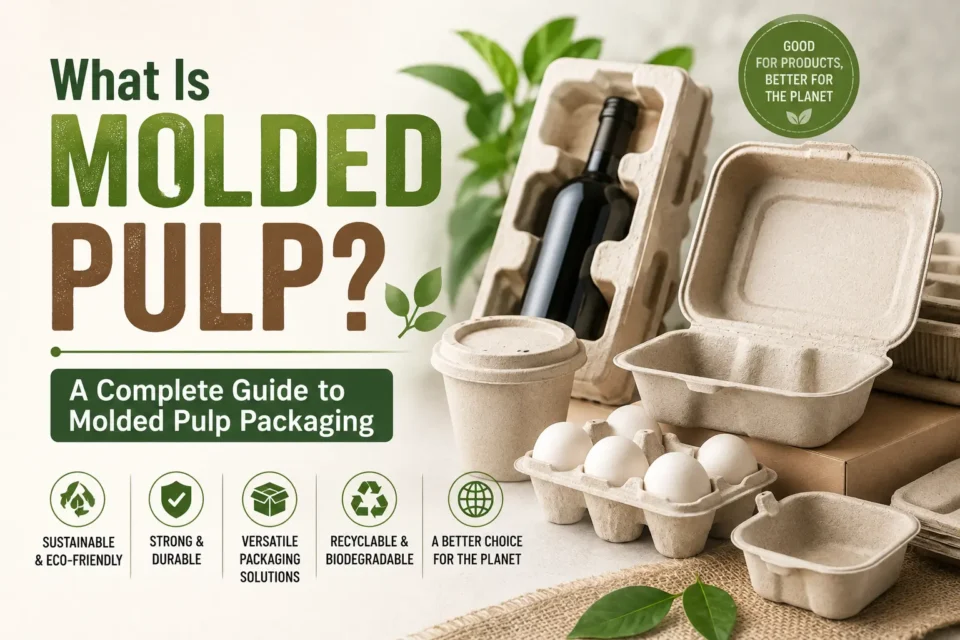
Molded pulp (also called molded fiber) is packaging made by shaping wet paper pulp into three-dimensional forms using molds, then drying and pressing it into a rigid, lightweight final product. Unlike flat paper or cardboard, molded pulp packaging is formed to a specific shape — like the cavities of an egg carton or the contoured cushioning inside an electronics box.
It’s typically made from recycled paper, cardboard waste, or a mix of recycled and virgin plant fibers, making it one of the more genuinely sustainable packaging materials available at commercial scale. Because it’s biodegradable, recyclable, and compostable in most cases, it has become a go-to replacement for expanded polystyrene (EPS) foam and rigid plastic packaging.
How Molded Pulp Packaging Is Made
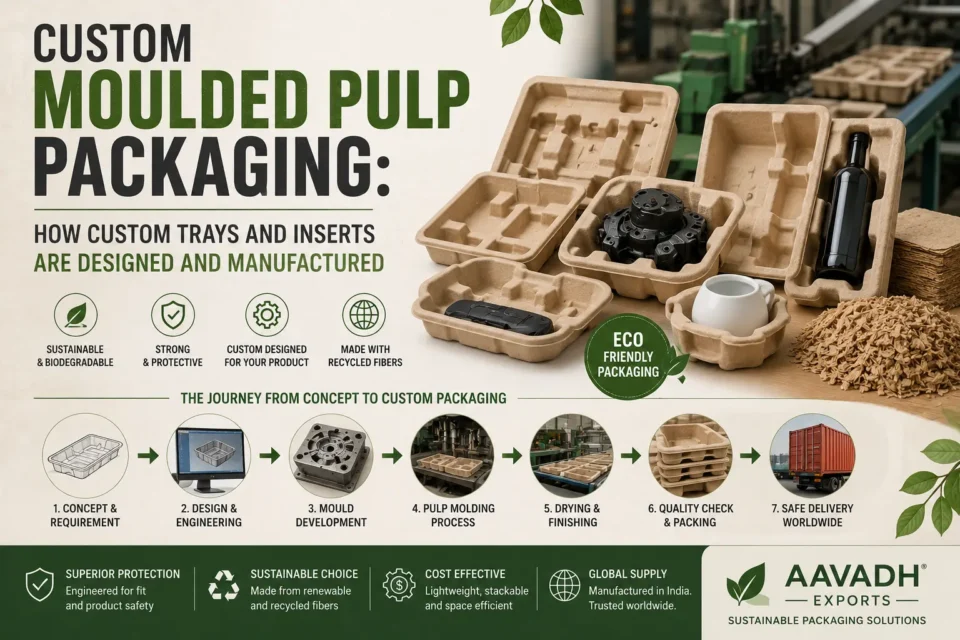
The molded pulp manufacturing process generally follows these stages:
- Pulp preparation — recycled paper and cardboard are broken down into pulp using water and mechanical processing
- Mold forming — the wet pulp slurry is drawn onto mesh molds shaped like the final product (an egg tray, a protective insert, etc.), where water is drained out and the fiber layer takes shape
- Pressing — the molded shape is pressed to remove excess moisture and improve rigidity
- Drying — the pressed pulp is dried, either through natural air drying or heated drying tunnels, depending on production scale
- Trimming and quality check — excess material is trimmed, and the final product is inspected for consistency, strength, and finish
This process allows manufacturers to create precise, repeatable shapes at scale — which is what makes molded pulp practical for mass production, from millions of identical egg trays to custom-designed protective inserts for specific products.
Types of Molded Pulp Packaging
Molded pulp packaging generally falls into a few categories based on finish and application:
- Transfer molded pulp — the most common and cost-effective type, used for items like egg trays and fruit trays; has a slightly textured, less refined surface
- Thermoformed molded pulp — pressed with heated molds for a smoother, more refined finish, often used for retail-facing or premium packaging
- Processed/precision molded pulp — used for high-precision applications like electronics packaging, where exact dimensions and tighter tolerances matter
Each type balances cost, finish quality, and structural performance differently, so the right choice depends on what’s being packaged and how it will be presented.
Molded Pulp vs Paper Pulp: What’s the Difference?
It’s worth clarifying a common point of confusion: paper pulp is the raw fibrous material itself, while molded pulp refers specifically to the process of shaping that pulp into three-dimensional packaging. All molded pulp starts as paper pulp, but not all paper pulp becomes molded packaging — much of it is pressed flat into paper, cardboard, or tissue instead.
Why Businesses Are Switching to Molded Pulp Packaging
A few forces are driving global adoption of molded pulp packaging:
- Plastic packaging regulations — the EU, UK, and a growing number of US states have introduced restrictions and taxes on single-use plastic and hard-to-recycle materials, pushing businesses toward biodegradable alternatives
- Consumer and retailer sustainability expectations — brands increasingly treat packaging as a visible extension of their environmental commitments
- Functional performance — modern molded pulp can be engineered to match or exceed the protective performance of foam and plastic for many applications
- Cost stability — pulp packaging, especially from recycled input, can offer more stable and often lower per-unit costs compared to petroleum-based plastics, which are subject to oil price volatility
Common Applications
Molded pulp packaging is used across a wide range of industries, including:
- Egg and produce packaging — egg trays, cartons, and fruit trays
- Electronics — protective inserts replacing foam cushioning
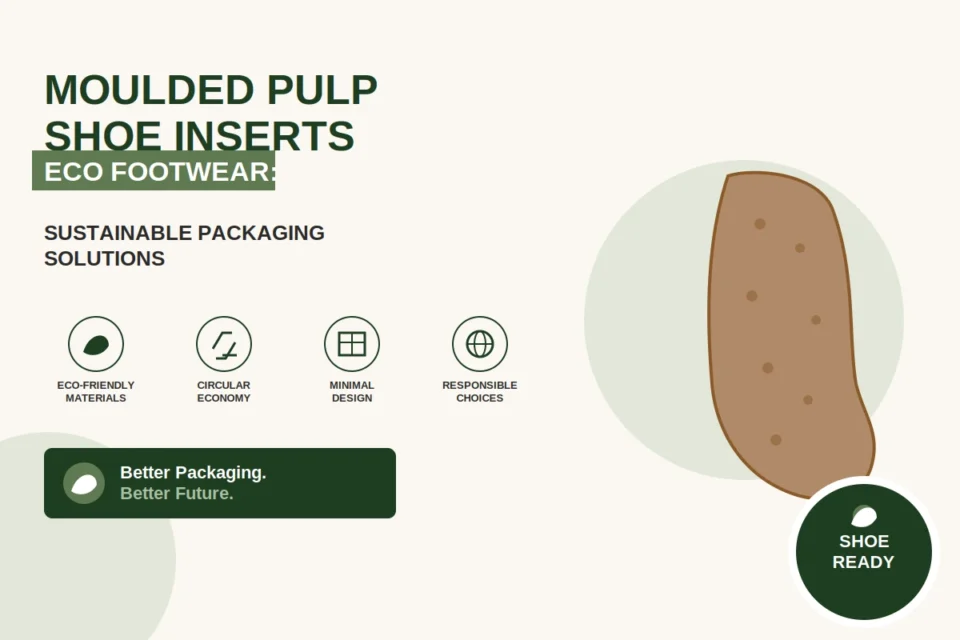
- Footwear and consumer goods — shoe inserts and retail packaging
- Medical and healthcare — clean, functional packaging trays
- Industrial packaging — protective packaging for heavier or delicate components
If you’d like a deeper look at how these applications vary, our guide on paper pulp applications across industries covers each use case in more detail.
Is Molded Pulp Packaging Durable Enough?
This is one of the most common questions buyers ask when considering a switch from plastic or foam. The honest answer: it depends on design and engineering, not just material. A well-designed molded pulp tray, with the right wall thickness, density, and mold precision, can provide comparable protection to foam for most applications — which is exactly why electronics manufacturers, footwear brands, and food producers have adopted it at scale. Poorly designed or generically sized molded pulp, on the other hand, can underperform. This is why working with an experienced manufacturer for custom mold design matters.
Getting Started with Molded Pulp Packaging
If you’re exploring molded pulp packaging for your business, the process typically starts with sharing your product’s dimensions, weight, and protection requirements, so a manufacturer can recommend a standard product or design a custom mold. From there, most suppliers offer samples for approval before committing to bulk production.
At Aavadh Exports, we manufacture molded pulp packaging across multiple categories — egg trays, electronics packaging, medical and healthcare trays, and footwear and consumer goods packaging — along with fully custom molded pulp packaging built around your exact specifications. Learn more about our manufacturing process or explore our full product range.
Frequently Asked Questions
Is molded pulp the same as molded fiber? Yes, “molded pulp” and “molded fiber” are used interchangeably to describe packaging shaped from wet pulp using molds.
What is molded pulp packaging made from? It’s typically made from recycled paper, cardboard, and plant fibers, sometimes blended with virgin fiber for added strength.
Is molded pulp packaging waterproof? Standard molded pulp isn’t waterproof, but it can be treated or coated for moisture resistance depending on the application. For most dry-goods and cushioning uses, this isn’t necessary.
How strong is molded pulp compared to plastic? With proper mold design and material density, molded pulp can match plastic and foam in protective performance for many applications, though extremely heavy or high-impact use cases may still require alternative materials.
Can molded pulp packaging be recycled? Yes — it’s both recyclable and biodegradable, and often compostable, making it one of the more environmentally sound packaging materials available.