If you’ve spent any time researching paper pulp production, you’ve likely come across the terms “mechanical pulping” and “chemical pulping.” These are the two fundamental methods used to turn raw wood into usable pulp fiber, and the difference between them significantly affects the strength, appearance, and best use of the final material. Here’s a clear, practical breakdown of how they compare.
The Core Difference
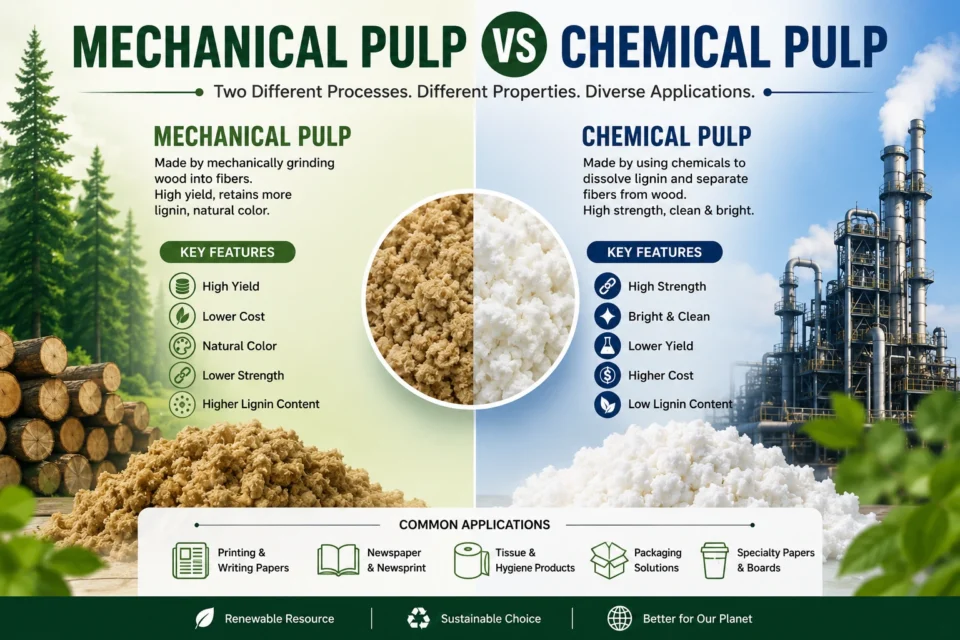
Mechanical pulping separates wood fibers using physical force — grinding or refining wood until the fibers break apart. Chemical pulping uses chemicals to dissolve the lignin (the natural “glue” holding wood fibers together), releasing the fibers with much less physical damage.
This difference in approach leads to very different outcomes in fiber strength, pulp yield, and the type of paper or packaging products each method is best suited for.
How Mechanical Pulping Works
Mechanical pulping physically grinds wood logs or chips against a rotating stone or metal disc refiner, breaking the wood down into individual fibers through friction and pressure. Because this process uses force rather than chemical dissolution, it retains most of the original wood material — including lignin — in the final pulp.
Key characteristics of mechanical pulp:
- High yield — typically 90-95% of the original wood is converted into usable pulp, since very little material is chemically removed
- Shorter, weaker fibers — the grinding process damages and shortens fibers compared to chemical methods
- Retains lignin — this makes mechanical pulp more prone to yellowing over time when exposed to light and air
- Lower cost — less energy-intensive in terms of chemical processing, though it requires significant mechanical energy
Mechanical pulp is commonly used for products where high strength and long-term color stability aren’t critical — such as newsprint and some packaging applications.
How Chemical Pulping Works
Chemical pulping uses chemical solutions — most commonly in the kraft (sulfate) process or sulfite process — to cook wood chips at high temperature and pressure, dissolving the lignin that binds fibers together. This releases individual cellulose fibers with much less mechanical damage than grinding.
Key characteristics of chemical pulp:
- Lower yield — typically 45-55%, since a significant portion of the wood (mostly lignin) is chemically dissolved and removed
- Longer, stronger fibers — because fibers aren’t physically ground apart, they retain more of their natural length and strength
- Minimal lignin content — resulting in pulp that’s more resistant to yellowing and better suited for higher-quality, longer-lasting paper products
- Higher processing cost — chemical pulping requires more complex equipment, chemical recovery systems, and energy input
Chemical pulp — particularly kraft pulp — is used for products requiring strength and durability, including packaging papers, cardboard, and higher-quality printing and writing papers.
Side-by-Side Comparison
| Factor | Mechanical Pulp | Chemical Pulp |
|---|---|---|
| Process | Physical grinding/refining | Chemical dissolution of lignin |
| Yield | ~90-95% | ~45-55% |
| Fiber strength | Weaker, shorter fibers | Stronger, longer fibers |
| Lignin content | Retained (yellows over time) | Mostly removed (more stable) |
| Typical uses | Newsprint, lower-grade packaging | Kraft paper, cardboard, packaging board |
| Cost driver | Mechanical energy | Chemical processing and recovery |
Which Type of Pulp Is Used for Molded Packaging?
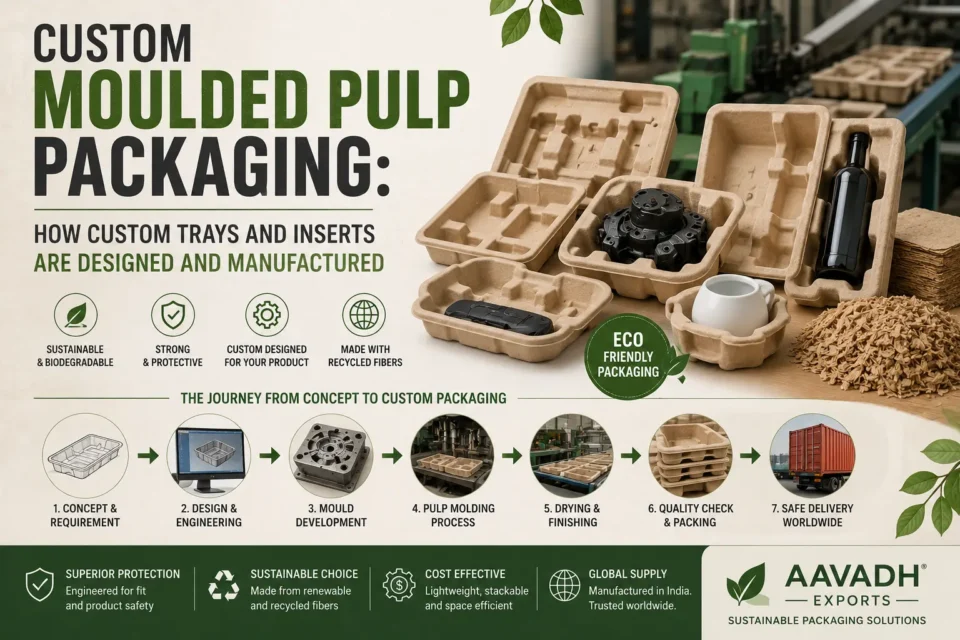
Molded pulp packaging — like egg trays and protective inserts — is most commonly made from recycled paper pulp rather than pure virgin mechanical or chemical pulp. Recycled pulp is essentially a mix of previously processed fibers (which may have originally come from either mechanical or chemical pulping), reprocessed and reused. This is one reason molded pulp packaging is considered a genuinely sustainable material — it relies heavily on the existing paper and cardboard recycling stream rather than requiring large volumes of freshly processed virgin pulp.
That said, understanding the underlying pulping methods still matters, since the original fiber source affects the strength and quality of the recycled material used in molded packaging production.
Why This Distinction Matters Beyond the Paper Industry
While mechanical versus chemical pulping is primarily a concern for paper and pulp mill operations, understanding it gives packaging buyers useful context — particularly around why fiber quality and strength can vary between suppliers, and why “recycled content” isn’t a single uniform standard. If you’re evaluating suppliers for molded pulp packaging, it’s worth asking about their fiber sourcing and blend, since this ultimately affects the strength and consistency of the final product.
For a broader look at how raw pulp becomes finished packaging, see our guide on what paper pulp is, or explore how that raw material is shaped into molded pulp packaging products.
At Aavadh Exports, we manufacture molded pulp packaging using quality-controlled recycled fiber, balancing strength, cost, and sustainability for our egg trays, electronics packaging, medical and healthcare trays, and footwear and consumer goods packaging.
Frequently Asked Questions
Which is stronger, mechanical pulp or chemical pulp?
Chemical pulp generally produces stronger, longer-lasting fibers because the pulping process causes less physical damage to individual fibers compared to mechanical grinding.
Why does mechanical pulp yellow over time?
Mechanical pulp retains most of its original lignin content, and lignin naturally darkens and yellows when exposed to light and air over time.
Is kraft pulp a type of chemical pulp?
Yes, kraft (sulfate) pulping is the most widely used chemical pulping method globally, known for producing strong, durable pulp used in packaging papers and cardboard.
Does molded pulp packaging use mechanical or chemical pulp?
Molded pulp packaging typically uses recycled paper pulp, which is a mix of fibers originally processed through either method, rather than relying solely on fresh virgin mechanical or chemical pulp.
Which pulping method is more environmentally friendly? Both methods have environmental considerations — mechanical pulping uses more energy but fewer chemicals, while chemical pulping uses more chemicals but achieves higher fiber quality per tree harvested. Recycled pulp, used heavily in molded packaging, reduces the environmental impact of both methods by reusing existing fiber.