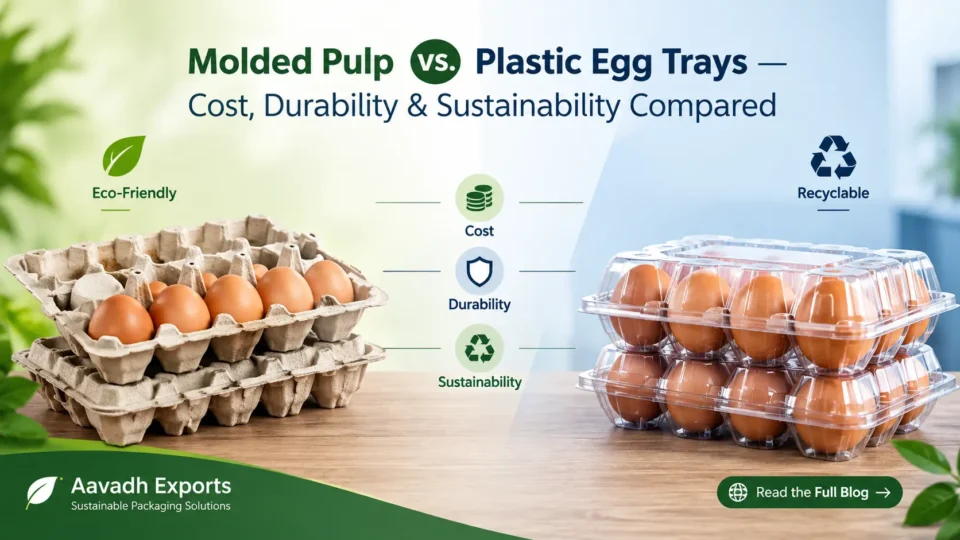
For poultry farms, egg wholesalers, and distributors, the choice between molded pulp egg trays and plastic egg trays is rarely made on sustainability alone. Cost per unit, breakage rates, storage space, and buyer expectations in your target export market all factor into the decision. This guide breaks down the real, practical differences between the two materials so you can make a sourcing decision based on data rather than assumption.
How the Two Materials Actually Compare
Material cost. Molded pulp trays are manufactured from recycled paper fiber — largely recovered newsprint, cardboard, and mixed waste paper — which is significantly cheaper as a raw material than virgin or even recycled plastic resin. This cost advantage typically holds even after accounting for the slightly higher labor and drying time involved in pulp molding versus plastic injection molding, which is why molded pulp remains the default packaging choice for high-volume, price-sensitive egg markets worldwide.
Weight and shipping cost. Molded pulp trays are lighter than most rigid plastic trays of equivalent strength, which reduces freight cost per container — a meaningful factor for buyers importing in bulk across long distances. Because ocean and air freight are frequently billed on a combination of weight and volume, lighter packaging directly reduces landed cost per unit.
Durability and cushioning. Plastic trays offer more flexibility (literally) — they can flex slightly under pressure without cracking, and they’re often reusable across many cycles. Molded pulp trays, by contrast, are usually single-use but offer excellent compressive strength when stacked, plus superior shock absorption during vertical drops, which matters more than lateral flex for most egg-breakage scenarios during transport.
Moisture resistance. This has traditionally been plastic’s biggest advantage, since untreated paper pulp softens when wet. However, modern molded pulp manufacturing techniques — including hot-press finishing — significantly improve moisture resistance, making today’s export-grade pulp trays far more viable for humid climates and refrigerated distribution than older-generation pulp packaging.
End-of-life and regulatory fit. This is where the comparison becomes less about performance and more about compliance. Plastic packaging, including PET and PP egg trays, faces a rapidly tightening regulatory environment across the EU, UK, Australia, and a growing number of US states, as covered in more depth in our post on sustainable packaging trends. Molded pulp trays are fully biodegradable and recyclable in standard paper recycling streams, which increasingly matters not just for environmental compliance but for retailer sourcing requirements and Extended Producer Responsibility (EPR) fee structures that penalize hard-to-recycle plastic formats.
Where Plastic Still Wins
It would be inaccurate to claim molded pulp is superior in every scenario. Reusable plastic trays make sense for closed-loop systems — for example, a poultry farm shipping trays to a regional distributor and receiving the same trays back for reuse. In these cases, the higher upfront cost of plastic is offset over dozens of reuse cycles. Plastic trays also tend to offer more consistent transparency and branding options for retail-facing packaging, where visual presentation at point of sale matters more than for bulk wholesale trays.
Where Molded Pulp Wins Decisively
For one-way, export-oriented, high-volume egg distribution — which describes the majority of international B2B egg trade — molded pulp is generally the stronger choice on cost, weight, sustainability compliance, and disposal simplicity for the end buyer. It’s also the format most aligned with buyer expectations in markets actively phasing out single-use plastics, since a plastic tray arriving in a market with strict EPR fees or plastic bans can create compliance headaches for the importer that a molded pulp tray simply avoids.
Making the Switch Without Disrupting Your Supply Chain
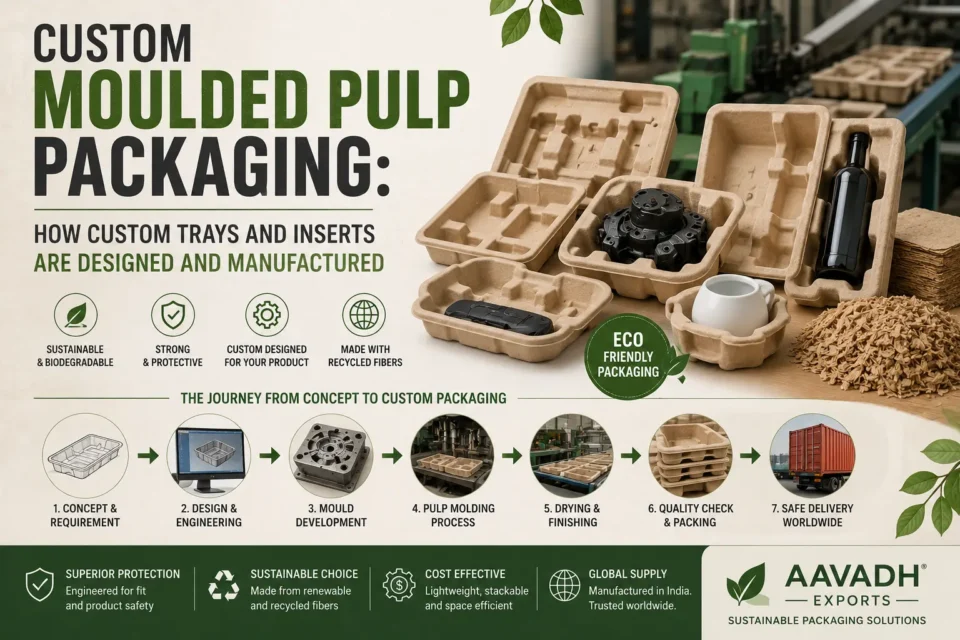
If you’re currently using plastic trays and considering a switch, the most common concerns we hear from buyers are: will pulp trays survive our specific shipping route and handling conditions, and will our packing line equipment need modification? Both are reasonable questions with concrete answers. Export-grade molded pulp trays are manufactured to specific compressive strength and moisture-resistance standards — you can review the process behind this in our article on wet-pressed vs. dry-pressed molded pulp — and most standard tray dimensions are compatible with existing automated and manual egg-packing lines without equipment changes. For businesses considering the switch, requesting samples for a trial run on your specific route before committing to a full production order is the standard, low-risk way to validate the switch.
Frequently Asked Questions
Q.1 Are molded pulp egg trays as strong as plastic egg trays?
A: For stacking and vertical drop protection, yes — export-grade molded pulp trays offer excellent compressive strength and shock absorption. Plastic retains an edge in lateral flex and reusability across many cycles, but for one-way shipping, pulp performs comparably or better.
Q.2 Do molded pulp egg trays hold up in humid or refrigerated conditions?
A: Modern export-grade pulp trays, especially those finished with hot-press techniques, offer significantly improved moisture resistance compared to older-generation pulp packaging, making them viable for most humid climates and cold-chain distribution.
Q.3 Can’t I just recycle plastic egg trays instead of switching materials?
A: Recyclability depends on whether the destination market has functioning collection and processing infrastructure for that plastic type. Molded pulp is recyclable through standard paper streams in most markets, which is generally more accessible than specialized plastic recycling.
Q.4 How much cheaper are molded pulp trays compared to plastic?
A: Pulp trays are typically cheaper on raw material cost and lighter for freight purposes, though exact savings depend on your specific volume, tray size, and shipping route. Request a quote comparison for your specific order to get an accurate figure.
Q.5 Will switching from plastic to pulp disrupt my packing line?
A: Usually not — most standard pulp tray dimensions are compatible with existing automated and manual egg-packing equipment. We recommend a sample trial run before committing to a full production switch.
Q.6 Is plastic ever the better choice? A: Yes — for closed-loop, reusable systems where the same trays are returned and reused many times, plastic’s higher upfront cost can be offset over multiple cycles. For one-way export distribution, pulp is generally the stronger choice.
Explore Our Egg Tray Range
Aavadh Exports manufactures export-grade molded pulp egg trays in standard and custom cell configurations for poultry farms, wholesalers, and distributors worldwide. Visit our Egg Trays page to see available sizes, or read our companion guide on choosing the right egg tray size and cell count for help specifying the right product for your packing line. To discuss a bulk order or request samples, contact our team directly.
References
- International Organization for Standardization — packaging and quality management standards: https://www.iso.org
- European Commission — Packaging and Packaging Waste Regulation (PPWR): https://environment.ec.europa.eu/topics/waste-and-recycling/packaging-waste_en
- US Environmental Protection Agency — Sustainable Packaging resources: https://www.epa.gov/trash-free-waters/reducing-single-use-plastics