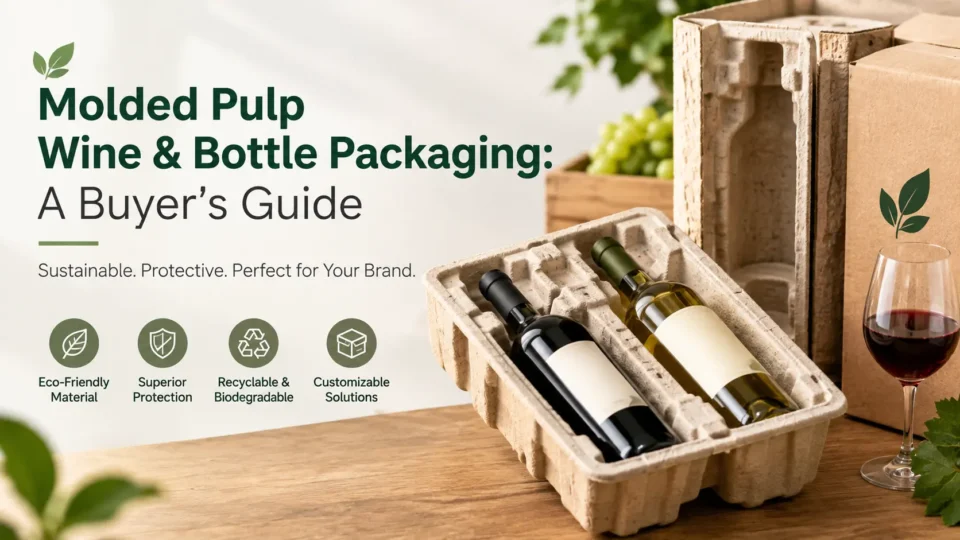
Wine and spirits brands lose a measurable percentage of every shipment to breakage — a cost that has driven the beverage packaging industry toward molded pulp shippers over the last decade. Unlike foam inserts or corrugated dividers, molded pulp bottle packaging is engineered specifically to cradle glass, absorb shock, and biodegrade at end of life, making it the default choice for wine clubs, e-commerce beverage retailers, and export-focused distilleries and wineries.
This guide breaks down how molded pulp wine packaging works, what specifications matter most, and what international buyers should evaluate before placing a bulk order.
What Is Molded Pulp Wine Packaging?
Molded pulp wine shippers are formed from recycled paper fiber using wet-pressed or dry-pressed molding techniques, producing a rigid tray with individually contoured bottle cavities. Most designs come as a two-piece system — a base tray and a lid or top cushion — that fully encloses each bottle, or as a single insert designed to sit inside an outer corrugated shipping box. Configurations range from single-bottle sleeves to 12-bottle case shippers, with champagne-specific molds available for taller, punt-bottomed bottles.
The manufacturing process itself matters more than it might seem. Wet-pressed pulp produces a denser, smoother-surfaced tray that’s better suited to printed branding, while dry-pressed pulp is generally faster and cheaper to produce at the cost of some surface finish quality. Buyers evaluating suppliers should ask which process is used for a given quote, since it directly affects both cost and how the finished product photographs and handles.
Molded Pulp vs. Foam and Corrugated Alternatives
| Factor | Molded Pulp | EPS Foam | Corrugated Dividers |
| Breakage protection | High — contoured cavity cushioning | High | Moderate |
| Biodegradable | Yes | No | Yes (but lower cushioning) |
| Regulatory risk (EU SUP, plastic taxes) | Low | High | Low |
| Branding surface | Good (printable/embossable) | Poor | Good |
| Weight | Light | Very light | Moderate |
| Cost at scale | Competitive | Cheaper per unit, but regulatory risk rising | Cheapest, weaker protection |
For a deeper look at how molded pulp performs against foam specifically, see our comparison of EPS/styrofoam alternatives, and for regulatory context, our breakdown of the EU Single-Use Plastics Directive and the UK/EU plastic packaging tax.
Key Specifications to Request From Any Supplier
| Specification | Why It Matters |
| Bottle format compatibility (standard 750ml, champagne punt, magnum) | Wrong cavity depth causes bottle movement in transit |
| Wall thickness / pulp density | Affects drop-test performance and crush resistance |
| Wet-pressed vs. dry-pressed finish | Impacts print quality and surface smoothness |
| Compression/stacking rating | Determines safe pallet height for warehousing |
| Certifications (ISO 9001, compostability standard) | Needed for retailer and import compliance |
| Custom branding capability | Embossing vs. full-color print changes cost and lead time |
| Case configuration (1, 2, 3, 6, 12-bottle) | Must match your outer carton and case-pack requirements |
Why Wine & Spirits Brands Are Switching to Molded Pulp
- Reduced breakage claims. The individually molded cavity structure keeps bottles from contacting each other or the outer box during transit, which meaningfully reduces breakage-related returns compared to loose-fill or corrugated dividers, especially over long-distance export routes involving multiple handling points.
- Regulatory pressure on plastic and foam. As EU and UK plastic packaging regulations tighten, wine importers and distributors are proactively moving away from EPS foam inserts to avoid future reformulation costs — see our detailed guide on biodegradable vs. compostable vs. recyclable packaging for the compliance distinctions that matter to import documentation.
- Brand storytelling. Wine brands — especially DTC and subscription models — increasingly use packaging as a sustainability signal to consumers. A pulp shipper with an embossed logo communicates an eco-conscious brand position more effectively than a foam-and-cardboard combination, and unlike plastic, it can be composted alongside food waste in many municipal systems.
- Export cost efficiency. Molded pulp shippers nest and stack more efficiently than foam, improving container fill rates for exporters shipping wine packaging materials internationally — relevant background is covered in our FOB/CIF/EXW export terms guide.
- Consistent thermal performance. Molded pulp doesn’t degrade structurally across the temperature swings common in ocean freight containers, unlike some foam formulations that can become brittle in cold conditions or soft in heat.
Who Buys This Product
- Wineries and distilleries shipping direct-to-consumer
- Wine subscription/club box companies
- Beverage distributors and importers
- E-commerce retailers selling wine, spirits, or gift sets
- Packaging trading companies supplying the hospitality and retail beverage sector
- Duty-free and airport retail suppliers needing secure single-bottle presentation packaging
Customization Options
Buyers can typically specify cavity count and bottle format, base color (natural, dyed, or printed), lid style (hinged, separate, or slip-cover), and branding treatment (embossed logo, full-color print, or a blank natural finish for private labeling downstream). Some suppliers also offer a hybrid design combining a molded pulp interior with a printed outer sleeve, giving brands full-color graphics without needing to print directly on the pulp surface.
Sourcing From India: What to Expect
Buyers sourcing molded pulp wine packaging from India should expect competitive FOB pricing, tooling lead times of several weeks for fully custom bottle-cavity molds, and standard export documentation (commercial invoice, packing list, certificate of origin). For a full walkthrough of the import process, see our buyer’s guide to importing molded pulp packaging from India and our guide on calculating landed cost so freight, duties, and tooling amortization are all accounted for before you commit to a supplier.
Frequently Asked Questions
Can molded pulp wine shippers handle international ocean freight?
Yes, when combined with an appropriately rated outer corrugated carton, molded pulp inserts are widely used for both domestic parcel shipping and international ocean/air freight of wine and spirits.
Do molded pulp wine trays work with champagne bottles?
Yes, though champagne bottles require a specific mold cavity to accommodate the punt (indented base) and cage/cork top — confirm this with your supplier before ordering standard wine molds.
Is molded pulp packaging recyclable after use?
Yes, molded pulp is both recyclable through standard paper recycling streams and industrially compostable, unlike EPS foam.
What’s the typical MOQ for custom wine tray tooling?
This varies significantly by cavity complexity and case configuration; expect higher MOQs for fully custom multi-bottle case designs versus standard single-bottle sleeve formats.
Can these shippers be reused by end customers?
While designed primarily for single-shipment protection, molded pulp wine trays are sturdy enough for at least limited reuse, which some wineries highlight as an added consumer benefit.
Get a Quote
Looking to source molded pulp wine and bottle packaging for export or domestic distribution? Contact Aavadh Exports for sample requests, tooling lead times, and volume pricing.