If you import packaging into the UK, you’ve probably already felt the sting of the Plastic Packaging Tax (PPT). And if you haven’t yet, April 2026 made sure you will. The rate jumped again — this time to £228.82 per tonne — and for anyone still buying virgin plastic trays, clamshells, or void-fill, that number lands directly on your cost sheet. No warning label, no separate line item on the invoice. It just quietly makes your packaging more expensive.
At Aavadh Exports, we get asked some version of the same question almost every week from UK buyers: “Is molded pulp actually exempt from this tax, or is that just a sales pitch?” It’s a fair question, and it deserves a straight answer. So let’s walk through what the 2026 rate actually means, why molded fiber packaging sits outside the tax entirely, what that saves you in real numbers, and what you should be checking before your next shipment lands.
What the 2026 PPT Rate Actually Means
The UK Plastic Packaging Tax has been rising every April since it launched in 2022 — £200.00, then £210.82, then £217.85, then £223.69, and now £228.82 per tonne from 1 April 2026. HMRC links the rate to CPI inflation, so this isn’t a one-off spike. It’s the new floor, and it will almost certainly rise again in 2027.
The tax applies to any plastic packaging component — manufactured in the UK or imported into it — that contains less than 30% recycled plastic content by weight. Cross the 10-tonne threshold in any rolling 12-month period, and you’re required to register with HMRC, whether or not you end up owing tax. That last part trips people up: registration is triggered by volume, not by liability. Even businesses using 100% recycled plastic still have to register once they pass 10 tonnes.
It’s also worth clearing up a common misconception: compostable and biodegradable plastics — PLA, CPLA, oxo-degradable films — are not exempt. HMRC treats them exactly like any other plastic for PPT purposes. So switching from a virgin PET clamshell to a “compostable” PLA one doesn’t get you out of the tax. It just moves you to a different taxable category.
Why Molded Pulp Sits Outside PPT Scope Entirely
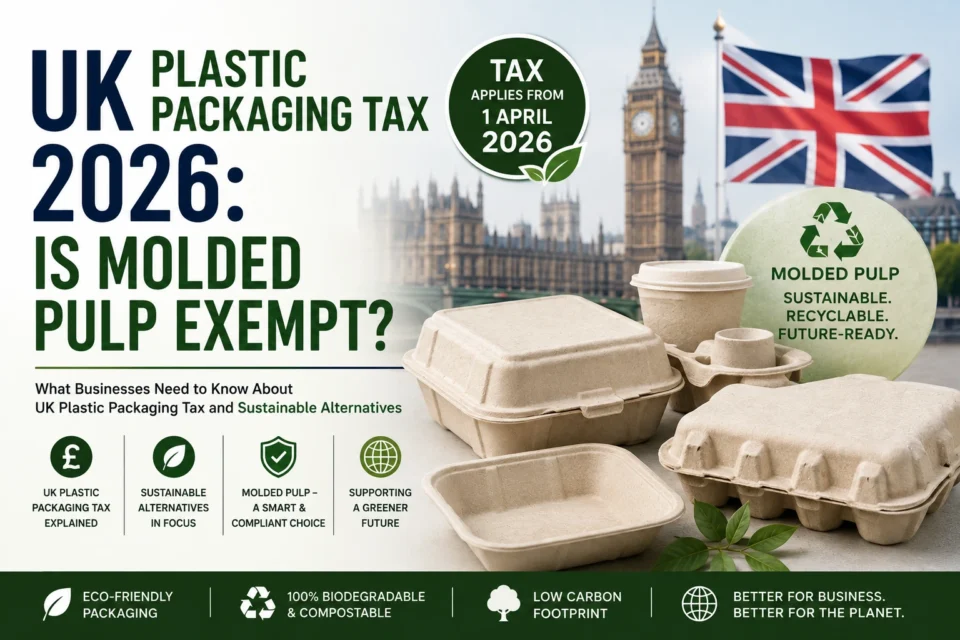
Here’s the part that matters most for UK importers: molded pulp isn’t exempt from the Plastic Packaging Tax. It’s outside the scope of it altogether — and that distinction is more than semantics.
An exemption means the product is plastic, but a specific carve-out lets you avoid paying (think packaging for licensed medicines, or transport packaging used solely to bring goods into the UK). Being out of scope means the material was never plastic packaging in the first place, so there’s no tax event to claim relief from, no evidence to file, no quarterly return line to worry about.
Molded pulp — egg trays, protective inserts, electronics cushioning, fruit and produce trays — is made from recycled or virgin cellulose fibre, pressed and dried into shape. There’s no plastic resin in the base material. Bagasse trays, recycled newsprint pulp, and standard wood-pulp molded fiber all fall into this same non-plastic packaging tax category. HMRC’s own guidance is direct about this: non-plastic packaging such as molded fibre, paper, glass, and metal simply doesn’t engage the tax. It’s not a loophole. It’s how the tax was designed from the start — to push demand toward exactly the kind of material molded pulp already is.
That matters for classification purposes too. If you’re the importer of record, you’re not filling out PPT paperwork for pulp-based components at all, which simplifies your compliance workload alongside the savings.
The Cost Impact, Per Import
Let’s put real numbers against this, because “per tonne” figures can feel abstract until you scale them to an actual shipment.
Say your business imports 40 tonnes of plastic protective packaging a year, and most of it falls under the less-than-30%-recycled-content bracket. At £228.82 per tonne, that’s £9,152.80 a year — before you even account for any additional compliance overhead: quarterly returns, six years of mandatory record-keeping, and (from 2026 onward) tighter evidence standards for recycled-content claims that HMRC is expected to formalise into a certification regime.
Switch that same volume to molded pulp trays or fiber-based protective packaging, and that £9,152.80 simply isn’t a line item anymore. It’s not reduced — it’s gone, because the material sits outside the tax’s scope. Multiply that across a multi-year contract, or across multiple SKUs, and the number stops looking like a rounding error and starts looking like a genuine budget lever.
There’s a second, quieter cost too: exposure to future rate rises. Every April, PPT has increased. Businesses still leaning on virgin plastic packaging are locking themselves into an ever-climbing cost base. Moving to non-plastic packaging now doesn’t just save this year’s £228.82 — it insulates your packaging spend from a tax that’s designed to keep climbing.
A Practical Checklist for UK Buyers
Before your next PO, it’s worth running through this list:
- Audit your current packaging by material, not just by product. Plastic trays, foam inserts, and PE-lined pulp products all sit in different tax positions — check each SKU individually rather than assuming.
- Confirm your registration status. If you’re importing 10+ tonnes of finished plastic packaging components in a rolling 12-month window, you need to register with HMRC regardless of recycled content.
- Separate “exempt” from “out of scope” in your own records. They’re taxed differently and audited differently. Molded pulp, being out of scope, needs no PPT evidence file at all — but keep supplier declarations on hand anyway, since due diligence expectations are tightening.
- Model the landed cost properly. Factor in the £228.82/tonne rate for anything under 30% recycled plastic content when comparing quotes — a slightly higher unit price on pulp packaging can still land cheaper once PPT exposure is included.
- Ask your supplier for material composition documentation upfront. For pulp and paper products, this is what confirms non-plastic packaging tax status if HMRC ever asks.
- Plan for 2027. From April 2027, only post-consumer recycled content will count toward the 30% threshold — pre-consumer offcuts won’t qualify anymore. If you’re relying on recycled plastic to stay under the tax threshold, this change could push you back into taxable territory. Molded pulp sidesteps that risk entirely.
Where Aavadh Exports Fits In
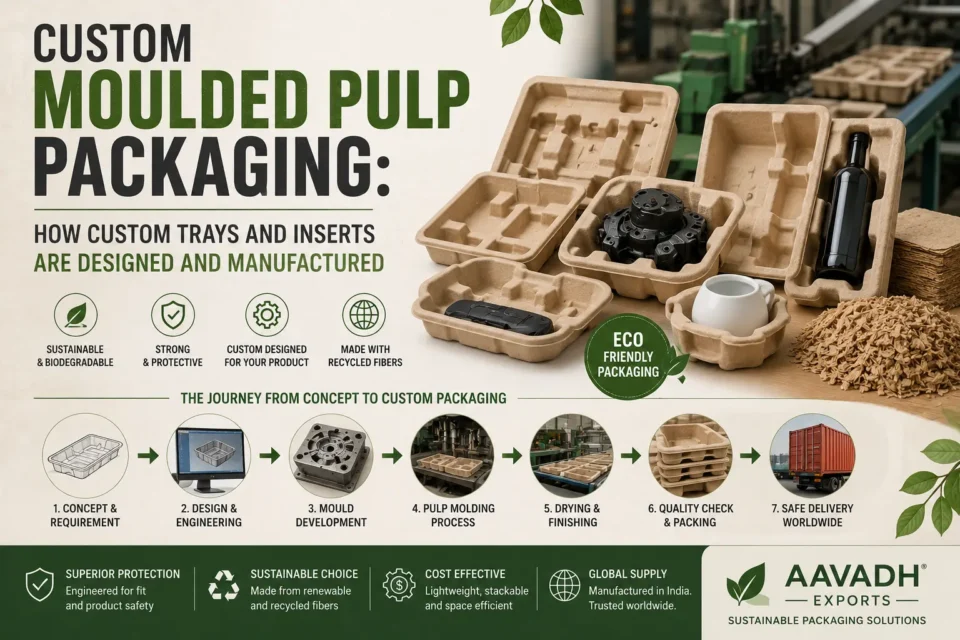
We manufacture molded pulp packaging specifically for exporters who need to hit UK compliance without adding a layer of tax paperwork to every shipment — egg trays, industrial and electronics protective packaging, fruit trays, and custom molded fiber inserts, all built from recycled and virgin pulp with full material declarations ready for your import file.
If you’re currently budgeting for PPT on your 2026-27 packaging spend, it’s worth running the comparison properly rather than estimating it. We can walk through your current SKUs, show you where pulp packaging fits functionally, and put together a landed-cost comparison so you’re deciding based on real numbers, not a rough guess.
Want the numbers for your own shipments? Get our UK Duty & PPT Checklist PDF and a tailored quote — reach out and we’ll run the comparison against your current packaging spec, tonnage, and shipment schedule.