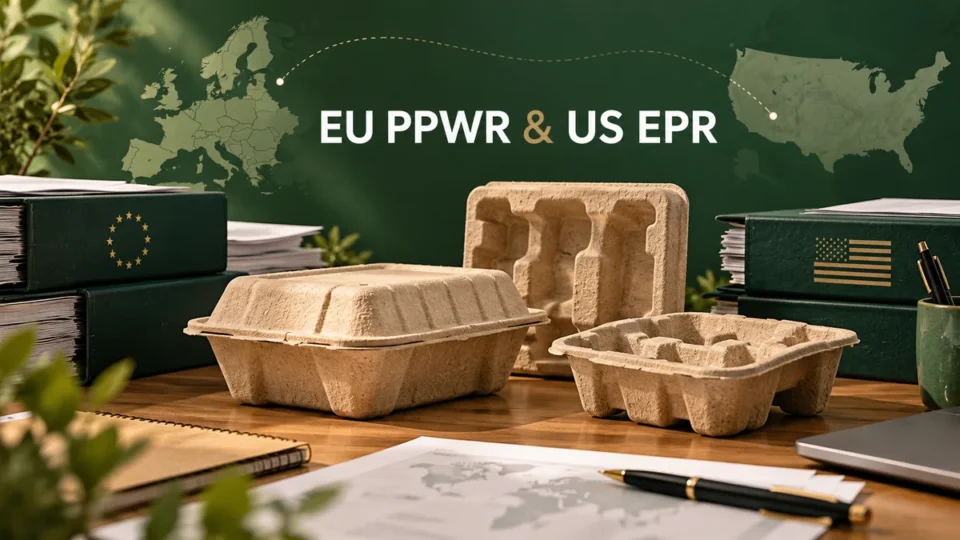
Packaging regulation is entering a new phase. In Europe, the Packaging and Packaging Waste Regulation (PPWR) is replacing older rules. In the United States, individual states are introducing Extended Producer Responsibility (EPR) laws that make companies pay for the end-of-life of the packaging they place on the market.
If you import molded pulp packaging, or sell products packed in it, these laws affect you. This article explains the basics in plain language. It is general information, not legal advice, so confirm details with a qualified adviser or the official texts.
Why These Laws Exist
Governments want less packaging waste, more recycling and fewer harmful substances in packaging. The tools they use include:
- Restrictions on certain materials and chemicals
- Recyclability and recycled-content requirements
- Labelling rules
- Producer fees or obligations for waste management
Molded pulp is well placed under these rules because it is fibre-based, widely recyclable and often made from recycled paper. But a good material does not exempt you from the paperwork. This article builds on topics we covered in the EU single-use plastics directive for importers and plastic packaging regulations.
The EU PPWR: Key Points
The PPWR is a regulation, which means it applies directly across EU member states rather than needing separate national laws. Its general application began in August 2026, with many detailed requirements phasing in over the following years. The main themes are below.
1. Substances of Concern
Restrictions apply to hazardous substances in packaging, including limits on PFAS in food-contact packaging. See our PFAS-free packaging guide.
2. Recyclability
Packaging must be designed to be recyclable at scale, under criteria that will be set out in secondary rules. Fibre packaging generally performs well. Heavy coatings, laminations or mixed materials can cause problems.
3. Recycled Content
Minimum recycled-content targets apply to plastic packaging. When molded pulp made from recycled paper replaces plastic, you can avoid these plastic-specific obligations.
4. Labelling
Harmonised labels showing material composition and sorting instructions will come into force in stages. Packaging placed on the market will eventually need to carry them.
5. Reduction and Reuse
There are targets to reduce packaging waste, limits on unnecessary packaging and rules to cut empty space in certain packaging formats. Right-sized molded pulp inserts can support these goals.
6. Producer Responsibilities
Producers must register, take responsibility for the packaging they place on the market and, if based outside the EU, generally appoint an authorised representative in the member state where they sell.
Who Is the “Producer” for an Importer?
This point trips up many buyers. Under EU rules, the “producer” is often the business that first makes the packaged product available on the market in that member state. That can be:
- The importer of record
- A brand owner
- An online seller shipping directly to consumers
If you import packaging or packaged goods into the EU, do not assume your Indian supplier carries the legal burden. In most cases the obligations fall on the party placing goods on the EU market. Discuss this early with your supplier and your adviser, and make sure your export documentation names the correct parties.
US EPR Laws: The State-by-State Picture
The United States has no federal packaging EPR law. Instead, several states have passed their own. The exact list and timelines keep growing, and states that have adopted or advanced such laws include Maine, Oregon, Colorado, California and Minnesota, among others.
Common features include:
- Producer registration with a producer responsibility organisation (PRO)
- Fees based on packaging type and weight, often adjusted to reward recyclability
- Reporting of the packaging you sell into the state
- Deadlines that differ by state
Because each state sets its own rules, national sellers face a patchwork. Check whether your business meets a state’s thresholds, since small businesses may be exempt in some places. For sourcing advice, see our USA buyers guide to molded pulp packaging.
What It Means for Molded Pulp Buyers
The good news
- Fibre-based packaging usually attracts lower fees than hard-to-recycle plastic in systems that reward recyclability.
- Switching from plastic clamshells or foam to molded pulp can reduce your regulatory exposure. See plastic clamshells vs moulded pulp trays and EPS and styrofoam alternatives.
- Recycled-content pulp supports sustainability claims and reporting.
The things to watch
- Coatings and additives may affect recyclability status.
- Documentation and data reporting are required regardless of material.
- Claims such as “compostable” or “recyclable” must be supportable with evidence.
A Practical Compliance Checklist
- Map your markets. List the EU countries and US states you sell into.
- Identify your role. Are you an importer, brand owner, distributor or online seller?
- Collect packaging data. Record material, weight, format and coatings for every SKU.
- Ask suppliers for documents. Request material declarations, test reports and certifications.
- Register where required. This may include producer registers or a PRO.
- Appoint an authorised representative if you sell in the EU without a local establishment.
- Check your claims. Do not label as recyclable or compostable without evidence.
- Review labels as harmonised marking rules take effect.
- Track deadlines. Secondary legislation and state timelines change often.
What to Ask Your Molded Pulp Supplier
- What fibre and additives are used in this product?
- Can you provide a declaration of composition?
- Is it free of PFAS and heavy metals above legal limits?
- Do you hold recognised certifications? See certifications for paper pulp tray exports.
- Can you supply accurate weight data for each SKU?
- Will you notify me if the recipe or coating changes?
Common Mistakes
- Assuming that an “eco-friendly” material is automatically compliant
- Leaving registration until after the first shipment
- Ignoring state-level US rules because there is no federal law
- Making unsupported green claims
- Forgetting that online sellers can also count as producers
Conclusion
The PPWR and US EPR laws reward smart packaging choices, and molded pulp is a strong option. But compliance still needs planning, data and registration. Start by mapping your markets and collecting supplier documentation now. Aavadh Exports can supply material information and compliance documents for our products. Get in touch to discuss your requirements, and remember to verify all legal details with a qualified professional.